

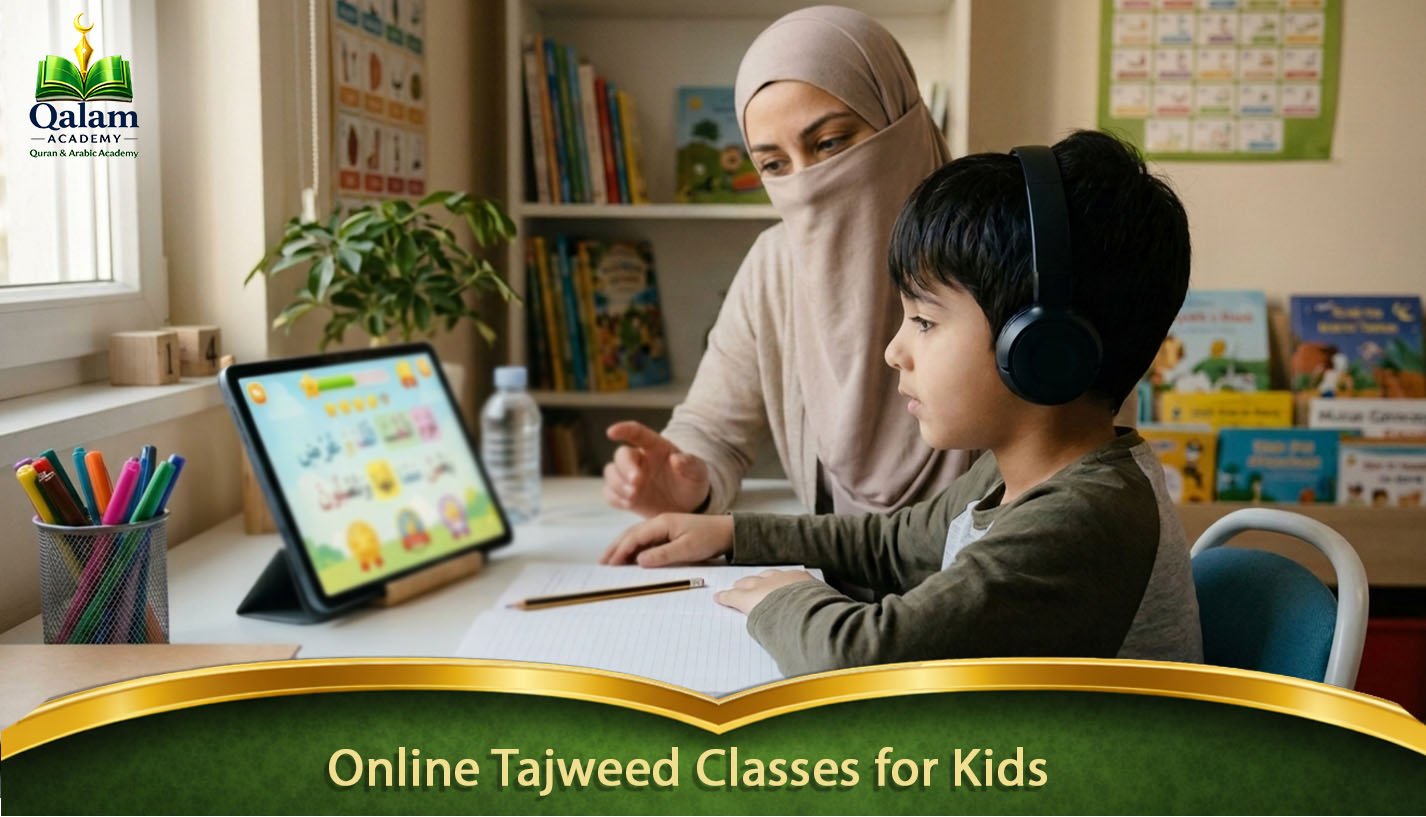
Online Tajweed classes for kids can help children improve Quran recitation while learning at a pace that suits their age and abilities. For parents seeking structured guidance from home, Qalam Online Quran Academy is an option to explore when comparing online Quran programs. Suitable lessons should do more than explain rules; they should help children hear, understand, and practice correct pronunciation in a supportive environment.
Choosing the right learning approach also means understanding that children do not develop reading skills at the same speed. Some may already recognize Arabic letters, while others need more time to connect letters, pronounce words, and read short verses. A flexible learning plan can make this journey more comfortable.
Why Is Learning Tajweed Important for Children?
Tajweed teaches learners how to pronounce Quranic letters correctly and observe the rules of recitation. Introducing these skills gradually can help children develop careful reading habits and become more aware of the sounds they hear and produce. Key benefits include:
- Clearer pronunciation: Children learn how Arabic letters are articulated and how to distinguish similar sounds.
- Better listening: Hearing a teacher recite and repeating the passage helps children notice pronunciation differences.
- Growing confidence: Patient correction and regular practice can make reading aloud more comfortable.
- A stronger foundation: Early skills prepare children to read longer passages and study additional rules.
- Improved concentration: Following a recitation example encourages children to listen carefully and pay attention to individual words.
Learning Tajweed also helps children understand that Quran recitation involves more than reading words from a page. Correct pronunciation, appropriate characteristics of letters, and attention to recitation rules all contribute to careful reading.
What Do Children Learn in Online Tajweed Lessons?
Effective online Tajweed classes for kids combine clear explanations of new rules with listening exercises and guided recitation practice to build confidence and accuracy.
1. Arabic Letters and Pronunciation
Children need to recognize Arabic letters and pronounce them clearly. A teacher can demonstrate difficult sounds and give the child time to repeat. Children who are still learning Arabic may need to strengthen their reading foundation first.
2. Basic Tajweed Rules
Once children can read simple words and verses, they can begin learning selected rules, including those related to Noon Sakinah, Tanween, and Meem Sakinah. Short explanations and examples from familiar Quranic passages make these ideas easier to understand.
Parents can consult tajweed rules for beginners to become familiar with concepts children may encounter. The rules of the Tajweed course can also help families review course topics.
3. Listening, Repetition, and Correction
Listening is essential. A child hears a short example, repeats it, and tries again after clear feedback. The teacher should demonstrate the correct sound rather than simply saying it is wrong.
For example, when a child struggles with a particular Arabic letter, the teacher can pronounce it slowly, explain where the sound comes from, and ask the child to repeat it in different words. This makes the correction more understandable.
4. Applying Rules While Reading
Children should apply each rule while reading. During a short surah, a teacher might ask them to notice a sound, model the correct recitation, and let them repeat the phrase. This connects rules to real reading.
How to Make Tajweed Practice Enjoyable at Home?
A calm home routine can reinforce what the child practices with the teacher. Parents do not need to become Tajweed specialists to provide encouragement and create a suitable learning environment. Parents can:
- Choose a regular practice time that does not compete with homework or bedtime.
- Keep practice short, especially when the child is young or tired.
- Play a short recitation before asking the child to read.
- Praise effort and improvement instead of expecting perfection.
- Review one familiar skill before introducing another.
- Avoid comparing the child with siblings or classmates.
A quiet study corner can also help children concentrate. Keeping a Quran, notebook, and headphones in the same place may make it easier to establish a consistent routine.
If a child becomes frustrated, a short break may be more useful than insisting on finishing the exercise. Encouragement and consistency are generally more helpful than pressure. These habits help children benefit more from online tajweed classes for kids.
Common Challenges Children May Face During Tajweed Learning
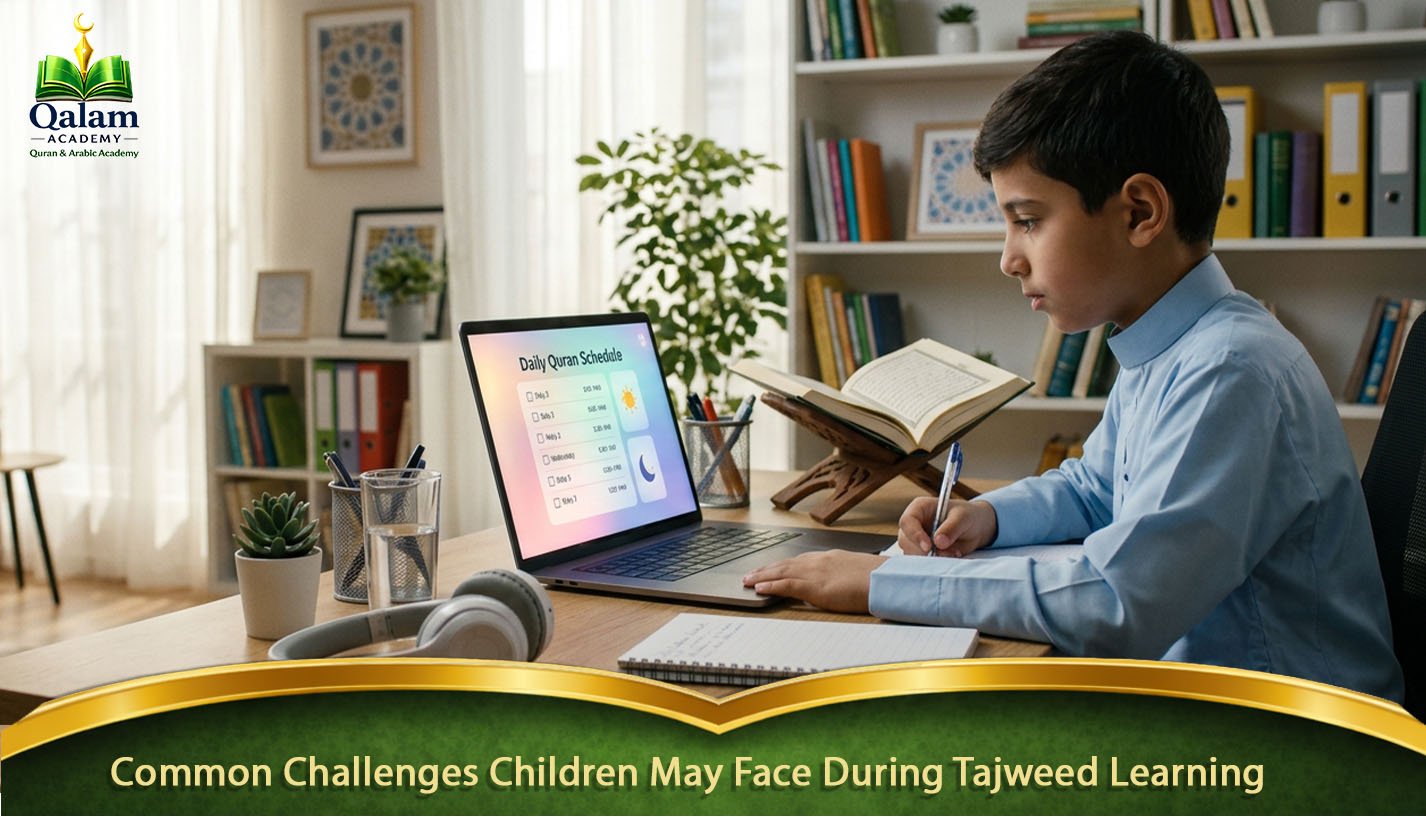
Some difficulties are a natural part of learning and should not be treated as signs of failure.
- Confusing similar Arabic letters: Children may need additional listening and pronunciation exercises to distinguish letters with close sounds.
- Forgetting previously learned rules: Short revision sessions can help reinforce earlier lessons before introducing new material.
- Losing concentration: Younger learners may struggle with long explanations. Dividing lessons into smaller activities can make learning more manageable.
- Feeling nervous about mistakes: Children should understand that correction is part of learning. A supportive teacher can encourage them to try again without embarrassment.
Recognizing these challenges helps parents set realistic expectations and communicate more effectively with the teacher.
How to Choose the Right Teacher for Online Tajweed Classes for Kids?
Choose a teacher who recites accurately and explains concepts in a child-friendly way. Before choosing a program, consider:
- Tajweed knowledge: Ask about the teacher’s recitation background and relevant qualifications.
- Experience with children: Young learners need patience, clear instructions, and age-appropriate activities.
- Correction style: A good teacher identifies mistakes respectfully and demonstrates how to improve them.
- Lesson structure: Ask how sessions are organized and how new topics build on previous lessons.
- Progress feedback: Find out whether parents receive updates about strengths, recurring mistakes, and home practice.
- Communication: Parents should have a clear way to discuss difficulties and ask questions about their child’s development.
When considering a tajweed tutor online, discuss your child’s needs and ask whether an introductory session is available.
How May Qalam Online Quran Academy Support Your Child?
Qalam Online Quran Academy is an option to explore. Before enrolling, ask about available courses, teacher qualifications, lesson format, scheduling, and age-appropriate instruction.
Explain your child’s current reading level and ask how teachers correct recitation, include practice, and communicate progress. It is also helpful to ask how the learning plan changes as a child becomes more comfortable with Arabic reading and basic Tajweed concepts.
Families comparing programs can explore Learn quran online with Tajweed and information about the online Quran academy Tajweed. Confirm current course details directly with the academy before deciding.
Frequently Asked Questions About Online Tajweed Classes for Kids
Find clear answers to common questions about lesson structure, suitable learning ages, practice frequency, and choosing the right Tajweed teacher for your child.
At what age can a child start learning Tajweed?
Children can begin with listening and letter sounds. Structured rules can follow when they can read and understand instructions.
Are online Tajweed lessons suitable for beginners?
Yes, if the program starts at the child’s actual level. Beginners may need Arabic letter recognition and reading practice before studying specific recitation rules.
How often should children practice Tajweed?
Short, regular practice is often easier to maintain than occasional long sessions. The right schedule depends on the child’s age, attention span, and learning plan.
Conclusion
Tajweed develops through listening, careful correction, and regular practice. A suitable program helps children apply each skill with confidence rather than rushing through rules.
When comparing online tajweed classes for kids, focus on teacher qualifications, age-appropriate lessons, and the way progress is supported. Qalam Online Quran Academy may be worth exploring as part of that comparison. Discuss your child’s current reading level with the academy, ask about available arrangements, and choose a plan that makes accurate Quran recitation a positive part of everyday learning.