Online Islamic Classes | Learn Quran & Islam from Home
Online Islamic Classes with Certified Teachers at Qalam Quran Academy, Are you looking for Islamic classes that help you or your children learn Islam in a structured, engaging, and authentic way?
Welcome to Qalam Quran Academy, a trusted platform providing high-quality online Islamic classes for students around the world. Our mission is to make Islamic education accessible, interactive, and deeply rooted in authentic teachings.
Through our live classes, experienced teachers, and personalized learning approach, students can learn the Quran, Islamic studies, Arabic, and essential Islamic values from the comfort of their homes.
Whether you are a beginner or someone looking to deepen your knowledge of Islam, our online Islamic classes are designed to meet your learning goals.
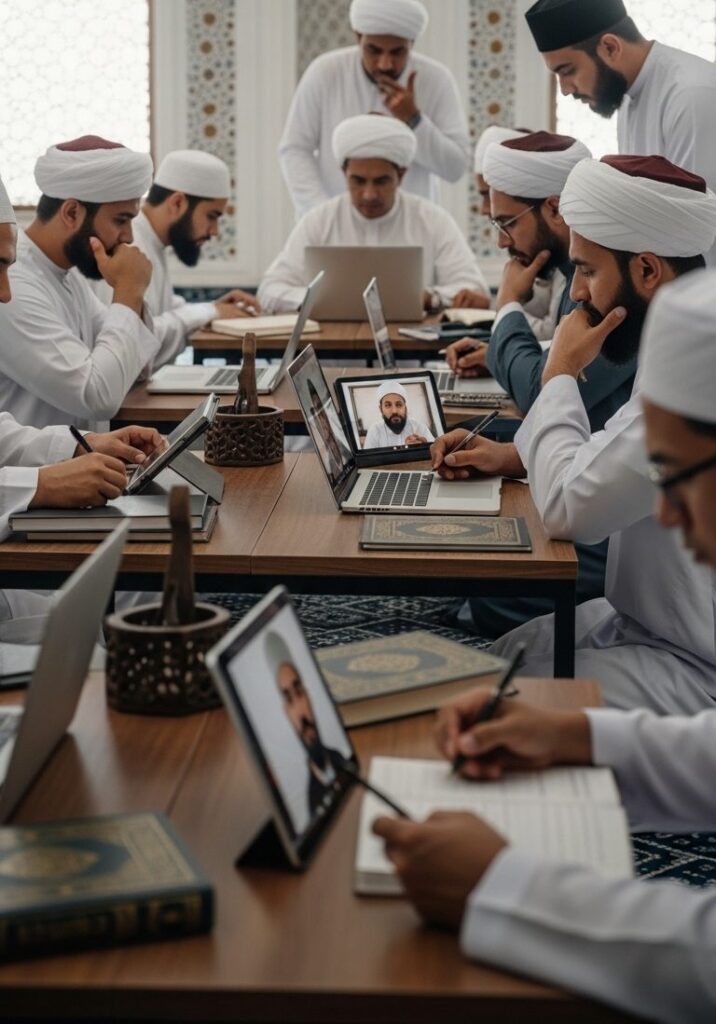
Courses Offered in Our Academy
Qalam Quran Academy provides a wide range of online Islamic classes suitable for kids, teens, and adults.
Quran Reading Classes
Our Quran reading classes are designed for beginners who want to learn how to read the Quran correctly.
Students will learn:
Arabic letters and pronunciation
Basic Tajweed rules
Proper Quran recitation
Reading fluency
These online Islamic classes help students build a strong foundation in Quran reading.
Quran with Tajweed
Tajweed is essential for reciting the Quran correctly.
In these online Islamic classes, students learn:
Makharij (pronunciation points)
Tajweed rules
Recitation improvement
Error correction
Our teachers guide students step by step until they achieve confident Quran recitation.
Quran Memorization (Hifz Program)
For students who want to memorize the Quran, we offer a structured Hifz program within our online Islamic classes.
Features include:
Daily memorization plans
Revision strategies
Progress tracking
Teacher supervision
This program helps students memorize the Quran efficiently while maintaining strong revision habits.
Islamic Studies Classes
Our Islamic studies program teaches essential Islamic knowledge including:
Pillars of Islam
Prophets in Islam
Islamic manners and ethics
Daily duas and supplications
Seerah (Life of Prophet Muhammad)
These classes help students understand Islam beyond just reading the Quran.
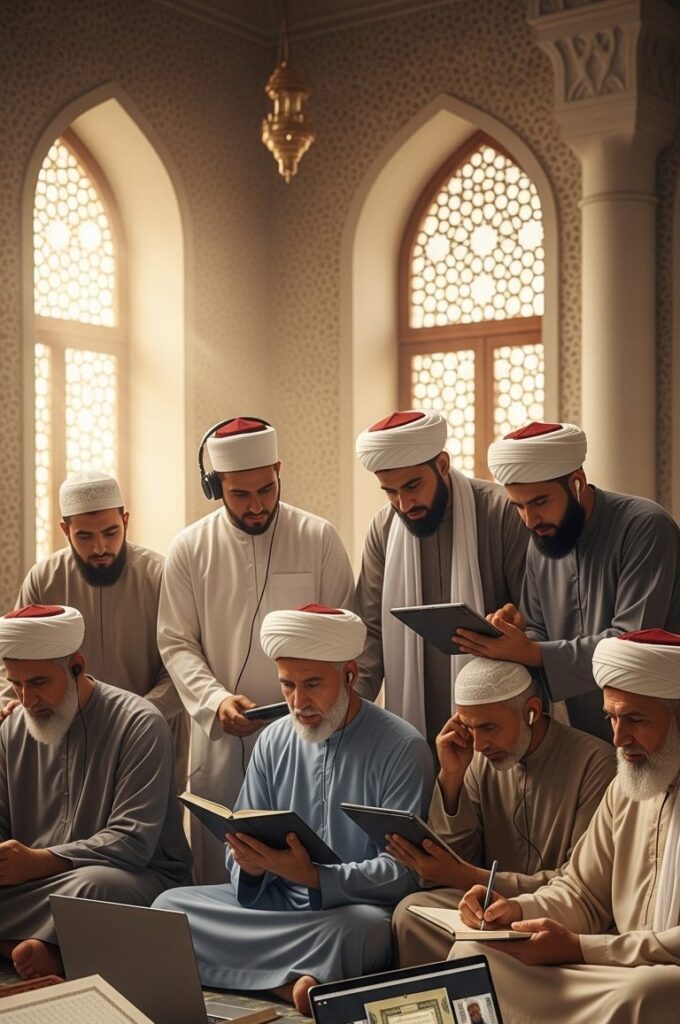
Who Can Join Our Online Islamic Classes?
One of the biggest advantages of Islamic classes is accessibility. Students from all over the world can join Qalam Quran Academy.
Our classes are suitable for:
Kids
Children learn in a friendly and interactive environment with patient teachers who specialize in teaching young learners.
Adults
Adults who want to learn Quran reading or improve their Islamic knowledge can join our flexible classes.
Beginners
Even if you have no previous Islamic education, our teachers will guide you step by step.
Advanced Students
Students who already have some background can enroll in advanced programs such as Tajweed mastery or Quran memorization.
Our Teaching Methodology
At Qalam Quran Academy, we follow a structured learning system to ensure every student benefits from our online Islamic classes.
Personalized Learning
Each student has different goals and learning speeds. Our teachers adjust lessons accordingly.
Qualified Teachers
Our instructors are experienced in teaching Quran and Islamic studies to international students.
Interactive Lessons
Our classes include:
Screen sharing
Quran recitation practice
Live feedback
Digital learning materials
Progress Tracking
Students receive regular feedback and progress evaluations.
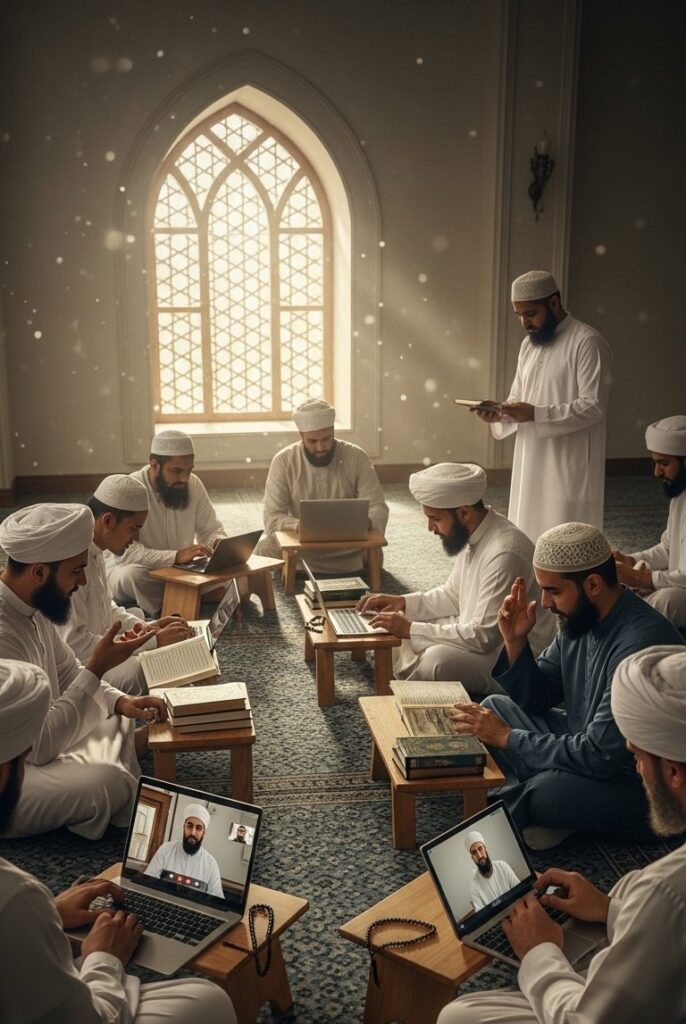
Why Qalam Quran Academy is Trusted Worldwide
Thousands of families choose Qalam Quran Academy for online Islamic classes because of our commitment to quality education.
What Makes Us Different?
Certified Quran teachers
Structured Islamic curriculum
One-on-one lessons
Affordable pricing
Global student community
Excellent student support
Our goal is not only to teach but also to inspire a lifelong connection with Islam.
What Our Islamic Studies Curriculum Covers
Islamic studies classes go beyond Quran recitation to build a broader understanding of faith and practice. Lessons are generally organized around a few core areas: foundational beliefs (Aqeedah), the practical rulings of worship (Fiqh) such as prayer and fasting, the life and character of the Prophet Muhammad, peace be upon him (Seerah), and everyday manners and character (Akhlaq). Teachers present each topic at a level appropriate to the student’s age and prior knowledge, always with an emphasis on accuracy and sourcing rather than casual explanation.
We are careful that all religious content is handled with precision, drawing on established, verifiable scholarship rather than any teacher’s personal interpretation presented as fact.
Who Benefits Most From This Program
Children Building a Foundation
Young students benefit from simple, story-based introductions to Islamic manners and history, building familiarity before more technical study begins later. Many families pair this with our Quran classes for kids so recitation and understanding grow together.
Adults Returning to Structured Study
Adults who grew up with informal exposure to Islamic teachings but never studied formally often find real value in a structured, judgment-free environment where basic questions are welcome rather than assumed to already be known.
New Muslims
Students who have recently embraced Islam need a clear, patient starting point covering fundamentals of belief and practice. Lessons for this group typically move a little slower and spend more time answering foundational questions before advancing.
How Lessons Are Structured by Age
Younger children usually start with short, story-driven lessons about the Prophets and basic manners, taught through simple language and repetition. Pre-teens move into more structured explanations of worship practices and the reasoning behind them. Teenagers and adults engage with more detailed discussion, including questions about how principles apply to modern daily life, always grounded in verified, mainstream scholarship rather than speculation.
Integrating Islamic Studies With Quran and Arabic Learning
Islamic studies rarely exist in isolation from Quran and Arabic learning. Many terms and concepts in Fiqh and Aqeedah are drawn directly from Arabic vocabulary, so students who are also taking our Arabic classes often grasp these lessons faster, since the underlying vocabulary is already familiar. Similarly, students memorizing portions of the Quran through our Quran classes often encounter direct connections to what they are studying in Islamic studies lessons, which reinforces both subjects at once.
Teacher Qualifications and Accuracy Standards
Teachers delivering Islamic studies content are selected specifically for their grounding in mainstream, verifiable scholarship. We hold a firm standard that religious information taught in our classes must be accurate and properly sourced rather than based on a teacher’s personal opinion presented as settled fact. Where a topic involves scholarly difference of opinion, teachers are expected to present that honestly rather than oversimplifying it into a single answer.
Frequently Asked Questions
Is this program suitable for someone new to Islam entirely?
Yes. Lessons can start from the very basics and build up gradually, with no assumption of prior knowledge.
Do you teach a specific school of thought?
We aim to present mainstream, widely accepted positions and are transparent when a topic involves recognized scholarly difference of opinion, rather than presenting one view as the only valid answer.
Can this be combined with Quran memorization?
Yes, many students study Islamic studies alongside our Tajweed classes or full Hifz programs, and scheduling is coordinated so the workload stays manageable.
What does enrollment cost?
Pricing details are available on our fees page.
Why Structured Islamic Education Matters
Many adults describe piecing together their religious knowledge informally over the years, picking up fragments from family, community talks, and casual reading without ever studying in a structured, sequential way. This often leaves gaps that only become obvious later, when a specific question comes up and there is no clear, reliable answer at hand. Structured lessons close these gaps methodically, building each topic on a solid foundation rather than leaving students to guess at connections themselves.
For parents, giving children this structure early tends to prevent the same gaps from forming in the next generation, since concepts are introduced in a logical order rather than absorbed randomly from whatever conversation happens to come up at home.
Handling Difficult or Sensitive Questions
Students of all ages eventually ask challenging questions, whether about historical events, differences between practices in different communities, or how a principle applies to a specific modern situation. Our teachers are trained to handle these questions honestly rather than deflecting them, while being careful to distinguish between well-established, verified information and areas of genuine scholarly discussion. Where a teacher is not certain of an answer, they are expected to say so and follow up with accurate information rather than guessing.
A Typical Lesson Format
Sessions usually begin with a short review of the previous topic, followed by introduction of new material through explanation, examples, and discussion. Students are encouraged to ask questions throughout rather than saving them for the end, since immediate clarification tends to stick better than a question addressed much later. Lessons close with a brief summary and, where relevant, a simple reflection question for the student to think about before the next session.
Supporting Character Development Alongside Knowledge
Islamic studies is not only about information but also about character and daily conduct. Lessons on manners, honesty, kindness, and handling conflict are woven throughout the curriculum rather than treated as a separate, occasional topic. For younger students especially, these lessons are often reinforced through simple real-life examples and gentle discussion rather than abstract rules alone.
If you are unsure where to begin, whether that means starting with basic beliefs, practical worship questions, or history and character, our team can help place you at the right starting point rather than leaving you to guess.
Getting Started
A free introductory session lets a new student meet a teacher and get a feel for how lessons are structured before committing to a regular schedule. This is particularly useful for adults who feel unsure about their existing knowledge level and want reassurance that the program will meet them where they actually are, not where they feel they are supposed to be.
Coordinating Islamic Studies With a Busy Household
Families managing multiple children across different ages often worry about juggling separate schedules for Quran, Arabic, and Islamic studies classes. Our enrollment team helps coordinate these across siblings so lessons complement rather than compete with each other, and so parents are not left manually managing three completely separate booking calendars. Many households eventually settle into a combined weekly rhythm that covers all three areas without feeling overwhelming.
Continuing Education for Adults
Adult students sometimes worry that starting Islamic studies later in life puts them behind. In practice, adult learners often progress faster through conceptual material than children do, since they can engage with abstract reasoning and historical context more readily. What adults typically need most is simply a structured starting point and permission to ask basic questions without embarrassment, both of which our program is specifically designed to provide.
Measuring Understanding, Not Just Memorization
It is possible to memorize facts about Islamic history or rulings without truly understanding the reasoning behind them, and our teachers actively check for genuine comprehension rather than rote recall alone. This usually means asking students to explain a concept in their own words or apply it to a simple scenario, rather than only testing whether a definition can be repeated back correctly.
This distinction matters most for older students and adults, who benefit far more from being able to reason through a new situation using what they have learned than from memorizing a fixed list of answers that may not cover every real-world case they encounter later.
Start Your journey Today
Learning Islam should be easy, accessible, and inspiring.
At Qalam Quran Academy, our Academy provide the perfect opportunity for students of all ages to learn the Quran, understand Islamic teachings, and strengthen their faith.
Whether you want to learn Quran reading, Tajweed, Islamic studies, or Arabic, our experienced teachers are ready to guide you every step of the way.