
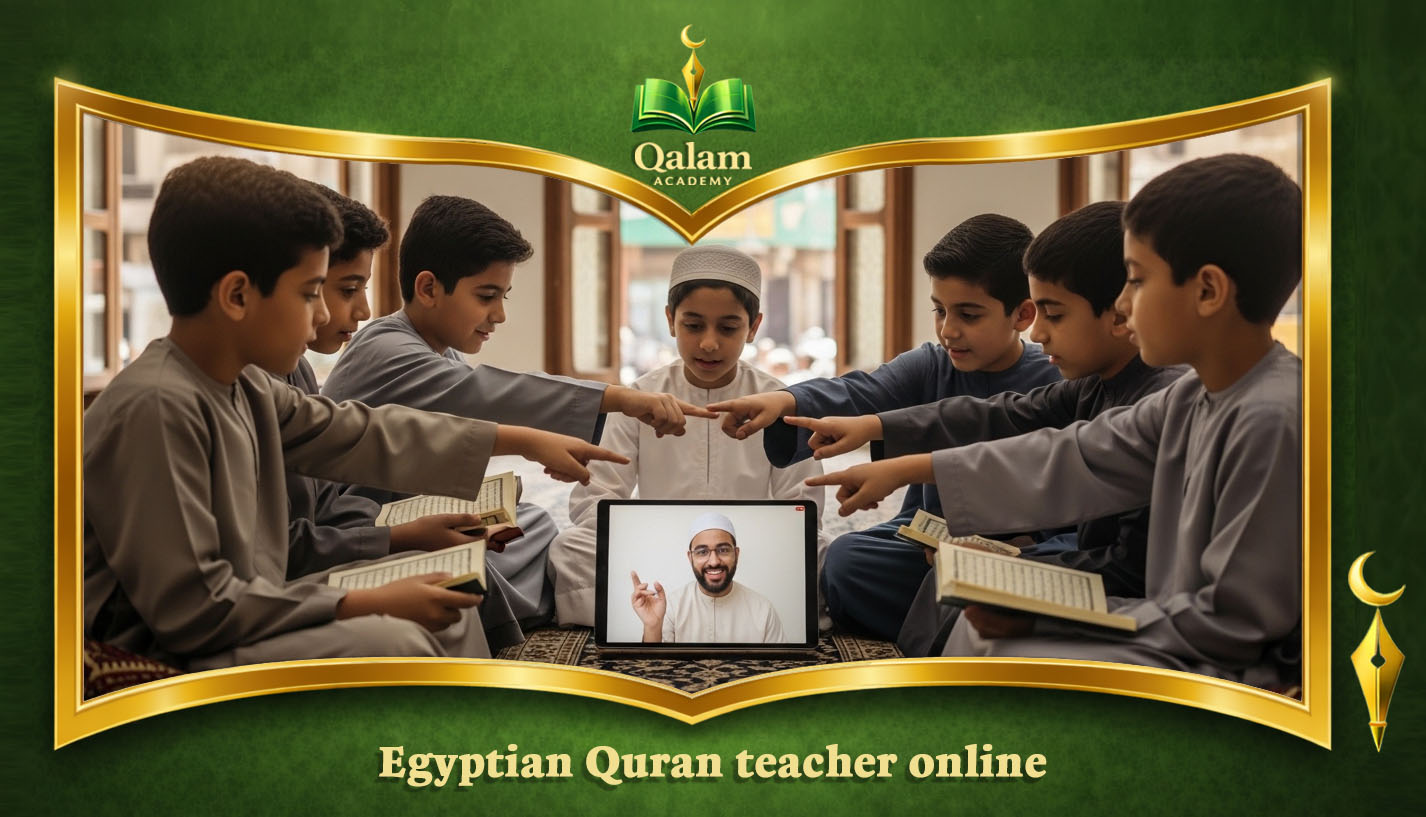
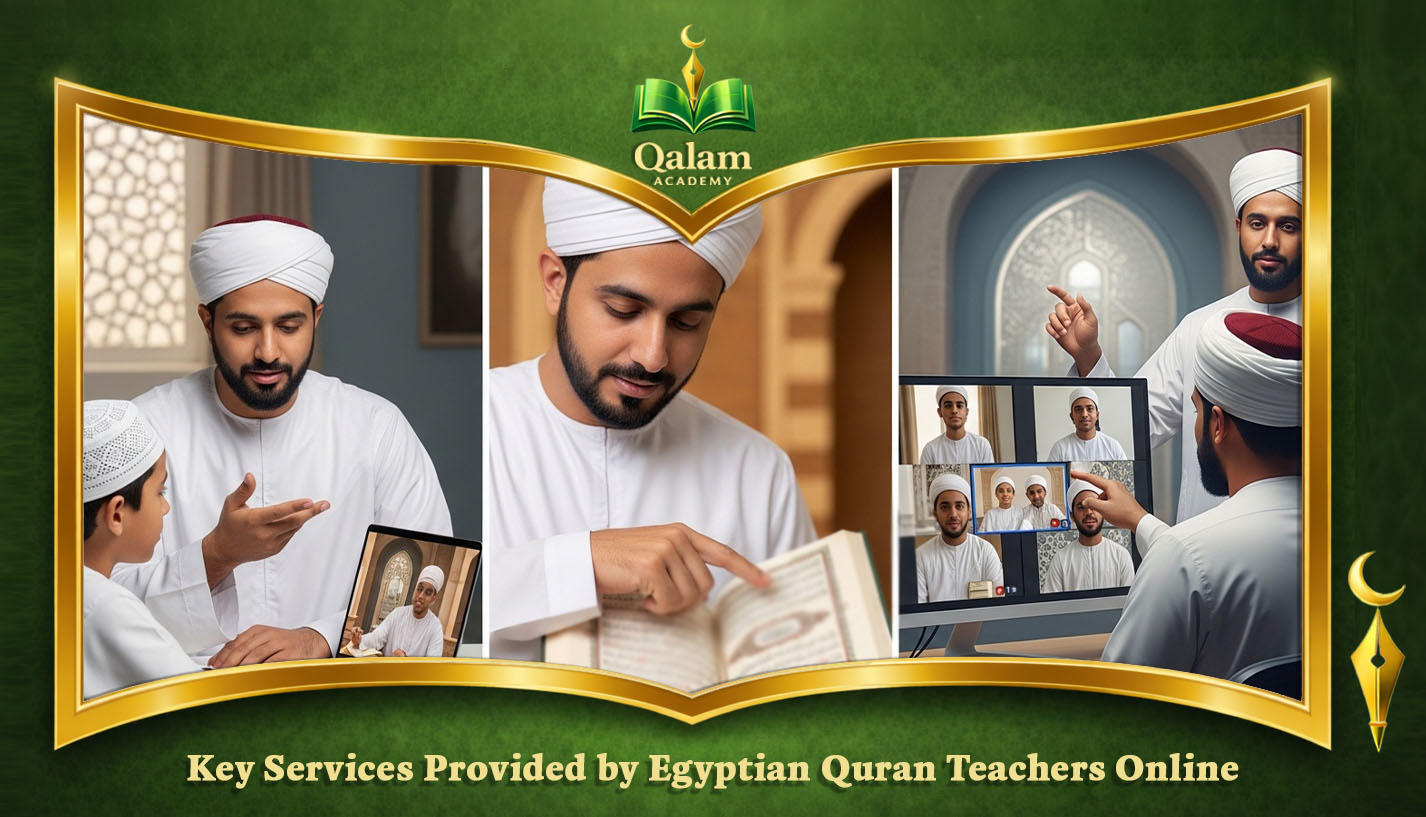
Egyptian Quran teacher online services have revolutionized the way students learn the Quran, offering a flexible and accessible learning experience. Platforms like Online Quran Academy Qalam provide expert instruction through qualified Egyptian Quran teachers, specializing in Quran recitation, memorization, Tajweed, and Arabic language courses.
By utilizing online learning tools, students can now receive personalized education from skilled teachers no matter where they are located. This research paper will explore the benefits of learning from an Egyptian Quran teacher online at Online Quran Academy Qalam, highlighting how this method enhances the Quranic education journey for students globally.
Meet Egyptian Quran Teachers Online
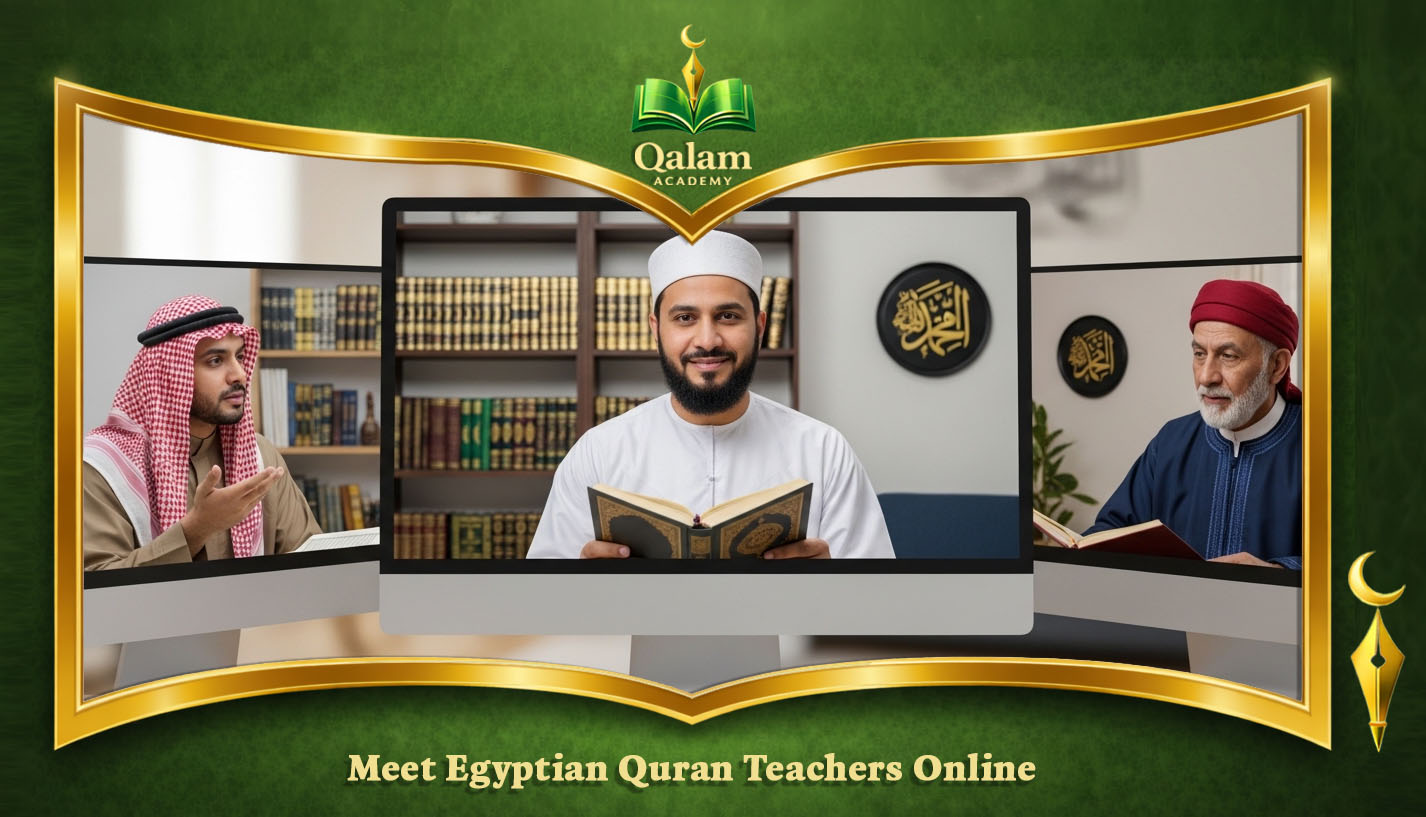
An Egyptian Quran teacher online is an experienced instructor who helps students learn the Quran, the sacred text of Islam. These teachers specialize in Quranic recitation, memorization, and interpretation, guiding students to understand the deeper meanings of the verses. Typically, these teachers come from families that emphasize the importance of Islamic education. Moreover, they receive extensive training in both Arabic and Quranic studies, which makes them highly skilled educators.
Why Choose an Egyptian Quran Teacher Online?
Learning from an Egyptian Quran teacher online offers numerous benefits. First, it provides students with flexibility. They can study at their own pace, which is essential for a more thorough understanding of the text. Additionally, these teachers not only help students memorize Quranic verses but also teach them to interpret the deeper meanings within the text. This enhances their overall learning experience.
Furthermore, online learning removes geographical barriers. Many students live in areas where finding qualified Quran teachers is difficult. By learning online, these students can access high-quality education from the comfort of their own homes. As a result, online learning is both accessible and convenient, allowing students to balance their studies with other daily responsibilities.
Online Quran Academy
Online Quran Academy Qalam offers an exceptional learning experience for students of all ages worldwide. Through the platform, students can learn from qualified teachers in Quran recitation, Tajweed, memorization, and Arabic language lessons, all in live online sessions.
Online Quran Academy Qalam provides an interactive learning environment that combines traditional and modern teaching methods, helping students improve their Quranic skills and deeply understand the meanings of the Quran. Additionally, the platform offers flexible scheduling to meet each student’s needs, along with continuous support to ensure a productive and enjoyable learning experience.

The Role and Importance of the Egyptian Quran Teacher
The role of an Egyptian Quran teacher goes far beyond just teaching the Quran. These teachers act as mentors, spiritual guides, and community leaders. Their contributions are not limited to the classroom but extend to shaping the broader community. Below are key aspects that highlight the importance of their role:
Spiritual Growth and Guidance
First, Egyptian Quran teachers play a critical role in the spiritual development of their students. By teaching how to recite and understand the Quran, these teachers help students strengthen their connection to their faith. Through their guidance, students are not only taught the verses but are also led toward spiritual enlightenment, which has a lasting impact on their lives.
Additionally, these teachers help students understand the deeper meanings of the Quran, allowing them to grow in both knowledge and spirituality. As a result, the students develop a stronger sense of purpose and faith in their everyday lives.
Preserving Cultural and Religious Heritage
Moreover, Egyptian Quran teachers are key to preserving the rich Islamic cultural heritage. By passing down the teachings of the Quran, they ensure that future generations understand its significance. In doing so, they help preserve the cultural and religious values embedded within the Quran, making sure that its relevance continues to be felt in the years ahead.
Through their teachings, these educators maintain the continuity of Islam’s rich intellectual and spiritual legacy, ensuring that its wisdom is passed down accurately to future generations.
Building Stronger Communities
Furthermore, Egyptian Quran teachers often serve as unifying figures within their communities. They organize Quran competitions, group prayers, and community events that bring people together. These activities foster a sense of belonging and strengthen bonds among believers, helping to create a supportive, faith-driven community.
By encouraging participation in religious and social activities, these teachers help nurture a collective spirit of cooperation and mutual respect among members of the community.
The Lasting Impact on Students
In addition, many students report that the impact of their Egyptian Quran teacher extends far beyond the classroom. Former students frequently mention how their teacher’s guidance shaped their moral compass, boosted their confidence, and influenced their life choices. Whether in their relationships, careers, or everyday decisions, many students acknowledge that the values and lessons they learned from their teacher have had a profound effect on their lives.
In conclusion, the role of the Egyptian Quran teacher is vital not only to the individual but also to society at large. These educators are essential in guiding students spiritually, preserving cultural heritage, and fostering strong community bonds. Their influence extends beyond teaching the Quran, as they shape the moral and social fabric of the communities they serve.
Qualifications and Skills Required
Becoming an effective Quran teacher requires strong educational background, mastery of Quranic Arabic, and proficiency in Tajweed and recitation. Teachers also need excellent communication skills to guide students of all ages successfully.
Educational Background
To become a skilled Egyptian Quran teacher, one must have a solid educational foundation. Most teachers begin their journey in traditional Islamic schools (madrasas), where they immerse themselves in Quranic studies from an early age. Here’s how the educational path typically shapes an Egyptian Quran teacher:
Formal Islamic Education
Many Egyptian Quran teachers continue their studies by earning degrees in Islamic studies from well-regarded institutions. This formal education gives them a deep understanding of Islamic teachings, beliefs, and principles. It equips them with the knowledge needed to effectively teach and share the core values of Islam with their students.
Mastery of the Arabic Language
Proficiency in Arabic is another essential skill for Egyptian Quran teachers since it is the language of the Quran. Teachers usually enroll in specialized courses to improve their fluency and comprehension. This allows them to teach students how to recite the Quran accurately and understand its meanings in their original form.
Practical Application of Knowledge
In addition to their academic qualifications, Egyptian Quran teachers also know how to apply their knowledge in ways that connect with their students. They link Quranic teachings to everyday life, making lessons more relevant and easier to understand. This approach enhances students’ learning experiences, allowing them to apply the Quran’s wisdom to their own lives.
In conclusion, becoming a qualified Egyptian Quran teacher requires more than academic achievements. Teachers need a strong foundation in Islamic studies, mastery of the Arabic language, and the ability to relate their teachings to real-world situations. These qualifications ensure they can guide students effectively, making the learning experience both meaningful and practical.
Traditional Methods of Teaching the Quran by Egyptian Teachers
Egyptian Quran teachers continue to rely on traditional methods such as memorization (Hifz) and direct recitation to teach their students. These approaches have stood the test of time and remain effective in fostering deep respect and understanding of the Quran. By focusing on repetition and correct pronunciation, these methods help students connect with the Quran in a meaningful way and ensure accurate recitation for years to come.
Traditional Teaching Approaches
When it comes to teaching the Quran, Egyptian Quran teachers often rely on traditional methods that have been effective for centuries. These methods are deeply rooted in history and have proven their success in helping students understand and respect the Quran. Below are two key traditional methods used in Quranic education:
Memorization (Hifz)
One of the most common techniques is focused on helping students memorize the Quranic verses, a method known as Hifz. In this approach, Egyptian Quran teachers use repetition to ensure that students commit each verse to memory. By consistently repeating verses, students gradually internalize them. This method not only helps with memorization but also strengthens the connection between the students and the Quran.
Moreover, this memorization technique builds a strong foundation for students, ensuring that they remember the verses accurately. The emphasis on repetition allows students to retain what they learn for years, as the constant practice helps solidify the verses in their minds.
Direct Recitation
Another essential method is direct recitation. In this approach, students learn by listening to the teacher’s recitation of the Quran. They then repeat the verses aloud, mimicking the teacher’s pronunciation and intonation. This method is vital for mastering Tajweed, the correct pronunciation and intonation of Quranic Arabic.
Additionally, through this approach, students learn to pronounce the words of the Quran correctly. The focus is on ensuring that every student can recite the verses with the correct rhythm, tone, and clarity. By hearing the verses from the teacher, students develop an ear for the proper recitation, which is essential for accurate learning.
Integrating Modern Technologies in Quranic Education
While traditional methods have proven to be effective, many Egyptian Quran teachers have begun to incorporate modern technologies to enhance the learning experience. By blending the old with the new, they create a more engaging environment for students. Here are a few examples of how modern techniques are being used in Quranic education:
Interactive Technology
One of the main ways Egyptian Quran teachers are integrating modern techniques is by using interactive technology. This includes multimedia resources such as apps, videos, and online quizzes. These tools make learning more dynamic and engaging. For instance, students can use apps to track their progress in memorization, or watch videos that demonstrate correct pronunciation and Tajweed. These resources help reinforce traditional teachings and make the learning process more enjoyable and accessible.
Furthermore, online platforms allow teachers to reach students who may not have access to in-person classes. This flexibility opens up new opportunities for students worldwide to connect with qualified teachers, regardless of their geographical location.
Collaborative Learning
Another modern approach gaining popularity is collaborative learning. Encouraging students to work together in small groups helps foster a sense of community. This method allows students to share insights, ask questions, and discuss the Quranic verses together. It creates a supportive learning environment where students can learn from each other. Additionally, it helps build strong social connections among learners, which can enhance their overall learning experience.
By using collaborative learning, Egyptian Quran teachers can encourage a sense of teamwork and mutual support, ensuring that students stay motivated and engaged throughout their studies.
How to Choose the Best Online Quran Teacher for Your Child
Choosing the right online Quran teacher for your child is an important decision, especially when it comes to studying courses like Tajweed, Quran memorization, Quran recitation, and Arabic language lessons. Here are key steps to help you find the best Quran teacher for your child:
Check Qualifications and Experience
When selecting an online Quran teacher, ensure they are certified and have extensive experience in teaching children. Browse through the profiles of teachers offering courses like “Nurani Qaidah,” Quran recitation, Tajweed, and Arabic. Look for teachers who hold certifications in Quran recitation or memorization and have a proven track record of success in teaching children.
Furthermore, qualified teachers with years of experience are more likely to understand how to engage young learners and tailor their teaching methods to your child’s needs.
Read Reviews and Ratings
Many online platforms feature reviews and ratings from other parents. These testimonials can offer valuable insights into the teacher’s teaching style, effectiveness, and ability to engage children. Pay close attention to feedback about the teacher’s ability to connect with kids, maintain their attention, and explain complex concepts in an easy-to-understand way.
Choose a Trial Lesson
Most online Quran academies offer trial lessons, giving you the opportunity to assess how well the teacher connects with your child. This is a great chance to evaluate their communication skills, teaching methods, and ability to create an engaging and welcoming learning environment. A trial lesson can also help you determine whether the teacher’s style fits your child’s learning needs.
Consider Gender Preferences
Some parents prefer a female Quran teacher for their daughters, while others may prefer a male teacher for their sons. Make sure the platform you choose offers a variety of male and female teachers to meet your specific preferences. This ensures you can find a teacher who both you and your child are comfortable with.
Evaluate the Learning Platform
An easy-to-use and interactive learning platform enhances the learning experience. Look for platforms that offer features like live video lessons, screen sharing, and digital Quran tools. These tools make the lessons more engaging and effective, allowing your child to interact with the material in an immersive way.
read more: