


Learning Quran in Arabic is the first step toward understanding the Quran deeply and improving your recitation skills. At Online quran Academy qalam, learners of all ages receive structured guidance that combines reading, tajweed, and comprehension.
Daily practice, interactive lessons, and personalized feedback help students progress quickly while maintaining accuracy and fluency. Moreover, the academy’s approach makes the learning process engaging and spiritually fulfilling, ensuring that beginners and advanced learners alike can connect with the Quran’s meanings. By following these methods, mastering Quranic Arabic becomes practical, enjoyable, and rewarding for everyone.
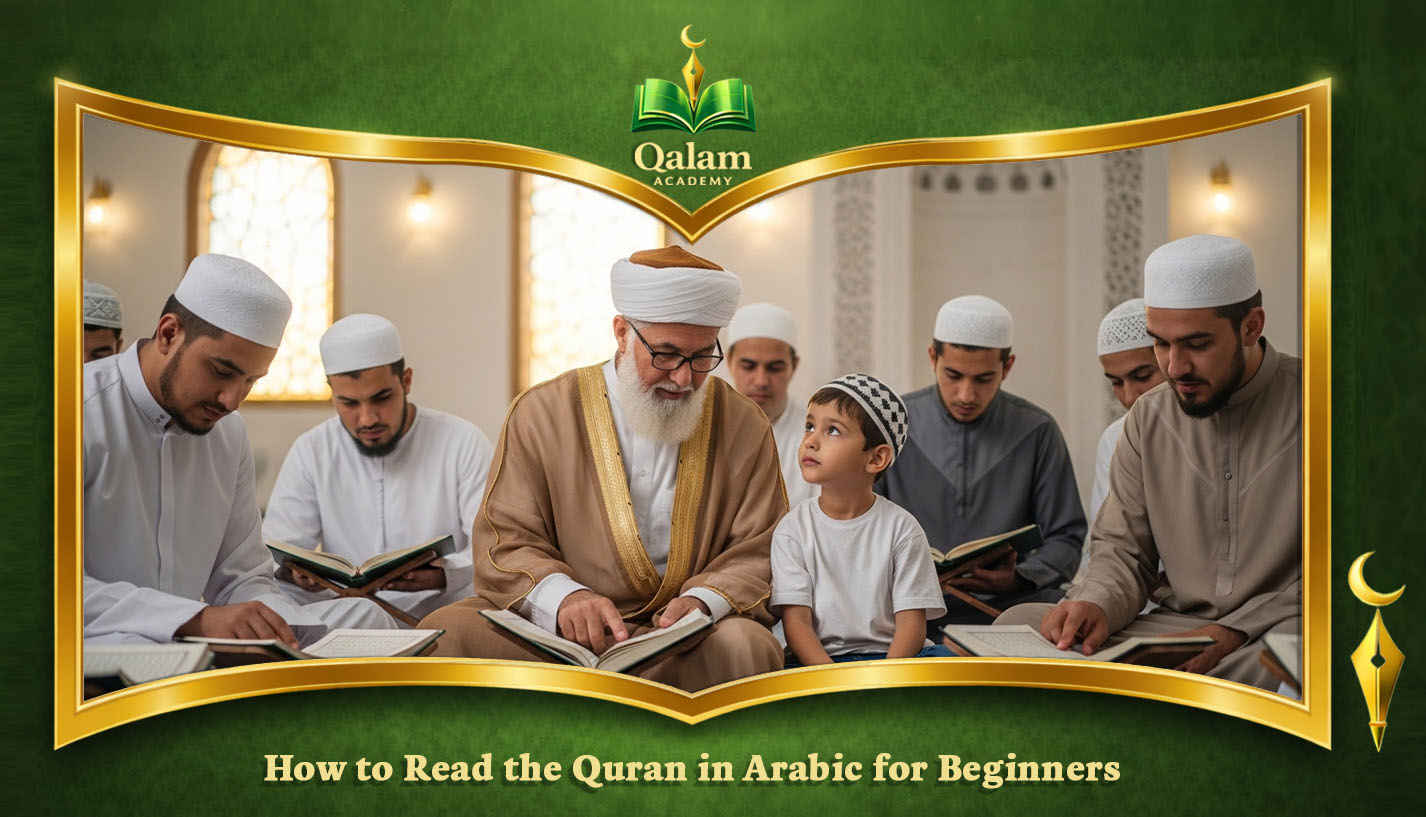
Learning to read the Quran is both a spiritual and educational journey. For beginners, following simple steps makes learning quran in arabic easier and more effective.
Step 1: Start with the Arabic Alphabet
First, every language begins with its alphabet, and Arabic is no different. Arabic has 28 letters, each changing its shape depending on its position in a word—beginning, middle, or end. Also, some letters look similar but have different dots. Beginners should write letters repeatedly, use flashcards, watch pronunciation videos, and practice every day. These steps form the foundation for learning quran in arabic.
Step 2: Understand Harakat and Marks
Next, Arabic uses vowel marks called harakat to guide pronunciation. For example, fatha (َ) sounds like “a,” kasra (ِ) sounds like “i,” and damma (ُ) sounds like “u.” Also, marks like sukun ( ْ ), shadda ( ّ ), and madd (~) are essential. Learning them early helps prevent mistakes.
Step 3: Learn Basic Tajweed Rules
Then, focus on basic tajweed rules. Tajweed ensures proper pronunciation. Beginners can start with ikhfaa (nasal sounds), idghaam (merging letters), qalqala (echo sounds), and ghunnah (emphasized noon or meem). Apply the rules gradually for better results.
Step 4: Read Short Surahs
After learning letters and tajweed basics, start reading short surahs like Al-Fatiha, Al-Ikhlas, Al-Falaq, and An-Naas. Also, listen to famous reciters and follow along to improve rhythm and pronunciation.
Step 5: Learn Common Words
Next, focus on common Quranic words like rahma, ilm, taqwa, and jannah. This helps you understand meaning and speeds up learning quran in arabic.
Step 6: Join a Structured Online Course
Then, consider enrolling in Online quran Academy qalam. A structured course guides you from letters to advanced reading, focusing on tajweed, vocabulary, and recitation. Using such courses improves learning quran in arabic efficiently.
Step 7: Build a Daily Routine
Finally, practice daily. Even 10–15 minutes each day makes a difference. Also, study with a teacher or group, be patient, and keep praying for ease and perseverance.By following these steps, beginners can confidently read the Quran fluently in Arabic.
Online Quran Academy
Online quran Academy qalam offers a structured and interactive way to master Quranic Arabic from the comfort of home. The academy provides lessons starting from the Arabic alphabet and basic letters, advancing to correct recitation, tajweed rules, and comprehension of the verses.
Students benefit from audio recordings, live sessions, and personalized guidance from experienced teachers, ensuring an effective and engaging learning process.
By following this approach, beginners and advanced learners alike can strengthen their pronunciation, understanding, and spiritual connection with the Quran. With learning quran in arabic through this academy, progress becomes consistent, practical, and rewarding.

Why You Should Read the Quran in Its Original Arabic Language
First, understanding why each step matters gives more clarity to your learning journey. The Quran was revealed in Arabic, and every word, letter, and sound carries a precise meaning. Also, reading in translation passes the message through an intermediary, which can reduce the purity of the experience. Therefore, reading in Arabic helps you experience the Quran as it was revealed.
Fully Grasping the Divine Message
Next, reading the Quran in Arabic allows you to fully understand the divine message. Each word is carefully chosen, and its pronunciation can affect meaning. Moreover, the rhythm, repeated phrases, and literary patterns become clearer, giving a deeper spiritual impact that translations cannot fully capture.
Experiencing the Beauty of Quranic Sounds
Then, the Arabic text lets you enjoy the beauty of Quranic sounds and melody. This rhythm not only pleases the ear but also helps memorization. In addition, reading in Arabic strengthens both comprehension and spiritual connection.
Enhancing Vocabulary and Understanding
Also, studying the Quran in Arabic helps you learn common words, roots, and grammar, which improves your overall learning quran in arabic experience. For example, repeated words like rahma (mercy), ilm (knowledge), or taqwa (piety) become familiar, and patterns that translations miss become easier to recognize.
Learning Proper Recitation and Tajweed
Moreover, reading in Arabic prepares you for correct recitation and tajweed. Even small pronunciation differences can change meanings, so reading the original text ensures accuracy and respect for the Quran.
Deepening Your Spiritual Connection
In addition, learning to read in Arabic makes your engagement with the Quran more personal. You are not just reading words on a page; you are experiencing a sacred text as it was revealed. Therefore, over time, this deepens your connection to the message and enhances your daily worship.
Guided Learning for Beginners
Finally, beginners can benefit from structured learning. Enrolling in Online quran Academy qalam provides step-by-step guidance from letters to advanced recitation, making learning quran in arabic easier and more effective.
The Spiritual Journey of Reading in Arabic
Ultimately, reading the Quran in its original language is not just an academic exercise—it is a spiritual journey that enriches understanding, memorization, and devotion.
How to Practice Quranic Arabic Daily
Practice Quranic Arabic daily by reading short verses, reflecting on their meanings, and listening to skilled reciters. Also, dedicate consistent time for vocabulary, tajweed, and guided lessons to steadily improve fluency and understanding.
Start Your Day with a Quranic Verse
First, begin your day with a verse. Choose a short verse that you like or are trying to memorize, and read it as part of your morning routine. Also, reflect on its meaning and consider how it can guide you throughout the day.
“Indeed, We have made the Quran easy to remember, so is there anyone who will take heed?” [Al-Qamar 54:40]
Dedicate Daily Time to Learning
Next, set aside time every day for learning quran in arabic. Even 10–15 minutes per day is enough if you are consistent. Focus on learning words, phrases, or grammar from the Quran. Small, regular efforts make a big difference over time.
“The best of you are those who learn the Quran and teach it.” [Sahih Al-Bukhari]
Read and Listen to the Quran Daily
Then, make reading and listening a part of your routine. Reading improves pronunciation and understanding, while listening helps you follow proper recitation and rhythm. Also, hearing skilled reciters makes it easier to mimic pronunciation and develop a natural flow.
“Those to whom We have given the Book recite it with its true recital.” [Al-Baqarah 2:121]
Use Quran Apps and Online Courses
In addition, utilize Quran apps and online courses. These platforms provide daily lessons, audio recordings, and translations, making regular practice easier. For example, joining Online quran Academy qalam offers guided instruction, which supports both beginners and advanced learners in learning quran in arabic.
Maintain Consistency for Best Results
Finally, consistency is key. By integrating these steps into your daily routine, you gradually build fluency and confidence in Quranic Arabic. Also, daily practice deepens your connection with the words of Allah, strengthening both comprehension and memorization.
“Indeed, in the creation of the heavens and the earth and the alternation of night and day are signs for those of understanding.” [Al-Imran 3:190]
Why Learning Arabic Through the Quran is Effective
Learning Arabic through Quranic lessons is a powerful and spiritually enriching way to master the language. It is not only about memorizing words, but also about connecting with the essence of the Quran and strengthening your connection to the message of Islam.
Quranic Lessons: A Sacred Approach to Learning
First, when you learn Arabic directly from the Quran, you are not just learning a language—you are engaging with something sacred. The Quran itself is a source of guidance, comfort, and wisdom. Also, as Allah reminds us:
“This is the Book about which there is no doubt, a guidance for those conscious of Allah.” [Al-Baqarah 2:2]
By studying Quranic Arabic, learners receive divine guidance and deepen their spiritual connection, living more closely according to Islamic principles. Moreover, learning under qualified instructors, for example from Online quran Academy qalam, enhances the experience and ensures correct pronunciation and understanding.
Quranic Arabic Enhances Spiritual Awareness
Next, Quranic Arabic is different from everyday spoken or modern standard Arabic. It is precise, expressive, and preserves the intended meaning of Allah’s message. Therefore, Quranic Arabic lessons help you connect with the depth and beauty of each verse. The Prophet ﷺ also emphasized learning the Quran in its original language:
“The best among you are those who learn the Quran and teach it.” [Sahih Al-Bukhari]
Personal Connection with the Quran
Then, studying Quranic Arabic is more than memorization—you internalize the words. As your understanding grows, your recitation becomes more fluent, and you can naturally incorporate the vocabulary and guidance of the verses into daily life.
“Allah has sent down the best statement: a consistent Book.” [Az-Zumar 39:23]
Finally, learning Arabic through the Quran combines linguistic skills with spiritual growth, making learning quran in arabic highly effective. This approach allows you to read, understand, and live the Quran’s teachings more profoundly, while also benefiting from guided learning platforms like Online quran Academy qalam.
How to Teach Children to Learn Quran in Arabic Easily
Teaching children the Quran is one of the greatest gifts. Children are naturally curious and quick learners. Therefore, the key is to make learning fun, simple, and full of love.
Start with Love, Not Pressure
First, help your child develop a love for the Quran. Avoid strictness and pressure. As the Prophet ﷺ said:
“Make things easy and do not make them difficult, and give glad tidings and do not repel people.” [Sahih Al-Bukhari]
Begin with the Basics: Arabic Letters
Next, focus on teaching Arabic letters. Use colorful books, songs, flashcards, and interactive apps. Also, repetition and visual aids help children remember better. These techniques lay the foundation for learning quran in arabic.
Make Learning Interactive and Fun
Then, keep lessons engaging by using stories, crafts, and role-playing. This makes learning the Quran enjoyable and helps children retain what they learn.
Start with Short Surahs and Their Meaning
After letters, begin with short surahs like Al-Fatiha, Al-Ikhlas, Al-Falaq, and An-Naas. Also, explain their meanings in a child-friendly way.
“Indeed, this Quran guides to that which is most upright.” [Al-Isra 17:9]
Be a Role Model
Moreover, children learn by observation. Therefore, demonstrate good recitation, reflection, and Islamic manners. Your example encourages them to follow.
Use Technology Wisely
In addition, use digital tools carefully. Limit screen time, choose appropriate content, and encourage learning beyond the screen. Online courses, like Online quran Academy qalam, provide structured lessons that support young learners in learning quran in arabic effectively.
Patience and Du’a
Finally, practice patience and celebrate small achievements. Teach children to pray for knowledge and understanding.
“My Lord, increase me in knowledge.” [Taha 20:114]
By following these steps, children develop both love and skill for Quranic Arabic, making their journey enjoyable, effective, and spiritually rewarding.
Common Challenges in Learning Quranic Arabic
Learning Quranic Arabic comes with challenges, but with the right approach, you can overcome them effectively. Understanding common obstacles helps you focus on what matters most and avoid unnecessary frustration.
Mixing Recitation Goals with Understanding
First, many learners confuse recitation with comprehension. It is important to integrate tajweed practice with studying the meanings of verses. Therefore, treat both as complementary activities. Practicing pronunciation while reflecting on the message enhances retention and spiritual connection.
Overloading Yourself with Grammar Rules
Next, avoid studying grammar tables excessively. Focus on basic cases and the most common patterns initially. Also, try to understand rules through the context of actual verses rather than memorizing them abstractly. Once you are comfortable with reading and comprehension, you can gradually add more details.
Ignoring Roots and Patterns
Then, don’t neglect roots and word patterns. Roots are your key to understanding new vocabulary. For example, when you encounter a new word, ask yourself: “What root do I recognize here?” This method helps you decode meanings faster and strengthens your learning quran in arabic skills efficiently.
Practical Tips to Overcome These Challenges
In addition, combine reading, listening, and guided instruction to reinforce your knowledge. For example, use online lessons or courses that focus on applied learning rather than abstract memorization. Also, daily practice and reflection make these obstacles much easier to manage.
Stay Consistent and Patient
Finally, patience and consistency are essential. Every learner faces hurdles, but regular practice, combined with understanding roots and integrating comprehension with recitation, makes Quranic Arabic more accessible and enjoyable.
By keeping these tips in mind, you can overcome common difficulties and progress steadily in learning quran in arabic, ensuring both linguistic mastery and deeper spiritual connection.
The Best Way to Learn Quranic Arabic

Learning Quranic Arabic effectively combines self-study, consistent practice, and guidance from experienced teachers. By following a structured approach, you can improve both your reading skills and understanding of the Quran.
Use Online Quran Lessons and Virtual Classes
First, take advantage of online Quran lessons or virtual classes. These platforms provide organized learning from the comfort of your home. For example, Online quran Academy qalam offers step-by-step guidance, helping learners progress from letters to full recitation. Such structured lessons make learning quran in arabic easier and more efficient.
Practice Daily Reading
Next, practice reading the Quran every day. Daily reading helps improve fluency, strengthens memory, and refines pronunciation. Also, consistent reading allows you to recognize common words and phrases, enhancing your overall comprehension.
Listen to Tajweed and Arabic Recitations
Then, listen to skilled reciters and focus on tajweed rules. Listening helps you develop proper pronunciation, intonation, and rhythm. Moreover, it trains your ear to the flow of Quranic Arabic, making your own recitation more accurate and melodious.
Join Study Groups
In addition, join study groups or Quran circles. Discussing meanings, asking questions, and clarifying doubts with peers or teachers increases understanding and motivation. Also, group study encourages accountability and provides a supportive learning environment.
Combine Methods for Best Results
Finally, combine these methods for the best outcome. Using online lessons, practicing daily, listening to recitations, and participating in study groups ensures a well-rounded approach. With patience and consistency, learning quran in arabic becomes manageable, enjoyable, and spiritually rewarding.
By following these steps, beginners and advanced learners alike can master Quranic Arabic, improve their recitation, and deepen their connection to the Quran.
Frequently Asked Questions About Learning Quran in Arabic
Get clear answers to common questions about learning quran in arabic, including best methods, online classes, and tips for memorization and understanding. Improve your skills efficiently with guidance and practical advice
1. What is the best way to start learning the Quran in Arabic?
It is recommended to begin with the Arabic alphabet and letters, then move on to vowels and diacritical marks, and finally practice short surahs while focusing on tajweed rules.
2. Can the Quran be learned effectively online?
Yes, platforms like Online quran Academy qalam offer interactive lessons, audio recordings, and personalized guidance, making learning quran in arabic easier and more structured.
3. How long does it take for beginners to learn Quranic Arabic?
The duration varies depending on effort and consistency, but practicing 10–15 minutes daily can lead to significant progress over time.
4. Do children need a teacher to learn Quranic Arabic?
Not necessarily, but direct supervision from a teacher or online lessons improves pronunciation, comprehension, and encourages a consistent daily routine.
5. How can one improve both memorization and understanding?
Combining daily reading, listening to proper recitations, and studying the meanings helps enhance both memorization and comprehension, making learning quran in arabic more effective and rewarding.
In conclusion, learning quran in arabic opens the door to a deeper understanding, proper recitation, and a stronger spiritual connection.
By combining daily practice, listening to skilled reciters, and following structured guidance, learners can steadily improve their fluency and comprehension.
Platforms like Online quran Academy qalam provide the support, interactive lessons, and feedback needed to make this journey effective and enjoyable.
Ultimately, consistency, patience, and dedication transform the challenge of learning Quranic Arabic into a rewarding and fulfilling experience, allowing every student to connect meaningfully with the Quran’s divine message.
read more: