
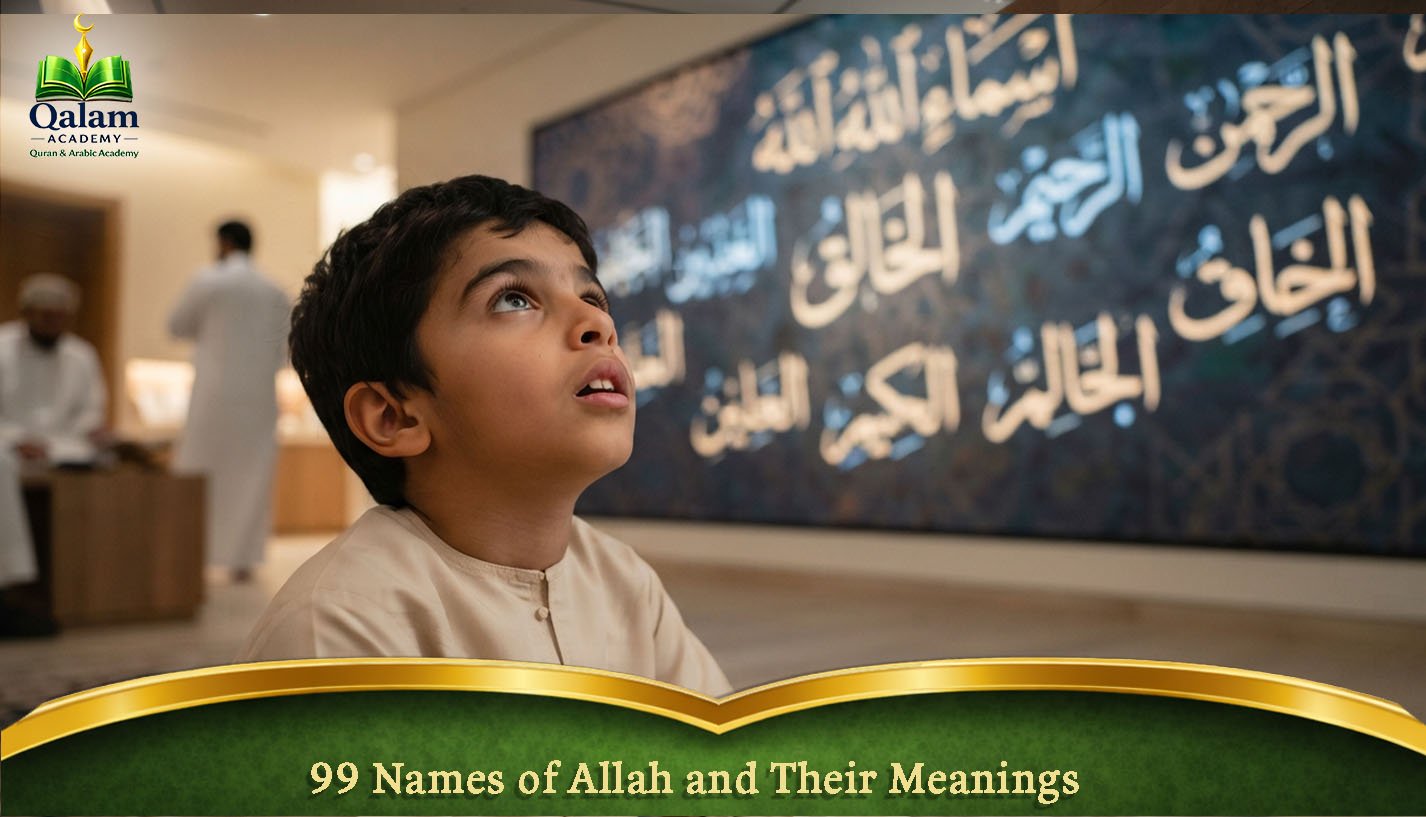
The 99 names of Allah and their meanings are among the most important topics in Islamic knowledge because they help Muslims understand Allah’s greatness, mercy, wisdom, and perfect attributes. In fact, learning these Names is not simply about memorizing a list of words; instead, it is a meaningful journey toward knowing Allah better. Furthermore, this knowledge can strengthen faith, improve worship, and develop a closer relationship with the Creator.
Throughout Islamic history, Muslim scholars have emphasized the importance of understanding the Names of Allah because every Name carries a profound meaning. Moreover, each Name teaches believers how to recognize Allah’s attributes and worship Him correctly. As a result, when Muslims study these Names carefully, they become more aware of Allah’s mercy, power, forgiveness, wisdom, and guidance in their daily lives.
In addition, Allah has introduced Himself to His servants through His Beautiful Names, known as Al Asma Ul Husna (The Most Beautiful Names). These Names describe His perfect attributes and, therefore, help believers understand that Allah is unlike anything in creation. Consequently, studying the Beautiful Names can increase a Muslim’s love, hope, trust, and reliance upon Allah.
For Muslims who want to learn Quran, understand Islamic concepts, and build a stronger spiritual connection, structured Islamic education can make a significant difference. For this reason, many students choose reliable online learning programs such as Qalam Online Quran Academy, where learners can study Quran and Islamic teachings with qualified instructors from the comfort of their homes.
What Are the 99 Names of Allah and Their Meanings?
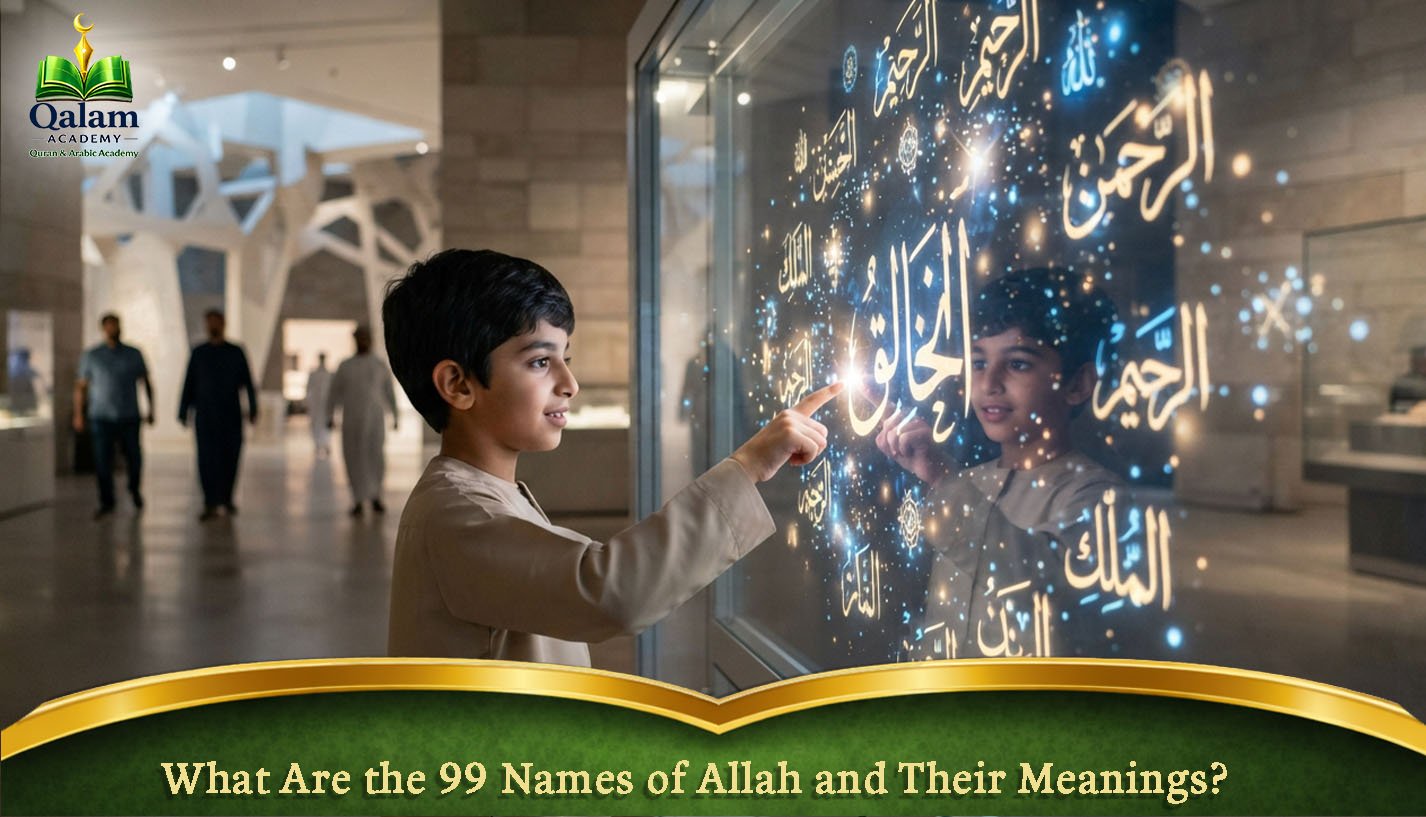
The 99 names of Allah and their meanings refer to the Beautiful Names that describe Allah’s perfect attributes as established in the Quran and authentic Sunnah. In particular, these Names describe qualities such as mercy, knowledge, forgiveness, power, wisdom, and greatness. Therefore, learning their meanings allows Muslims to develop a deeper understanding of their Creator.
Furthermore, the Quran encourages believers to know Allah and call upon Him through His Beautiful Names:
“And to Allah belong the Most Beautiful Names, so invoke Him by them.”
(Quran 7:180)
As this verse shows, learning Allah’s Names is closely connected with worship and supplication. Moreover, the Names of Allah are not simply titles; instead, they reveal His perfection and guide Muslims toward a better understanding of their faith.
For example, knowing that Allah is Ar-Rahman (The Most Merciful) reminds believers that His mercy encompasses His creation. Similarly, understanding that Allah is Al-Ghafur (The Forgiving) encourages people to repent and, therefore, prevents them from losing hope in His forgiveness. Likewise, knowing that Allah is Al-Hakim (The All-Wise) helps believers trust Allah’s decisions, even when they face situations they do not immediately understand.
Consequently, studying these Names transforms Islamic knowledge into practical faith. In other words, Muslims can move beyond memorization and begin applying the meanings of Allah’s Names to their worship, decisions, behavior, and daily lives.
Start Learning with Qalam Online Quran Academy Today
Take the first step toward a stronger connection with the Quran and Islamic knowledge. At Qalam Online Quran Academy, our qualified teachers provide personalized one-on-one classes for children, adults, and beginners.
Enjoy flexible schedules, interactive lessons, and a supportive learning environment designed to help you achieve your goals. Begin your Quran learning journey with confidence.

Why Learning 99 Names of Allah and Their Meanings Is Important?
Learning the 99 names of Allah and their meanings provides numerous spiritual benefits. First of all, it increases a person’s awareness of Allah’s greatness and perfect attributes. Furthermore, when believers understand who Allah is, their worship becomes more meaningful because they have a deeper understanding of the One they worship.
Additionally, these Names help Muslims develop a stronger spiritual connection with Allah. For instance, someone experiencing hardship may remember that Allah is Al-Fattah (The Opener) and, therefore, remain hopeful that Allah can provide solutions even when circumstances appear difficult.
Moreover, knowing Allah’s Names can improve the quality of dua. Instead of making only general requests, Muslims can call upon Allah through Names that are appropriate to their needs. As a result, their supplication can become more thoughtful, sincere, and meaningful.
For example, a person seeking forgiveness can call upon Allah as Al-Ghafur. Similarly, someone asking for mercy can remember Ar-Rahman. In the same way, someone seeking guidance can call upon Allah as Al-Hadi (The Guide).
Therefore, understanding the meanings behind Allah’s Names helps believers approach dua with greater awareness. At the same time, it reminds Muslims that Allah hears their supplications and knows what is best for them.
The Difference Between Knowing the Names and Understanding Their Meanings
Many Muslims memorize the Names of Allah, and certainly, memorization is a valuable act. However, knowing the Names by heart is only one part of learning them. Instead, true understanding requires believers to learn the meanings of the Names and reflect on how those meanings should influence their lives.
In particular, learning the 99 names of Allah and their meanings includes several important stages.
1. Memorizing the Names
First, memorization allows Muslims to preserve the Beautiful Names and repeat them during worship and daily remembrance. In addition, regular repetition can help learners become more familiar with the Names over time.
2. Understanding Their Meanings
Next, a believer should learn what each Name means and what attribute it represents. Without this understanding, memorization alone may not provide the full educational and spiritual benefit. Therefore, learners should study the meaning of each Name before moving too quickly to the next one.
3. Worshiping Allah According to These Names
Furthermore, the Names of Allah should influence a Muslim’s behavior and relationship with Allah. For example, knowing that Allah is As-Sami’ (The All-Hearing) reminds believers that Allah hears everything they say. As a result, Muslims become more careful with their words and strive to speak in a respectful and beneficial manner.
4. Calling Upon Allah Through His Names
Finally, using Allah’s Names during dua can strengthen worship and deepen a believer’s connection with Allah. Moreover, the Quran teaches Muslims to invoke Allah through His Beautiful Names. Therefore, learning the meanings of these Names can help believers make more meaningful and sincere supplications.
Because of this, many learners prefer guided Islamic education in which qualified teachers explain both meanings and practical applications. For example, programs such as Qalam Online Quran Academy can help students study Quranic and Islamic concepts through organized lessons rather than relying only on memorization.
Al Asma Ul Husna: The Most Beautiful Names of Allah
Al Asma Ul Husna means “The Most Beautiful Names.” In Islamic understanding, these Names represent Allah’s perfect attributes because His qualities are complete and free from every weakness, limitation, or imperfection.
Unlike human qualities, Allah’s attributes are eternal and perfect. For example, people may show mercy to others; however, Allah’s mercy is perfect and beyond comparison. Similarly, humans possess limited knowledge, whereas Allah’s knowledge encompasses everything that is seen and unseen.
Furthermore, the Quran describes Allah’s greatness through His Beautiful Names:
“He is Allah, the Creator, the Inventor, the Fashioner; to Him belong the Most Beautiful Names.”
(Quran 59:24)
Therefore, every Name of Allah teaches believers something important about their Creator. Moreover, reflecting on these Names can help Muslims increase their faith and develop a greater appreciation of Allah’s perfection.
How the 99 Names of Allah and Their Meanings Strengthen Faith?
The study of the 99 names of Allah and their meanings can have a powerful effect on a Muslim’s faith. When believers understand Allah’s Names, they can develop stronger trust, patience, hope, and reliance upon Him during life’s challenges.
For example, the Name Al-Wakil (The Trustee) teaches believers to depend upon Allah while still making responsible efforts. Similarly, the Name As-Sabur (The Patient) reminds Muslims that Allah is not limited by human impatience or haste. Therefore, believers can learn to remain patient while trusting Allah’s perfect wisdom and timing.
Furthermore, learning Allah’s Names can correct misunderstandings about His attributes. For instance, a person who knows Allah as Al-Adl (The Just) understands that Allah never treats His creation unfairly. As a result, believers can develop greater confidence in Allah’s justice, even when they do not understand every event in their lives.
Consequently, learning the Beautiful Names can help believers develop:
- Greater trust in Allah.
- Furthermore, more patience during difficulties.
- In addition, stronger motivation for worship.
- Moreover, a better understanding of Islamic beliefs.
- Finally, a deeper connection with Quranic teachings.
The Quranic Foundation of the Beautiful Names of Allah
The Quran contains numerous references to Allah’s Names and Attributes. Therefore, Muslims should study the Quran carefully when learning about Allah’s Beautiful Names. Moreover, these verses encourage believers to reflect on Allah’s greatness, mercy, wisdom, and perfect power.
Among the important Quranic teachings about Allah’s Names are the following:
- First, Allah’s mercy is greater than human imagination.
- Furthermore, Allah’s knowledge encompasses everything.
- In addition, Allah’s power has no limits.
- Finally, Allah guides those who sincerely seek His guidance.
As a result, studying the 99 names of Allah and their meanings is closely connected with studying the Quran itself. In fact, the Quran provides believers with many opportunities to reflect on Allah’s attributes and understand how these attributes affect their faith.
For this reason, many students who want to explore Quranic meanings choose structured educational platforms such as Qalam Online Quran Academy. In addition, learning with experienced teachers can make difficult Islamic concepts easier to understand and apply.
The Role of Quran Learning in Understanding Allah’s Names
The Quran is a primary source for learning about Allah’s Names and Attributes. Throughout the Quran, believers encounter teachings about Allah’s mercy, wisdom, knowledge, power, commands, and forgiveness. Therefore, studying the Quran alongside the Beautiful Names provides a more complete approach to Islamic education.
Instead of memorizing information separately, students can learn how Quranic teachings connect with their understanding of Allah. Furthermore, this approach helps learners recognize how faith should influence their daily actions and decisions.
For example, a proper Quran learning journey can help students:
- First, improve their Quran reading skills.
- Furthermore, understand verses related to Allah’s attributes.
- In addition, learn proper Quran pronunciation.
- Finally, apply Islamic teachings in daily life.
Moreover, modern technology has made online Quran education more accessible to children and adults around the world. As a result, learners can study from home while following structured lessons that match their educational level.
For this reason, institutions such as Qalam Online Quran Academy provide organized online programs that support students at different stages of Quran and Islamic learning.
99 Names of Allah and Their Meanings: Complete List of Al Asma Ul Husna
The 99 names of Allah and their meanings provide Muslims with an important framework for understanding Allah’s perfect attributes and strengthening their relationship with Him. In particular, each Name reflects a perfect quality that belongs to Allah. Therefore, studying these Names can help believers connect Islamic knowledge with worship, reflection, and everyday life.
Moreover, the Names of Allah are found throughout the Quran and Sunnah. They describe Allah’s mercy, greatness, forgiveness, wisdom, power, knowledge, and perfect control over creation. As a result, these Names teach Muslims how to approach Allah with worship, gratitude, hope, trust, and supplication.
Furthermore, learning the Names should not stop at memorization. Instead, believers should reflect on their meanings and consider how each Name can influence their faith and character. For example, remembering Allah’s mercy can encourage hope, while remembering His justice can encourage honesty and fairness.
Ultimately, understanding the 99 names of Allah and their meanings allows Muslims to turn Islamic knowledge into practical worship. Therefore, learning these Names gradually, understanding their meanings, reviewing them regularly, and applying their lessons can help believers build a stronger and more meaningful relationship with Allah.
99 Names of Allah and Their Meanings: The First Group of Beautiful Names
These Names introduce believers to Allah’s mercy, greatness, and perfect attributes. They provide the foundation for understanding Al Asma Ul Husna and help Muslims develop a deeper connection with Allah through reflection and worship.
Ar-Rahman and Ar-Raheem: The Names of Allah That Show His Mercy
The first Names in the list of 99 names of Allah and their meanings are connected to Allah’s mercy.
- 1. Ar-Rahman (ٱلرَّحْمَٰنُ) – The Most Merciful
- Ar-Rahman describes Allah’s unlimited mercy that reaches all creation. Every blessing people experience comes from Allah’s mercy, including life, health, guidance, and provision.
- 2. Ar-Raheem (ٱلرَّحِيمُ) – The Especially Merciful
- Ar-Raheem refers to Allah’s special mercy toward His believing servants. It reminds Muslims that Allah’s compassion is always available for those who sincerely turn to Him.
Al-Malik and Al-Quddus: Understanding Allah’s Perfect Authority
- 3. Al-Malik (ٱلْمَلِكُ) – The King
- Allah is the true Owner and Ruler of everything in existence. Human authority is temporary, while Allah’s kingdom is eternal.
- 4. Al-Quddus (ٱلْقُدُّوسُ) – The Absolutely Pure
- This Name teaches that Allah is free from every imperfection and weakness. His perfection is complete and unmatched.
- As-Salam and Al-Mu’min: Names That Bring Peace and Security
- 5. As-Salam (ٱلسَّلَامُ) – The Source of Peace
- Allah is the source of true peace and safety. Therefore, believers seek peace through obedience and closeness to Him.
- 6. Al-Mu’min (ٱلْمُؤْمِنُ) – The Giver of Security and Faith
- Allah provides security, protection, and faith to His servants. This Name encourages Muslims to trust Allah during uncertain situations.
- Al-Muhaymin and Al-Aziz: Allah’s Protection and Power
- 7. Al-Muhaymin (ٱلْمُهَيْمِنُ) – The Guardian
- Allah watches over everything in creation. Nothing happens outside His knowledge and control.
- 8. Al-Aziz (ٱلْعَزِيزُ) – The Almighty
- Allah possesses complete strength and honor. No power can overcome Him.
These Names demonstrate that the 99 names of Allah and their meanings are not only information to memorize; instead, they are lessons that shape a believer’s understanding of Allah.
99 Names of Allah and Their Meanings: Names Related to Creation and Forgiveness
These Names highlight Allah’s power to create, His ability to restore, and His endless forgiveness. They remind believers of Allah’s greatness, mercy, and the importance of turning to Him with sincere repentance.
Al-Khaliq, Al-Bari, and Al-Musawwir: Allah the Creator
Allah’s creative power is described through several Names:
- 9. Al-Jabbar (ٱلْجَبَّارُ) – The Restorer and Compeller
- Allah repairs what is broken and has complete authority over creation.
- 10. Al-Mutakabbir (ٱلْمُتَكَبِّرُ) – The Supreme
- Allah alone deserves absolute greatness and glory.
- 11. Al-Khaliq (ٱلْخَالِقُ) – The Creator
- Allah created everything from nothing and designed creation with perfect wisdom.
- 12. Al-Bari (ٱلْبَارِئُ) – The Originator
- This Name highlights Allah’s ability to bring creation into existence with perfect balance.
- 13. Al-Musawwir (ٱلْمُصَوِّرُ) – The Fashioner
- Allah gives every creation its unique form and characteristics.
- Names Related to Forgiveness and Mercy
- 14. Al-Ghaffar (ٱلْغَفَّارُ) – The Constant Forgiver
- Allah repeatedly forgives those who sincerely repent.
- 15. Al-Qahhar (ٱلْقَهَّارُ) – The All-Dominating
- Allah has complete power over everything.
- 16. Al-Wahhab (ٱلْوَهَّابُ) – The Bestower
- Allah gives countless blessings without needing anything in return.
- 17. Ar-Razzaq (ٱلرَّزَّاقُ) – The Provider
- Every provision comes from Allah. This includes material blessings as well as knowledge, guidance, and opportunities.
- 18. Al-Fattah (ٱلْفَتَّاحُ) – The Opener
- Allah opens doors of mercy, success, and solutions for His servants.
Because of these meanings, many Muslims use the Names of Allah when making dua. For example, someone seeking forgiveness remembers Allah as Al-Ghaffar, while someone seeking provision calls upon Allah as Ar-Razzaq.
99 Names of Allah and Their Meanings: Names Related to Knowledge and Wisdom
These Names reflect Allah’s infinite knowledge, perfect wisdom, and complete understanding of all things. They remind believers to trust Allah’s decisions, seek His guidance, and recognize that His wisdom is beyond human limitation.
Al-Alim and Al-Hakim: Allah’s Complete Knowledge
- 19. Al-Alim (ٱلْعَلِيمُ) – The All-Knowing
- Allah knows everything, including the past, present, and future. His knowledge has no limits.
- 20. Al-Qabid (ٱلْقَابِضُ) – The Withholder
- Allah controls what is restricted and what is expanded according to His wisdom.
- 21. Al-Basit (ٱلْبَاسِطُ) – The Expander
- Allah provides ease, blessings, and opportunities whenever He wills.
- 22. Al-Khafid (ٱلْخَافِضُ) – The Reducer
- Allah lowers those who deserve humility and teaches people important lessons.
- 23. Ar-Rafi (ٱلرَّافِعُ) – The Exalter
- Allah raises the status of those whom He chooses.
- 24. Al-Mu’izz (ٱلْمُعِزُّ) – The Giver of Honor
- True honor comes only from Allah.
- 25. Al-Mudhill (ٱلْمُذِلُّ) – The One Who Allows Humiliation
- Allah has complete control over honor and hardship.
- 26. As-Sami’ (ٱلسَّمِيعُ) – The All-Hearing
- Allah hears every sound, every prayer, and every hidden thought.
- 27. Al-Basir (ٱلْبَصِيرُ) – The All-Seeing
- Nothing is hidden from Allah.
- 28. Al-Hakam (ٱلْحَكَمُ) – The Judge
- Allah’s judgment is always fair and perfect.
- 29. Al-Adl (ٱلْعَدْلُ) – The Absolutely Just
- Allah never wrongs anyone.
Learning these Names helps Muslims understand that every event happens with Allah’s knowledge and wisdom.
How to Memorize 99 Names of Allah and Their Meanings Easily?
Memorizing the 99 names of Allah and their meanings requires consistency and patience. Instead of trying to memorize all Names at once, learners can follow a gradual method.
Divide the Names Into Small Groups
A practical approach is learning five to ten Names every week. This method allows students to focus on pronunciation, meaning, and application.
Connect Each Name With a Daily Situation
For example:
- During difficulty, remember Al-Fattah, the Opener.
- When seeking forgiveness, remember Al-Ghafur, the Forgiving.
- When needing guidance, remember Al-Hadi, the Guide.
Review Through Repetition
Regular review helps transfer knowledge into long-term memory.
Learn With Qualified Teachers
Although self-study is valuable, guidance from experienced teachers can improve understanding and pronunciation. Therefore, many students choose programs such as Qalam Online Quran Academy to study Quran and Islamic knowledge through structured lessons.
The Benefits of Studying 99 Names of Allah and Their Meanings Daily

Studying Allah’s Names regularly creates many positive changes in a Muslim’s spiritual life.
Increasing Love for Allah
When people understand Allah’s mercy and generosity, their love for Him increases.
Improving Worship
Understanding Allah’s Names makes prayer, dua, and remembrance more meaningful.
Developing Trust in Allah
Knowing Allah as Al-Wakil helps believers rely on Him during challenges.
Building Better Character
The Names of Allah encourage believers to develop qualities such as patience, forgiveness, and kindness.
For this reason, learning the 99 names of Allah and their meanings is not limited to religious information; rather, it becomes a practical guide for everyday life.
How Qalam Online Quran Academy Helps Students Learn Islamic Knowledge?
Learning Quran and Islamic teachings requires a clear educational method. Qalam Online Quran Academy provides students with organized lessons designed to help them understand Quran reading, Tajweed, and Islamic concepts.
Furthermore, studying with qualified teachers allows learners to ask questions and receive explanations based on their level.
Through structured online learning, students can:
- Improve Quran recitation.
- Understand Islamic meanings.
- Learn gradually according to their ability.
- Study from home with flexible schedules.
As a result, Qalam Online Quran Academy supports learners who want to build a stronger connection with the Quran and Islamic knowledge.
99 Names of Allah and Their Meanings: Names From 30 to 60
Continuing the journey of understanding the 99 names of Allah and their meanings, the following Names reveal more about Allah’s mercy, wisdom, protection, and control over all creation. Learning these Names allows Muslims to recognize the perfection of Allah’s attributes and apply their meanings in worship and daily life.
99 Names of Allah and Their Meanings: Names Related to Gentleness, Forgiveness, and Greatness
These Names highlight Allah’s endless kindness, mercy, forgiveness, and supreme greatness. They help believers recognize Allah’s compassion, seek His forgiveness, and strengthen their respect and love for His perfect attributes.
Al-Latif, Al-Khabir, and Al-Halim: Understanding Allah’s Perfect Care
- 30. Al-Latif (ٱللَّطِيفُ) – The Most Gentle
- Allah is gentle with His servants and provides blessings in ways they may not always recognize. Sometimes Allah protects people from difficulties without them even knowing.
- 31. Al-Khabir (ٱلْخَبِيرُ) – The All-Aware
- Allah knows the reality of everything. He knows people’s intentions, struggles, and hidden feelings.
- 32. Al-Halim (ٱلْحَلِيمُ) – The Most Forbearing
- Allah does not immediately punish people for their mistakes. Instead, He gives opportunities for repentance and improvement.
- 33. Al-Azim (ٱلْعَظِيمُ) – The Magnificent
- Allah possesses absolute greatness. Everything in creation is small compared to His عظَمة and perfection.
- 34. Al-Ghafur (ٱلْغَفُورُ) – The Exceedingly Forgiving
- Allah forgives sins when His servants sincerely repent and return to Him.
- 35. Ash-Shakur (ٱلشَّكُورُ) – The Appreciative
- Allah rewards even small acts of goodness with great rewards.
- 36. Al-Ali (ٱلْعَلِيُّ) – The Most High
- Allah is above all creation in His greatness and authority.
- 37. Al-Kabir (ٱلْكَبِيرُ) – The Greatest
- Allah’s greatness has no limit.
Names That Show Allah’s Protection and Watchfulness
- 38. Al-Hafiz (ٱلْحَفِيظُ) – The Preserver
- Allah protects His creation and preserves everything according to His wisdom.
- 39. Al-Muqit (ٱلْمُقِيتُ) – The Sustainer
- Allah provides nourishment and maintains all creation.
- 40. Al-Hasib (ٱلْحَسِيبُ) – The Reckoner
- Allah is sufficient for His servants and will judge everyone with perfect justice.
- 41. Al-Jalil (ٱلْجَلِيلُ) – The Majestic
- Allah possesses unmatched greatness and honor.
- 42. Al-Karim (ٱلْكَرِيمُ) – The Most Generous
- Allah gives countless blessings and favors to His servants.
- 43. Ar-Raqib (ٱلرَّقِيبُ) – The Watchful
- Allah is always aware of everything people do.
- 44. Al-Mujib (ٱلْمُجِيبُ) – The One Who Responds
- Allah responds to the prayers and requests of His servants according to His wisdom.
- 45. Al-Wasi (ٱلْوَاسِعُ) – The All-Encompassing
- Allah’s knowledge, mercy, and generosity encompass everything.
- 46. Al-Hakim (ٱلْحَكِيمُ) – The All-Wise
Allah’s decisions are always based on perfect wisdom.
99 Names of Allah and Their Meanings: Names Related to Love, Truth, and Strength
These Names reflect Allah’s perfect love, absolute truth, and unlimited power. They remind believers of Allah’s support, protection, and strength while guiding them to develop sincerity, trust, and strong faith.
Al-Wadud and Al-Majid: Allah’s Love and Glory
- 47. Al-Wadud (ٱلْوَدُودُ) – The Most Loving
- Allah loves His righteous servants and grants them mercy and blessings.
- 48. Al-Majid (ٱلْمَجِيدُ) – The Most Glorious
- Allah possesses complete honor, greatness, and glory.
- 49. Al-Ba’ith (ٱلْبَاعِثُ) – The Resurrector
- Allah will bring all people back to life on the Day of Judgment.
- 50. Ash-Shahid (ٱلشَّهِيدُ) – The Witness
- Allah witnesses everything and nothing escapes His knowledge.
- 51. Al-Haqq (ٱلْحَقُّ) – The Truth
- Allah is the ultimate truth, and His existence and promises are completely real.
- 52. Al-Wakil (ٱلْوَكِيلُ) – The Trustee
- Allah is the best One to rely upon. Believers place their trust in Him while taking responsible actions.
- 53. Al-Qawiyy (ٱلْقَوِيُّ) – The Most Strong
- Allah has unlimited strength and power.
- 54. Al-Matin (ٱلْمَتِينُ) – The Firm
- Allah’s power and authority are perfect and unchanging.
- 55. Al-Waliyy (ٱلْوَلِيُّ) – The Protecting Friend
- Allah supports and protects His believing servants.
- 56. Al-Hamid (ٱلْحَمِيدُ) – The Praiseworthy
- Allah deserves all praise because of His perfect attributes.
- 57. Al-Muhsi (ٱلْمُحْصِي) – The Enumerator
- Allah knows and counts everything, no matter how small.
- 58. Al-Mubdi (ٱلْمُبْدِئُ) – The Originator
- Allah begins creation without any previous example.
- 59. Al-Muid (ٱلْمُعِيدُ) – The Restorer
- Allah has the power to restore creation after death.
- 60. Al-Muhyi (ٱلْمُحْيِي) – The Giver of Life
- Allah gives life to all living beings.
Understanding these Names demonstrates why the 99 names of Allah and their meanings are essential for every Muslim who wants to strengthen faith and develop a deeper relationship with Allah.
99 Names of Allah and Their Meanings: Names From 61 to 80
The next group of Names highlights Allah’s control over life, existence, guidance, forgiveness, and mercy. Therefore, reflecting on these Names helps believers recognize Allah’s complete authority.
Names Related to Life, Power, and Eternal Existence
- 61. Al-Mumit (ٱلْمُمِيتُ) – The Giver of Death
- Allah controls life and death. Every creature returns to Him at the appointed time.
- 62. Al-Hayy (ٱلْحَيُّ) – The Ever-Living
- Allah’s life is perfect and eternal. Unlike creation, Allah does not experience weakness or death.
- 63. Al-Qayyum (ٱلْقَيُّومُ) – The Self-Sustaining
- Allah maintains everything in existence and does not depend on anyone.
- 64. Al-Wajid (ٱلْوَاجِدُ) – The One Who Lacks Nothing
- Allah is completely self-sufficient and possesses everything.
- 65. Al-Majid (ٱلْمَاجِدُ) – The Noble
- Allah is full of honor, generosity, and perfection.
- 66. Al-Wahid (ٱلْوَاحِدُ) – The One
- Allah is unique and has no partner.
- 67. Al-Ahad (ٱلْأَحَدُ) – The Only One
- Allah is absolutely one and incomparable.
- 68. As-Samad (ٱلصَّمَدُ) – The One Upon Whom All Depend
- All creation depends on Allah, while Allah depends on no one.
- 69. Al-Qadir (ٱلْقَادِرُ) – The All-Able
- Allah can do everything according to His perfect wisdom.
- 70. Al-Muqtadir (ٱلْمُقْتَدِرُ) – The Most Powerful
- Allah’s power controls all matters.
Names Related to Allah’s Perfect Planning
- 71. Al-Muqaddim (ٱلْمُقَدِّمُ) – The One Who Advances
- Allah brings forward whatever He wills according to His wisdom.
- 72. Al-Mu’akhkhir (ٱلْمُؤَخِّرُ) – The One Who Delays
- Allah delays matters when it is better for His servants.
- 73. Al-Awwal (ٱلْأَوَّلُ) – The First
- Allah existed before everything.
- 74. Al-Akhir (ٱلْآخِرُ) – The Last
- Allah remains after everything ends.
- 75. Az-Zahir (ٱلظَّاهِرُ) – The Manifest
- Allah’s signs are visible throughout creation.
- 76. Al-Batin (ٱلْبَاطِنُ) – The Hidden
- Allah knows what is hidden and unseen.
- 77. Al-Wali (ٱلْوَالِي) – The Governor
- Allah controls and manages all affairs.
- 78. Al-Muta’ali (ٱلْمُتَعَالِي) – The Most Exalted
- Allah is above every imperfection.
- 79. Al-Barr (ٱلْبَرُّ) – The Source of Goodness
- Allah continuously provides kindness and blessings.
- 80. At-Tawwab (ٱلتَّوَّابُ) – The Accepter of Repentance
- Allah accepts sincere repentance from His servants.
The Importance of Applying 99 Names of Allah and Their Meanings in Daily Life
Learning the 99 names of Allah and their meanings is not limited to memorizing a list of Names. Instead, the true purpose is to understand their meanings and apply their lessons in everyday life. Therefore, Muslims should allow the Beautiful Names of Allah to influence their behavior, decisions, worship, and relationship with their Creator.
For example, when a believer understands that Allah is Ar-Razzaq (The Provider), they develop stronger trust in Allah’s wisdom and provision. As a result, they become less overwhelmed by worries about the future and rely on Allah with greater confidence.
Similarly, learning that Allah is Al-Adl (The Most Just) encourages Muslims to practice honesty, fairness, and kindness because they know that Allah loves justice and rewards those who act with integrity.
Moreover, remembering that Allah is Ar-Raqib (The Watchful) helps believers become more aware of their actions, words, and intentions. Consequently, they strive to improve their character because they understand that Allah knows everything they do.
For this reason, studying the 99 names of Allah and their meanings with qualified teachers can provide a deeper understanding of Islamic knowledge. Through structured programs such as Qalam Online Quran Academy, students can learn Quran recitation, memorization, and the meanings behind important Islamic teachings in an organized way.
99 Names of Allah and Their Meanings: Names From 81 to 99
The final section of the 99 names of Allah and their meanings highlights Names that reflect Allah’s forgiveness, justice, generosity, guidance, and everlasting existence. Furthermore, these Names complete the understanding of Al Asma Ul Husna and help believers recognize the perfect relationship between Allah and His creation.
By reflecting on these Names, Muslims can strengthen their faith and develop better manners. In addition, understanding Allah’s Names allows believers to use them correctly during dua, remembrance, and daily worship.
99 Names of Allah and Their Meanings: Names Related to Justice and Forgiveness
These Names highlight Allah’s perfect justice, unlimited forgiveness, and great mercy. They help believers understand that Allah is fair, compassionate, and always accepts sincere repentance.
Al-Muntaqim, Al-Afuw, and Ar-Rauf: Allah’s Justice and Mercy
- 81. Al-Muntaqim (ٱلْمُنْتَقِمُ) – The One Who Gives Justice
- Allah is completely just and holds people accountable for their actions. However, His justice is always based on perfect wisdom and complete fairness.
- 82. Al-Afuw (ٱلْعَفُوُّ) – The Pardoner
- Allah removes sins and forgives those who sincerely repent. Therefore, believers should always remain hopeful and never feel that Allah’s mercy is unavailable.
- 83. Ar-Rauf (ٱلرَّءُوفُ) – The Most Kind
- Allah shows unlimited kindness and compassion toward His servants. Moreover, His mercy appears through countless blessings that people experience throughout their lives.
Names Related to Allah’s Ownership and Greatness
These Names reflect Allah’s complete authority, majesty, generosity, and perfect control over all creation. They remind believers that everything belongs to Allah and that all power and honor ultimately come from Him.
- 84. Malik Al-Mulk (مَالِكُ الْمُلْكِ) – Owner of All Dominion
- Everything in the heavens and the earth belongs to Allah. Therefore, all authority, power, and control ultimately return to Him.
- 85. Dhul-Jalali Wal-Ikram (ذُو الْجَلَالِ وَالإِكْرَامِ) – Possessor of Majesty and Honor
- Allah possesses absolute greatness, perfection, and generosity. Furthermore, His honor and majesty are beyond human understanding.
- 86. Al-Muqsit (ٱلْمُقْسِطُ) – The Most Just
- Allah establishes perfect justice among His creation. Consequently, every matter is decided with complete fairness.
- 87. Al-Jami’ (ٱلْجَامِعُ) – The Gatherer
- Allah will gather all people on the Day of Judgment. Therefore, every person should prepare through faith and righteous actions.
- 88. Al-Ghani (ٱلْغَنِيُّ) – The Self-Sufficient
- Allah does not need anyone, while every creation depends completely on Him.
- 89. Al-Mughni (ٱلْمُغْنِيُّ) – The Enricher
- Allah provides wealth, blessings, and satisfaction according to His wisdom. Moreover, true richness comes from being content with Allah’s gifts.
- 90. Al-Mani’ (ٱلْمَانِعُ) – The Preventer
- Allah prevents certain things from happening when there is wisdom behind that prevention. As a result, believers learn to trust Allah even when they do not immediately understand His decisions.
99 Names of Allah and Their Meanings: The Final Names of Al Asma Ul Husna
The final Names of Allah complete the understanding of Al Asma Ul Husna, highlighting His guidance, mercy, justice, generosity, and everlasting perfection.
Names of Benefit and Guidance
- 91. Ad-Darr (ٱلضَّارُّ) – The One Who Allows Harm
- Everything that occurs happens by Allah’s permission and knowledge. Therefore, even difficult situations may contain hidden wisdom and lessons.
- 92. An-Nafi’ (ٱلنَّافِعُ) – The Bestower of Benefit
- Allah is the ultimate source of every benefit, blessing, and goodness.
- 93. An-Nur (ٱلنُّورُ) – The Light
- Allah guides hearts through faith and revelation. Furthermore, His guidance brings clarity and peace to believers.
- 94. Al-Hadi (ٱلْهَادِي) – The Guide
- Allah guides people toward truth and the correct path. Therefore, Muslims should always seek His guidance.
- 95. Al-Badi’ (ٱلْبَدِيعُ) – The Incomparable Originator
- Allah creates everything uniquely and perfectly. Moreover, the beauty of creation reflects His greatness.
- 96. Al-Baqi (ٱلْبَاقِي) – The Everlasting
- Everything in creation will come to an end, while Allah’s existence remains eternal.
- 97. Al-Warith (ٱلْوَارِثُ) – The Inheritor
- Allah remains after all creation disappears. Consequently, everything belongs to Him in the beginning and the end.
- 98. Ar-Rashid (ٱلرَّشِيدُ) – The Guide to the Right Path
- Allah guides His servants toward what is beneficial and correct.
- 99. As-Sabur (ٱلصَّبُورُ) – The Most Patient
- Allah is not affected by weakness or haste. Instead, everything happens according to His perfect knowledge and timing.
How to Teach 99 Names of Allah and Their Meanings to Children
Teaching children the 99 names of Allah and their meanings requires patience, simplicity, and practical examples. Since children learn better through stories and real-life situations, parents and teachers should connect each Name with experiences they understand.
For example:
- Ar-Rahman can be explained by showing how Allah provides blessings such as family, food, and protection.
- Al-Khaliq can be introduced by discussing the beauty of nature and Allah’s creation.
- Al-Hafiz can be explained by teaching children that Allah protects His servants.
Additionally, Quranic stories can make learning more enjoyable and help children remember the meanings more easily.
Children should not only memorize Allah’s Names. Instead, they should understand how these Names influence their behavior and strengthen their connection with Allah.
Furthermore, online Islamic education has made learning accessible for families worldwide. Through organized lessons from Qalam Online Quran Academy, children can study Quran and Islamic concepts through suitable methods and experienced teachers. Parents who prefer flexible learning options can also explore online quran classes via Zoom to provide their children with interactive Quran lessons from home.
Common Mistakes When Learning 99 Names of Allah and Their Meanings
Although learning Allah’s Names is a great act of worship, some common mistakes should be avoided.
Memorizing Without Understanding
Some learners focus only on repeating the Names. However, the main goal is to understand what these Names teach about Allah’s attributes.
Using Allah’s Names Incorrectly
Each Name has a specific meaning. Therefore, Muslims should learn how to use these Names correctly in worship and dua.
Ignoring Quranic Context
The Names of Allah are connected to Quranic teachings. Consequently, studying them alongside Quran understanding creates a more complete learning experience.
Learning Without Consistency
A small amount of daily learning is usually more beneficial than studying a large amount once and then stopping.
Choosing the Right Way to Teach Islamic Concepts to Children
Teaching children about Islamic values requires simple explanations and suitable learning methods. Therefore, many parents look for qualified instructors who know how to teach Islam to kids in an engaging and age-appropriate way.
Moreover, modern technology has created more opportunities for Quran education. For example, students can use platforms such as Microsoft Teams for structured lessons, making Learn Quran Microsoft Teams programs a practical option for families who prefer online learning environments.
Additionally, parents who want personalized instruction may choose a female quran teacher to help children learn Quran and Islamic concepts in a comfortable and supportive setting.
The Best Ways to Study 99 Names of Allah and Their Meanings
Studying the 99 names of Allah and their meanings becomes more effective when learners follow a clear and consistent plan. Therefore, the following methods can help students achieve better results.
Create a Daily Learning Schedule
First, choose a specific time each day to review Allah’s Names. Even a few minutes of daily learning can create strong progress over time.
Understand Before Memorizing
Furthermore, learners should focus on understanding the meaning of each Name before memorizing it. As a result, knowledge becomes deeper and easier to remember.
Use the Names During Dua
Another effective method is using Allah’s Names while making dua.
For example:
- Ask Allah for mercy while remembering Ar-Rahman.
- Ask Allah for forgiveness while remembering Al-Ghafur.
- Ask Allah for guidance while remembering Al-Hadi.
Review Regularly
However, memorization without revision may lead to forgetting. Therefore, regular review is essential for maintaining knowledge.
Learn From Qualified Teachers
Although books and online resources are useful, learning from experienced teachers provides accurate explanations and correct understanding.
For this reason, many students choose Qalam Online Quran Academy to study Quran and Islamic knowledge through structured online programs. In addition, students who need different communication options can benefit from online quran classes via Skype with qualified Quran instructors.
Frequently Asked Questions About 99 Names of Allah and Their Meanings
Provide clear answers to common questions that Muslims ask about Al Asma Ul Husna, their significance, their meanings, and the best ways to learn and apply these Beautiful Names in daily life.
What is the meaning of Al Asma Ul Husna?
Al Asma Ul Husna means “The Most Beautiful Names of Allah.” These Names describe Allah’s perfect attributes and qualities.
Are there exactly 99 Names of Allah?
The Prophet Muhammad ﷺ mentioned a special reward related to learning ninety-nine Names. However, scholars explain that Allah has additional Names beyond this number.
Why should Muslims learn the Names of Allah?
Muslims learn Allah’s Names to increase faith, improve worship, strengthen dua, and understand Allah’s attributes.
How can beginners memorize the 99 Names of Allah?
Beginners can memorize gradually by learning a few Names daily, understanding their meanings, and reviewing consistently.
Can children learn the 99 Names of Allah?
Yes. Children can learn these Names through simple explanations, stories, and organized Islamic education.
In conclusion, the study of the 99 Names of Allah and their meanings is a meaningful journey that helps Muslims know Allah better and strengthen their faith. These Names are not simply words to memorize; rather, they are lessons that guide believers toward better worship, stronger trust, and improved character.
When Muslims understand Allah as The Most Merciful, The Forgiving, The Provider, and The Guide, they develop a deeper spiritual connection with their Creator. Moreover, these Names provide comfort during hardships and increase gratitude during times of blessing.
Therefore, every Muslim should try to learn, understand, and apply the meanings of Allah’s Beautiful Names in daily life.
With reliable Islamic education, learners can study these important concepts in a clear and organized way. Programs such as Qalam Online Quran Academy support students in building strong foundations in Quran and Islamic studies through accessible online learning.
Ultimately, learning the 99 names of Allah and their meanings is not only an educational process; it is a spiritual journey that brings believers closer to Allah and helps them live according to Islamic values.