
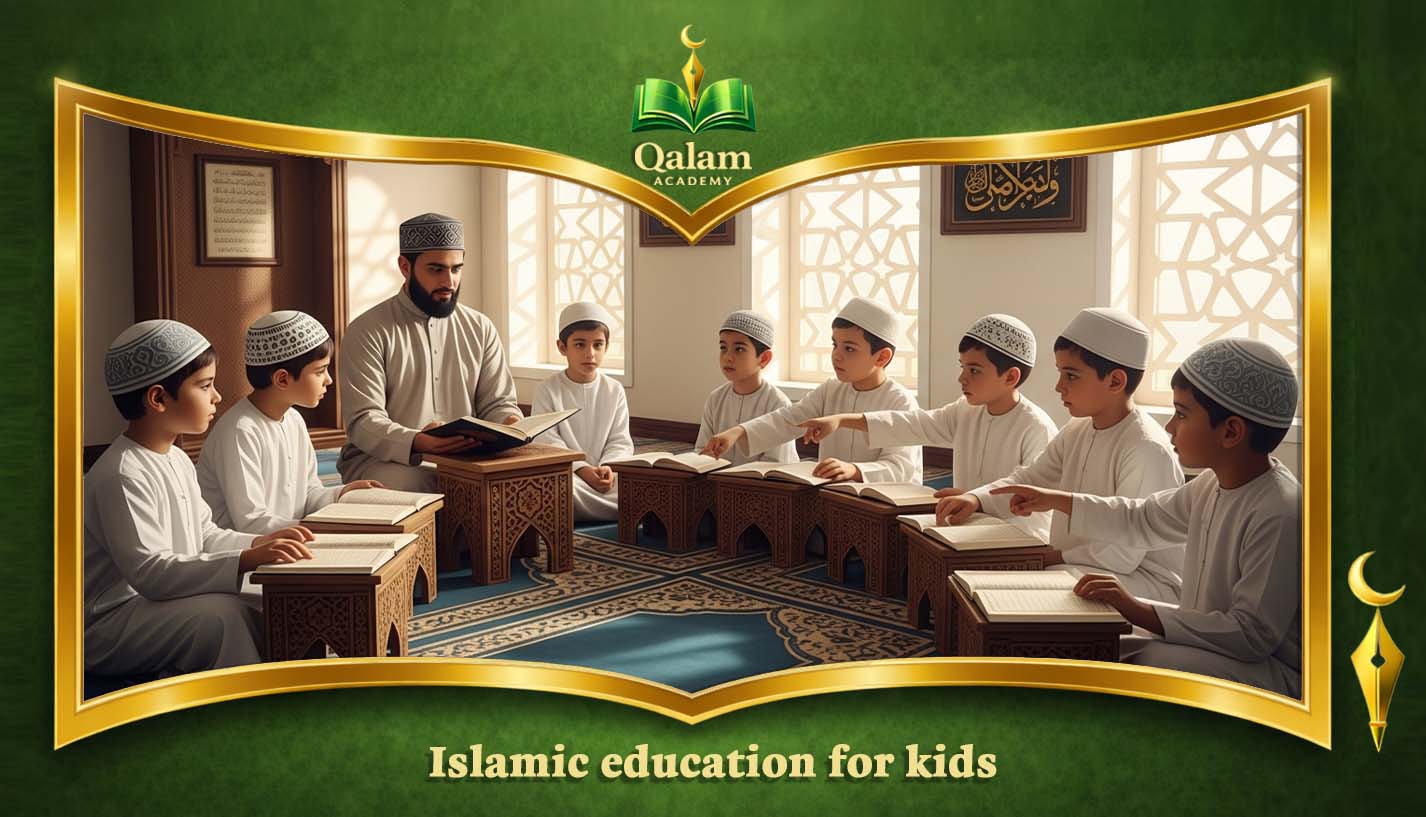
Islamic education for kids is vital for nurturing a strong faith and moral values from an early age. At Online Quran Academy Qalam, we provide engaging lessons that combine learning, creativity, and fun. Children explore the Five Pillars, the Six Pillars of Faith, basic prayers, and Quranic stories in a way that is easy to understand.
Through interactive activities, storytelling, and guided practice, Online Quran Academy Qalam ensures that Islamic education for kids is both enjoyable and meaningful. Users can also explore islamic courses online for more related options.This approach helps children connect with their faith, build confidence, and develop a lifelong love for learning about Islam.
Why Early Childhood Is the Best Time for Islamic Learning
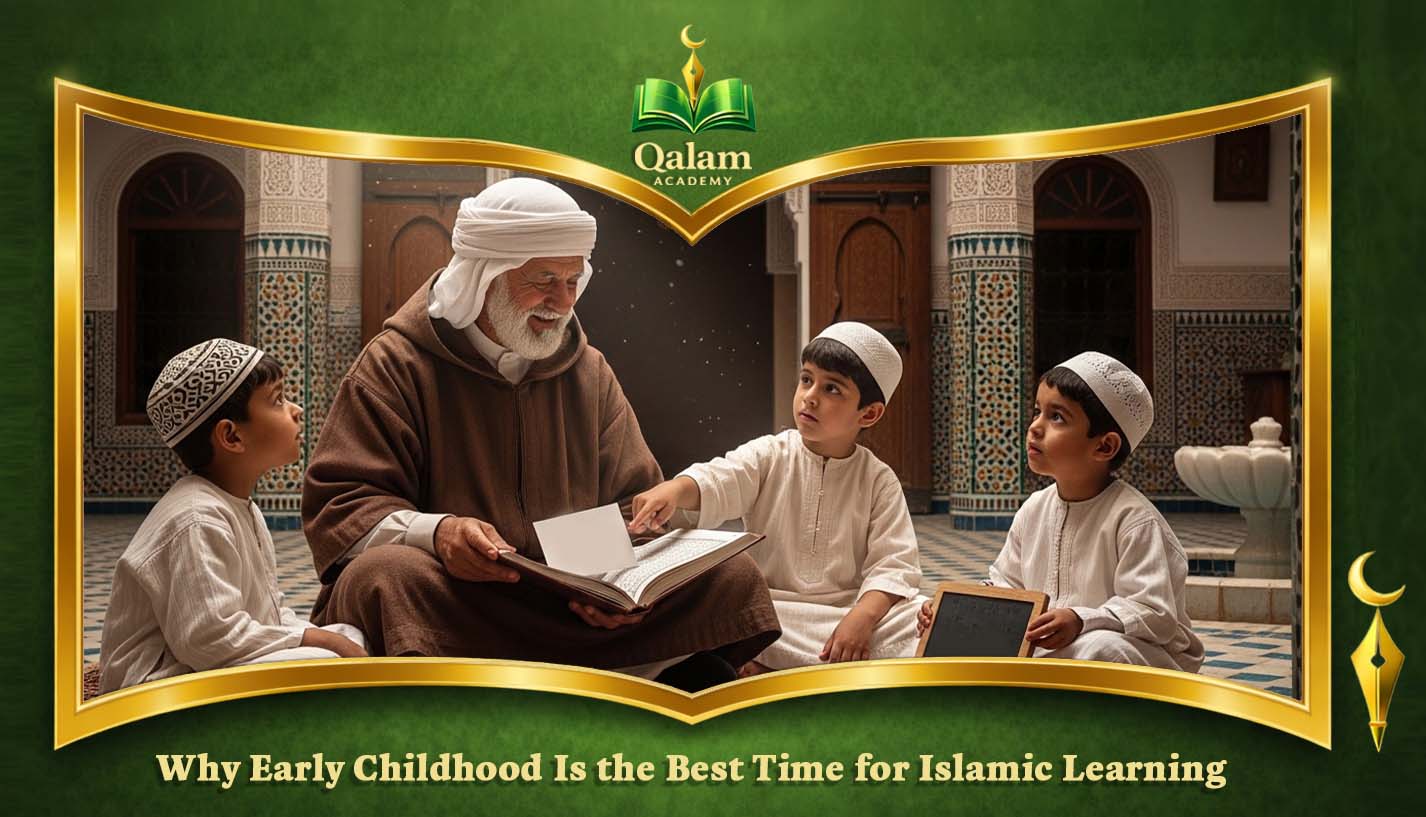
Early childhood is one of the most important stages in shaping a child’s character and beliefs. Between the ages of 3 and 12, children absorb spiritual ideas and values more easily than at any other time. During these years, the brain begins forming a strong sense of identity and moral understanding. This is why many families prioritize islamic education for kids during the early years of development.
Psychologists in the field of educational development often highlight that early exposure to moral and spiritual guidance can play a major role in shaping a child’s behavior and worldview.
The Developmental Benefits of Early Islamic Education
Research in educational psychology shows that early religious learning is associated with several positive outcomes for children. When values are introduced early, children tend to develop stronger ethical awareness and a clearer sense of right and wrong.
Another important benefit is a deeper feeling of belonging to a community. Through islamic education for kids, children learn about compassion, respect, honesty, and responsibility. These lessons help them build positive relationships with others and encourage empathy in everyday life.
Learning about faith in a supportive and engaging way also helps children understand the meaning behind their actions and choices.
Supporting Muslim Children in Diverse Societies
For Muslim families living in Western countries, early Islamic learning often serves two key purposes. First, it helps build a strong spiritual foundation. Second, it prepares children to confidently navigate questions about their identity in culturally diverse school environments.
Programs such as Online Quran Academy qalam provide families with accessible ways to introduce religious learning at home. With structured lessons and age-appropriate teaching methods, children can engage with their faith in a way that feels natural and enjoyable.
When a child receives islamic education for kids at home or through trusted learning platforms like Online Islamic Academy qalam, they are more likely to grow up feeling confident about their beliefs rather than confused about their identity.
Building a Lifelong Spiritual Foundation
The lessons taught in childhood often shape a person’s worldview for life. The spiritual foundation you build today can influence your child’s future in many ways, including their relationship with God, their understanding of life’s purpose, and their ability to treat others with kindness and mercy.
Providing islamic education for kids at Online Quran Classes does not require parents to be scholars or experts in theology. What matters most is consistency, creativity, and a sincere effort to make faith easy to understand and enjoyable for children.
Through simple daily practices, engaging stories, and supportive learning environments, families can nurture a strong and lasting connection between children and their faith.
Online Quran Academy
Online Quran Academy Qalam is a leading platform for children to learn Quran and Islamic teachings from the comfort of their home. The academy offers interactive lessons, engaging activities, and personalized guidance to make Islamic education for kids enjoyable and effective.
Through live classes, storytelling, and practical exercises, children can learn Quranic recitation, basic prayers, and moral values while developing a strong connection to their faith. Online Quran Academy Qalam ensures a safe, supportive, and creative learning environment that inspires children to explore Islam with curiosity and confidence.

Understanding the Five Pillars of Islam for Children
The Five Pillars of Islam are the essential acts of worship that guide every Muslim’s life. They shape beliefs, daily routines, and interactions with others. Introducing these pillars to children helps them understand their faith clearly. Therefore, many parents focus on islamic education for kids from an early age.
When these lessons are taught in small, age-appropriate steps, children learn more easily. In addition, combining explanations with practical activities makes learning enjoyable. Consequently, children develop a strong connection to their faith and a better understanding of their identity.
1. Shahada (Declaration of Faith)
The first pillar, Shahada, expresses the core belief of Islam:
- “There is no god but Allah, and Muhammad is the Messenger of Allah.”
- Children can learn this gradually, depending on their age.
Ages 3–5
At this stage, repetition works best. Parents can include the Shahada in songs, bedtime routines, or daily conversations. Over time, children memorize it naturally. This method is widely used in islamic education for kids.
Ages 6–9
Next, children can begin to understand simple meanings. For example, parents might ask questions like:
- Who created the world?
- Who is Prophet Muhammad?
Such discussions help children connect words with understanding.
Ages 10 and Above
Older children are ready to explore deeper ideas. They can discuss how believing in one God shapes daily decisions and moral behavior.
2. Salah (Prayer)
Salah, or daily prayer, is the second pillar of Islam. Children usually learn it in three stages: observing, imitating, and practicing independently.
Initially, they watch their parents pray. Then, they begin copying movements. Finally, they learn to pray on their own. In this way, children gradually become confident in performing Salah.
The Prophet Muhammad encouraged parents to start guiding children toward prayer around age seven.
Ages 2–4
At this stage, children mainly observe. Giving them a small prayer mat helps them feel involved and motivated.
Ages 5–7
Next, children can start learning the basics, such as ablution and memorizing Surah Al-Fatiha. Additionally, structured lessons from Online Tajweed Academy qalam can make these steps easier to understand.
Ages 8–12
Older children gradually learn all five daily prayers. Parents can also explain the meaning of the words in each prayer, helping children connect the practice to understanding.
3. Zakat (Charity)
Zakat teaches children that money comes with responsibility. Moreover, it encourages generosity and empathy.
A simple method to teach this is the three-box system:
- One box for spending
- One box for saving
- One box for charity
When the charity box is full, the child chooses where to donate. As a result, children learn independence and compassion. Because of its simplicity, this method is commonly used in islamic education for kids programs.
4. Sawm (Fasting in Ramadan)
Fasting is the fourth pillar of Islam. Although it becomes obligatory after puberty, children can practice gradually.
Ages 5–7
Children may fast for half a day. This helps them understand the practice without strain.
Ages 8–11
Later, they can fast on selected days. This allows them to build patience gradually.
Ages 12 and Above
Many children begin fasting the full month when able. Additionally, lessons from Online Quranic Arabic Academy qalam help them understand the spiritual meaning of fasting, such as patience, self-discipline, and gratitude.
5. Hajj (Pilgrimage)
Hajj, the fifth pillar, is the pilgrimage to Makkah. Most children will perform it as adults. However, learning about it early helps them understand Muslim unity worldwide.
Learning Activities
Parents can make Hajj engaging through activities. For example:
- Watching simple educational videos about Hajj
- Building a small paper model of the Kaaba
- Explaining the meaning of Eid al-Adha
Through these activities, children can connect the pilgrimage to broader lessons about faith. Therefore, islamic education for kids becomes both fun and meaningful, helping children grow with confidence in their beliefs.
Learn also: Quranic Arabic Online
The Six Pillars of Faith for Children
The Six Pillars of Faith are the foundation of Islamic belief. While the Five Pillars focus on actions, these pillars explain what Muslims should believe in. Teaching them early helps children understand the spiritual side of Islam. Therefore, introducing these ideas through islamic education for kids is very effective.
Additionally, using simple examples and activities helps children connect abstract concepts to their everyday life. As a result, learning becomes enjoyable, and children gradually develop a strong connection to their faith.
1. Belief in Allah
Start with simple questions to spark curiosity:
- Who created everything?
Show children examples of Allah’s creations, such as:
- Trees and flowers
- Animals
- The human body
Next, introduce some of Allah’s beautiful names gradually, such as Ar-Rahman (The Most Merciful) and Al-Khaliq (The Creator). In addition, discussing these examples helps children understand that Allah is the Creator of everything around them.
2. Belief in Angels
Angels are special beings made of light. They always obey Allah and never disobey Him. Also, angels record our actions and deliver Allah’s messages to the prophets. Therefore, teaching children about angels helps them understand the unseen world. In addition, it encourages children to act responsibly and make good choices.
3. Belief in the Holy Books
Allah sent holy books to guide humanity. For example:
- The Torah to Moses (Musa)
- The Gospel to Jesus (Isa)
- The Quran to Muhammad ﷺ
The Quran is the final and perfectly preserved book. Consequently, children can learn lessons from it through simple stories or short verses. Moreover, understanding that Allah communicates guidance through books helps children see the importance of reading and following instructions.
4. Belief in the Prophets
Children love stories, which makes prophets’ stories an excellent teaching tool. Stories of:
- Adam
- Noah
- Abraham
- Moses
- Jesus
- Muhammad ﷺ
teach children important values, such as patience, honesty, courage, and trust in Allah. In addition, storytelling allows children to connect with historical figures while learning moral lessons. As a result, children can apply these lessons to their daily lives.
5. Belief in the Day of Judgment
Introduce this concept gently. Allah will judge everyone fairly. Also, children learn that good deeds are rewarded, and wrong actions have consequences. Therefore, they understand that their choices matter. Moreover, using reassuring language prevents fear and promotes responsibility and moral awareness.
6. Belief in Qadar (Divine Decree)
Belief in Qadar teaches that Allah knows everything that happens in the universe. When challenges occur, children can be taught to say:
“Alhamdulillah” (Praise be to Allah)
and trust that there is wisdom behind every event. In addition, this belief encourages patience, resilience, and reliance on Allah. Furthermore, children learn that even difficult situations have a purpose and meaning.
Learn also: Online Quran Classes for Kids
Teaching Children According to Their Age
Children learn best when lessons match their age and understanding. Therefore, it is important to adjust activities and teaching methods as they grow. In addition, using simple examples and fun activities makes learning more enjoyable.
Ages 3–5
At this stage, children learn best through their senses and play. For example, they can:
- Say Bismillah before eating
- Say Alhamdulillah to express gratitude
- Listen to short Quran recitations
- Learn simple du’as (prayers)
These activities help children form a natural connection to Islamic practices while keeping learning fun and interactive. In addition, repetition and encouragement help them remember these early lessons.
Ages 6–9
Children at this age can focus on more structured lessons. For instance, they can:
- Listen to stories of the prophets
- Memorize short surahs from the Quran
- Learn the basics of Salah (prayer)
- Practice good Islamic manners and etiquette
Moreover, combining storytelling with practical examples allows children to understand moral lessons and connect them to daily life. As a result, they begin to develop stronger spiritual awareness.
Ages 10–12
Older children are ready for more advanced learning. At this stage, they can start:
- Understanding simplified interpretations of the Quran
- Learning Islamic history
- Exploring basic Fiqh (practical Islamic rulings) for daily life
Additionally, encouraging discussions about what they learn helps children think critically and apply their knowledge. Therefore, lessons become more meaningful and prepare them for responsible faith-based living.
Learn also: Online Arabic Classes
Fun Activities for Islamic Education for Kids
Learning about Islam can be both fun and meaningful when children engage in creative activities. Here are some Islamic Education for Kids at online Islamic classes ideas that combine play, learning, and spirituality.
Creative and Educational Activities
- Building the Pillars of Islam Tower – Children can create a tower using blocks or paper cards to learn the Five Pillars. This hands-on approach makes lessons memorable.
- Prayer Jar – Collecting daily du’as encourages regular practice and reflection.
- Prophets’ Story Theater – Acting out stories from the lives of the prophets makes learning history and morals exciting.
- Quran Art Boards – Children can draw or paint verses from the Quran, which helps them remember key teachings.
- Prayer Step Cards – Visual cards guide children through the steps of Salah, making learning easier.
Games and Interactive Learning
- Islamic Concept Scavenger Hunt – Children search for objects or concepts related to Islam around the house.
- Charity Month Calendar – Tracking acts of kindness each day teaches generosity.
- Learning Allah’s Names Game – Matching or memory games help children memorize the beautiful names of Allah.
- Mosque Model Craft – Building a mosque from paper or clay makes learning practical and hands-on.
- Halal and Haram Sorting Game – Children learn what is permissible and forbidden in Islam through fun activities.
Seasonal and Daily Activities
- Ramadan Countdown Calendar – Children anticipate Ramadan while learning its importance.
- Islamic Cooking with Family – Preparing halal recipes together teaches gratitude and practical skills.
- Daily Azkar Tracker – Encourages children to remember Allah regularly.
- Prophets’ Biography Reading – Reading stories about prophets inspires patience, honesty, and faith.
All of these activities are excellent examples of islamic education for kids because they combine learning, creativity, and play. Moreover, parents can adapt these activities to suit their child’s age and interests. In addition, practicing them regularly helps children develop a deep understanding of Islamic teachings.
Finally, incorporating these activities into daily routines ensures that Online Tajweed Classes becomes natural and engaging. Therefore, children not only learn about Islam but also enjoy the process. These hands-on experiences are some of the most effective islamic education for kids methods that foster curiosity, understanding, and practice.
Common Challenges in Teaching Children Islam
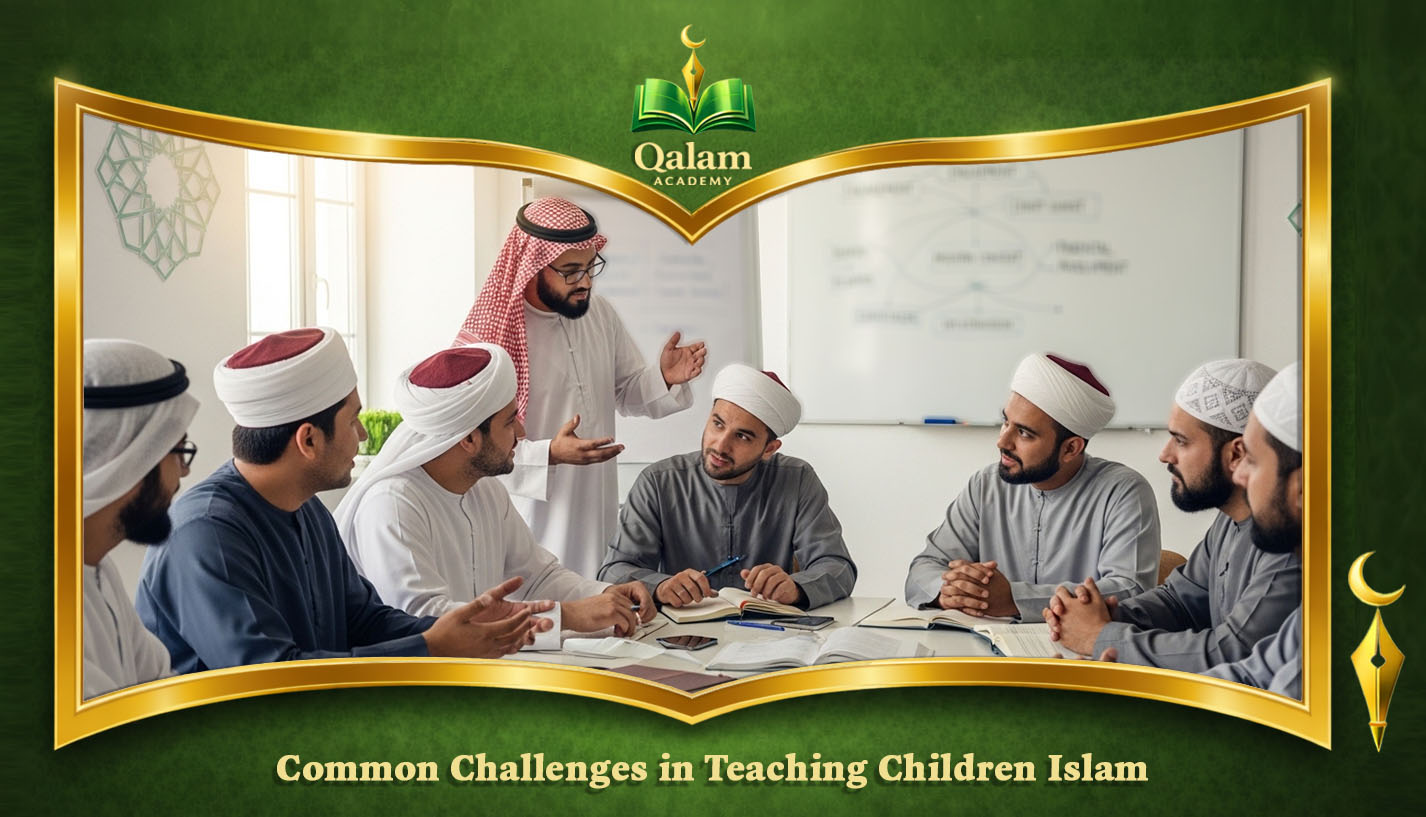
Teaching children about Islam can be rewarding, but it comes with challenges. Parents and educators often face common issues, such as boredom, lack of time, difficult questions, and resistance to prayer. Understanding these challenges and applying practical solutions can make islamic education for kids effective and enjoyable.
“My Child Feels Bored”
One of the most common problems is boredom. Children may lose interest if lessons are repetitive or too abstract. Therefore, it is important to change the way you teach. For example:
- Use colorful drawings or illustrations
- Show short educational videos
- Include hands-on activities or games
These methods make learning interactive and fun. As a result, children are more engaged and retain information better.
“We Don’t Have Enough Time”
Many parents feel they cannot dedicate long hours to teaching. However, even 5 minutes a day can be enough if it is consistent. Short, regular sessions are more effective than long, irregular ones. In addition, focusing on small daily habits, such as learning a new du’a or reciting a short surah, can build strong foundations over time.
“My Child Asks Difficult Questions”
Children are naturally curious and may ask questions that seem too hard. Instead of giving a rushed answer, be honest and say:
“Let’s find the answer together.”
This approach encourages curiosity, critical thinking, and active participation. Moreover, it strengthens the parent-child bond and creates a positive learning environment.
“My Child Refuses to Pray”
Resistance to prayer is common. Avoid forcing children to pray, as this can create negative associations. Instead, focus on being a good role model and use gentle encouragement. Show them the importance of prayer through your own actions. In addition, praise their small efforts to build consistency and motivation.
By applying these strategies, parents can overcome common obstacles and make islamic education for kids more effective, engaging, and meaningful. Consequently, children develop a natural connection to their faith and enjoy learning about Islam.
Frequently Asked Questions About Islamic Education for Kids
Frequently Asked Questions About Islamic Education for Kids help parents and educators understand how to teach children about Islam effectively. They provide practical guidance on age-appropriate lessons, engaging activities, and common challenges.
1. What is Islamic education for kids?
Islamic education for kids is a structured approach to teaching children about Islam. It includes learning about the Five Pillars, the Six Pillars of Faith, basic prayers, Quranic stories, and moral values. The goal is to help children develop a strong spiritual foundation from an early age.
2. At what age should children start learning Islam?
Children can start learning as early as age 3. Early lessons focus on simple concepts like saying Bismillah before eating, short du’as, listening to Quran recitations, and learning basic manners.
3. How can parents make learning fun?
Parents can use interactive activities such as storytelling, drawing, games, and arts & crafts. At Online Islamic Academy Qalam, we provide engaging lessons designed to make Islamic education for kids enjoyable and effective.
4. How much time should be dedicated to learning daily?
Even 5–10 minutes a day is enough if it is consistent. Short, regular lessons help children retain knowledge better than long, infrequent sessions.
5. What if my child asks difficult questions?
Be honest and say, “Let’s find the answer together.” Encouraging curiosity helps children develop critical thinking while learning about Islam.
6. What if my child refuses to pray?
Avoid forcing them. Focus on being a good role model and encouraging them gently. Positive examples are more effective than compulsion.
7. Can Islamic education for kids be combined with fun activities?
Yes! Activities like building the Pillars tower, Quran art boards, or learning Allah’s names through games are excellent ways to combine learning with play.
In conclusion, Islamic education for kids plays a crucial role in shaping their faith, character, and understanding of Islam. With the guidance of Online Quran Academy Qalam, children can learn in a fun, engaging, and meaningful way.
By combining interactive lessons, storytelling, and practical activities, this approach ensures that children not only understand Islamic teachings but also develop a lasting love for their religion.
Ultimately, investing in Islamic education for kids helps nurture confident, knowledgeable, and spiritually aware individuals who carry their faith proudly throughout their lives.
read more: