

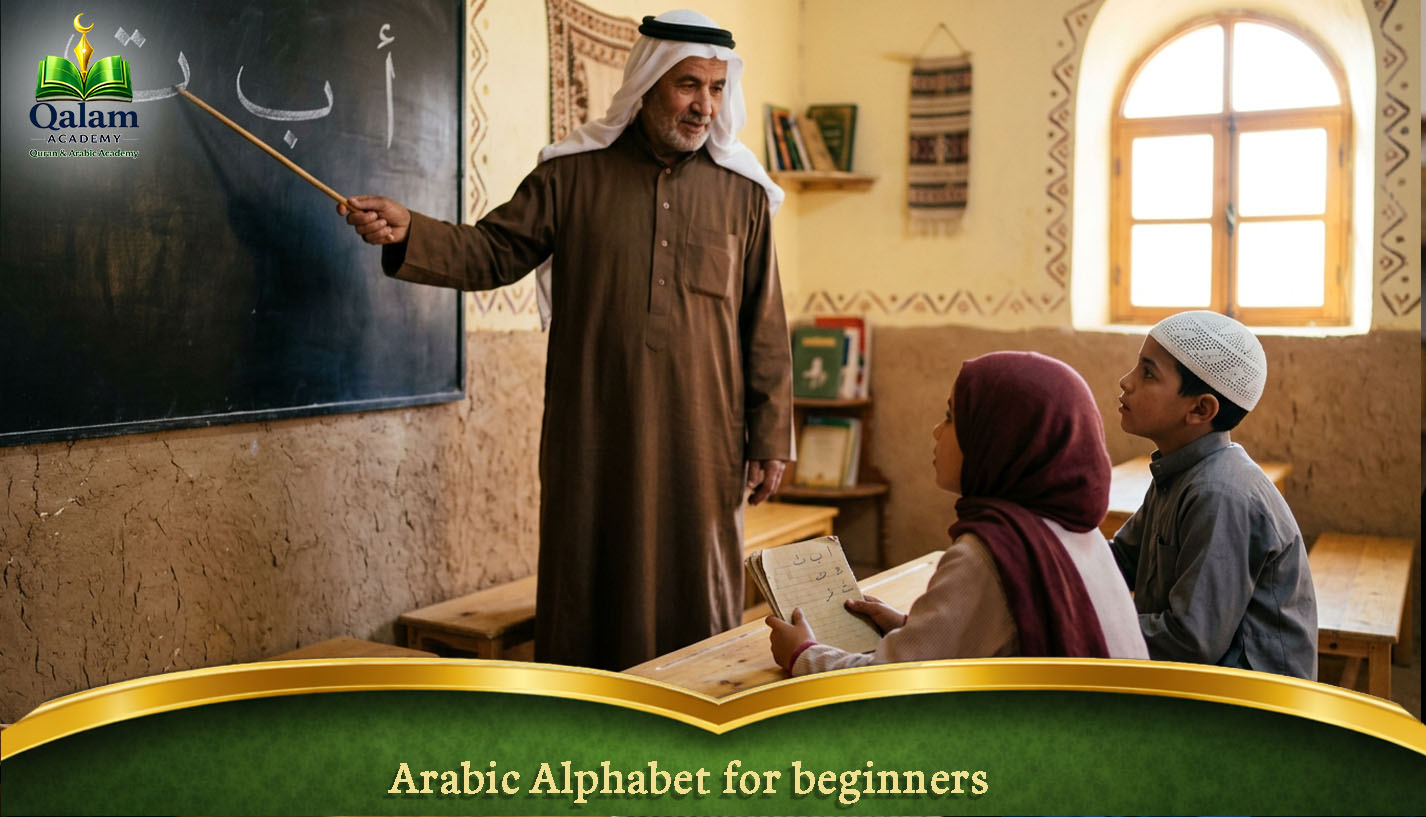
The Arabic alphabet for beginners is the essential first step for anyone who wants to learn Arabic correctly and confidently. It forms the foundation of reading, writing, pronunciation, and understanding. Without mastering the alphabet, progressing in the language becomes difficult and often confusing. That’s why every successful Arabic learner begins by building a strong base through understanding letters, sounds, and their proper usage.
At qalam quran academy, learners are introduced to a structured and simple method that makes the Arabic alphabet easy to understand. The academy focuses on correct pronunciation, gradual practice, and clear guidance. This helps students gain confidence from the start and build essential skills for reading and writing Arabic effectively.
Why Learning the Arabic Alphabet Matters

Learning the Arabic alphabet is much more than memorizing shapes. It is about training your ears to recognize new sounds and teaching your tongue how to produce them accurately. Just like learning the ABCs in English, the Arabic alphabet is the gateway to fluency.
One of the main reasons this step is so important is that Arabic includes sounds that do not exist in many other languages. Without proper knowledge of these sounds, learners often mispronounce words, which can completely change meanings.
A strong foundation in the alphabet also boosts confidence. Whether you are reading Arabic texts, listening to native speakers, or reciting the Quran, understanding the alphabet removes hesitation and improves clarity. It allows learners to progress smoothly without constantly second-guessing themselves.
Online Quran Academy

Overview of the Arabic Alphabet
The Arabic alphabet consists of 28 letters. It is written and read from right to left, which may feel unfamiliar at first but quickly becomes natural with practice.
Each letter has:
- A unique sound
- A distinct shape
- Multiple forms depending on its position in a word
Unlike English, learning quran in arabic is written in a connected script. Letters usually join together, which creates a flowing and artistic writing style. However, this also means learners must recognize the same letter in different forms.
For example, the letter “ب” (baa) changes its shape slightly depending on whether it appears at the beginning, middle, or end of a word.
Another essential part of learning the alphabet is understanding Harakat (short vowels). These small marks placed above or below letters determine pronunciation. Without them, many words may look identical but sound different.
Arabic Letters and Their Sounds
Here is a simplified breakdown of online Arabic classes and their approximate English equivalents:
- Alif (أ) – “a” sound
- Baa (ب) – “b” as in bat
- Taa (ت) – “t” as in top
- Thaa (ث) – “th” as in think
- Jeem (ج) – “j” as in jam
- Haa (ح) – deep “h” sound
- Khaa (خ) – “kh” sound
- Daal (د) – “d” as in dog
- Dhaal (ذ) – “th” as in this
- Raa (ر) – rolled “r.”
- Zay (ز) – “z” as in zoo
- Seen (س) – “s” as in sun
- Sheen (ش) – “sh” as in ship
- Saad (ص) – heavy “s.”
- Daad (ض) – heavy “d.”
- Taa (ط) – heavy “t”
- Zaa (ظ) – heavy “z.”
- ‘Ayn (ع) – deep throat sound
- Ghayn (غ) – “gh” sound
- Faa (ف) – “f” as in fun
- Qaaf (ق) – deep “k.”
- Kaaf (ك) – “k” as in kite
- Laam (ل) – “l” as in lamp
- Meem (م) – “m” as in moon
- Noon (ن) – “n” as in net
- Haa (هـ) – soft “h”
- Waw (و) – “w” or “oo.”
- Yaa (ي) – “y” or “ee.”
Effective Ways to Learn the Arabic Alphabet
1. Learn Gradually
Avoid trying to memorize all letters at once. Start with 3–5 letters per day. This method improves retention and reduces overwhelm.
2. Use Word Associations
Link each letter to a simple word. This helps your brain remember faster and more effectively.
3. Practice Daily
Consistency is key. Even 15–20 minutes a day can lead to noticeable progress.
4. Listen and Repeat
Listening to native pronunciation and repeating it is one of the most powerful techniques for mastering sounds.
5. Learn with Guidance
Working with a structured program like Qalam Quran Academy can significantly improve your learning experience by providing step-by-step instruction and feedback.
Pronunciation Tips for Beginners
Group 1: Easy Sounds
These letters are familiar and easy to pronounce:
ب، ت، د، ف، ك، م، ن
Start with these to build confidence.
Group 2: Moderate Sounds
These require some practice:
ث، ذ، ر، ش، ز، و، ي
Focus on listening carefully and repeating.
Group 3: Challenging Sounds
These are unique to Arabic:
ع، غ، خ، ق، ص، ض، ط، ظ
Take your time with these. They require patience and repeated practice.
The Importance of Starting with the Arabic Alphabet for Long-Term Fluency
Starting with the Arabic alphabet for beginners is not just an introductory step, but rather a long-term investment in language fluency. In fact, learners who skip this stage often face difficulties later when trying to read fluently or understand sentence structure. Therefore, mastering the alphabet early ensures a smoother learning journey and reduces confusion in advanced stages.
Moreover, building a strong foundation at the beginning helps learners develop accurate pronunciation habits from the start. This is especially important in Arabic because even a small pronunciation mistake can change the meaning of a word completely. As a result, beginners who focus on the alphabet first tend to progress faster and more confidently in reading and speaking.
How Structured Learning Improves Arabic Alphabet Mastery
Structured learning plays a crucial role in mastering the Arabic alphabet effectively. Unlike random self-study, organized programs guide learners step by step, ensuring that each letter is fully understood before moving forward. Consequently, students avoid confusion and retain information for a longer period.
In addition, structured lessons usually combine reading, listening, and speaking exercises, which strengthen memory and improve pronunciation at the same time. This multi-sensory approach makes learning more engaging and helps beginners stay motivated throughout their journey.
Furthermore, platforms like Qalam Quran Academy offer guided learning paths that adapt to each student’s level. Therefore, learners receive personalized attention, which significantly improves their ability to recognize and pronounce Arabic letters correctly.
Common Challenges Beginners Face When Learning Arabic Letters
Although learning the Arabic alphabet is essential, beginners often face several challenges at the start. One of the most common difficulties is adjusting to the right-to-left writing direction, which feels unusual for learners coming from Latin-based languages. However, with consistent practice, this becomes natural over time.
Another challenge is distinguishing between similar-looking letters, especially those that differ only in dots or slight shape variations. Therefore, learners must practice visual recognition regularly to avoid confusion.
Additionally, pronunciation of certain Arabic sounds such as “ع” and “ق” can be difficult for non-native speakers. However, with proper guidance and repeated listening practice, these sounds become easier to master.
The Role of Tajweed in Strengthening Arabic Alphabet Skills
Learning the Arabic alphabet is closely connected to Tajweed rules, especially for learners who aim to read the Quran correctly. Beginners can also explore tajweed rules for beginners to improve letter articulation and build accurate recitation habits.Tajweed helps students pronounce each letter from its correct articulation point, ensuring accurate and beautiful recitation.
Moreover, applying Tajweed rules from the beginning prevents the formation of incorrect pronunciation habits. As a result, learners develop stronger reading skills and a deeper understanding of Arabic phonetics.
In addition, consistent Tajweed practice enhances fluency and builds confidence when reading Quranic verses. Therefore, combining alphabet learning with basic Tajweed principles creates a more complete and effective learning experience.
Why Online Learning Is the Best Option for Arabic Beginners Today
In today’s digital world, online learning has become one of the most effective ways to study the Arabic alphabet. This is because it offers flexibility, accessibility, and personalized support that traditional classrooms may not always provide.
For example, learners can choose their own schedule, allowing them to study at times that suit their daily routine. This flexibility is especially beneficial for adults and busy students who cannot attend fixed classes.
Furthermore, online platforms provide access to qualified teachers from around the world. As a result, learners can receive high-quality instruction regardless of their location. This makes online Arabic learning a practical and efficient solution for beginners everywhere. If you’re interested, see our online quran classes uk page.
Building Confidence Through Step-by-Step Arabic Learning
Confidence is a key factor in successful language learning. When beginners start with the Arabic alphabet and progress gradually, they naturally build confidence in reading and pronunciation. This step-by-step approach reduces pressure and makes learning more enjoyable.
In addition, small achievements such as recognizing letters or reading simple words motivate to continue. Therefore, learners feel a sense of progress that encourages consistency and long-term commitment.
Over time, this confidence extends beyond the alphabet and helps learners read full sentences and Quranic verses with ease and clarity.
Tools and Techniques to Improve Pronunciation
Tools and Techniques to Improve Pronunciation help learners develop accurate Arabic language online course speaking skills through consistent practice, listening to native speakers, using audio apps, repeating letters daily, and receiving feedback from qualified teachers for better and faster improvement.
1. Audio Learning
Use videos and apps to hear correct pronunciation.
2. Mirror Practice
Watch your mouth and tongue movements while speaking.
3. Record Yourself
Compare your pronunciation with native speakers.
4. Interactive Learning
Joining structured lessons, such as those offered by Qalam Arabic Academy online, helps correct mistakes early and builds strong habits.
5. Repetition
Repeat each letter multiple times daily to strengthen muscle memory.
Common Mistakes and How to Avoid Them
Common Mistakes and How to Avoid Them highlights typical errors learners make and provides simple strategies to correct them early for better progress and accurate learning.
1. Confusing Similar Letters
Some letters look alike but sound different.
Solution: Practice visually and audibly.
2. Ignoring Harakat
Skipping vowel marks leads to incorrect pronunciation.
Solution: Always read with vowels in the beginning.
3. Relying on Native Language Sounds
Arabic sounds cannot always be matched to English.
Solution: Focus on listening and imitation.
4. Not Practicing Out Loud
Silent reading slows progress.
Solution: Speak daily and clearly.
The Role of Practice in Mastery
Practice is the most important factor in learning. Even if you understand the theory, you need consistent application.
You can:
- Read simple Arabic texts
- Watch educational videos
- Practice speaking daily
- Use language apps
Over time, your accuracy and confidence will improve significantly.
How Structured Courses Help
Learning on your own is possible, but structured courses provide:
- Clear learning paths
- Regular feedback
- Faster progress
- Motivation and accountability
Programs like qalam quran academy are designed specifically for beginners, helping them build a strong foundation step by step.
Connecting Alphabet Learning to Quran Reading
Learning the learn quran arabic UK is not only a linguistic step, but also a meaningful spiritual journey for many learners. Once you master the letters and their correct pronunciation, you open the door to reading the Quran with accuracy and confidence. Learners who want to build a broader understanding of practical Islamic guidance can also explore fiqh classes online alongside their Quran studies.This connection adds a deeper purpose to your studies, making every effort feel more valuable.As learners connect Arabic with broader Islamic understanding, they can also explore What is Ihram for helpful context around important Islamic terms.
As you begin to recognize words and recite verses, your motivation naturally increases. You are no longer just learning a language—you are building a direct connection with the Quran. This sense of purpose encourages consistency, patience, and dedication.
Over time, the process becomes more than practice; it turns into a rewarding experience that combines knowledge, faith, and personal growth in a truly unique way.
30-Day Learning Plan
- Week 1: Learn easy letters
- Week 2: Learn moderate letters
- Week 3: Focus on difficult sounds
- Week 4: Review and practice
With daily effort, you can build a solid foundation in just one month.
Importance of Consistency
Consistency matters more than speed. Even small daily efforts lead to long-term success. Take a look at our online quran classes with tajweed guide as well.
Remember:
- Practice daily, even briefly
- Review regularly
- Stay patient
Language learning is a journey, not a race.
How to Choose the Most Effective Learning Style for Arabic
Understanding your personal learning style helps you absorb Arabic more efficiently and with less confusion. Using the right approach keeps you motivated and makes your progress smoother and more consistent.
- Visual learners benefit from charts, colors, and flashcards to recognize letters quickly.
- Auditory learners improve through listening, repetition, and practicing pronunciation regularly.
- Practical learners learn best by writing letters, forming words, and speaking out loud.
- Combining listening and reading strengthens both memory and comprehension.
- Experimenting with different techniques helps you find what works best for you.
- Staying consistent with your preferred method leads to faster and more solid progress.
Adjusting your learning style over time keeps the process engaging and effective. A balanced approach that mixes multiple methods delivers the best long-term results.
Supportive Learning Environment in Arabic Learning

A supportive learning environment plays a crucial role in mastering any new skill, especially when learning a language as unique as Arabic. Whether you are studying independently or with guidance, the presence of encouragement, structure, and consistency can significantly impact your progress. A positive environment helps reduce frustration, builds confidence, and keeps you motivated during challenging stages.
Working with a teacher or joining a structured program provides direction and accountability, ensuring that you stay on track. Learning within a group also creates a sense of community, allowing you to share experiences and learn from others. Additionally, interactive platforms and guided lessons make the process more engaging and less overwhelming.
When learners feel supported, they are more likely to practice regularly and stay committed to their goals. In the long run, this consistency leads to better pronunciation, stronger understanding, and faster progress in learning Arabic.
Frequently Asked Questions (FAQs)
Frequently Asked Questions (FAQs) provide quick answers to common queries, helping learners understand key points clearly and save time while studying.
1. Is Arabic harder to learn than other languages?
Arabic can seem challenging at first due to new sounds and script, but with consistent practice, it becomes manageable and rewarding.
2. What is the best age to start learning Arabic?
Any age is suitable. Children may learn faster, but adults can also achieve great results with dedication.
3. Can I learn the Arabic alphabet without learning grammar?
Yes, beginners should focus on the alphabet first before moving on to grammar and sentence structure.
In Conclusion, Mastering Arabic begins with understanding yourself as a learner and choosing the approach that suits you best. The more aligned your learning style is with your study methods, the easier it becomes to stay consistent and make real progress.
Stay patient, keep practicing, and don’t be afraid to adjust your strategy along the way. With dedication and the right techniques, you will gradually build confidence and achieve lasting success in your Arabic learning journey.