
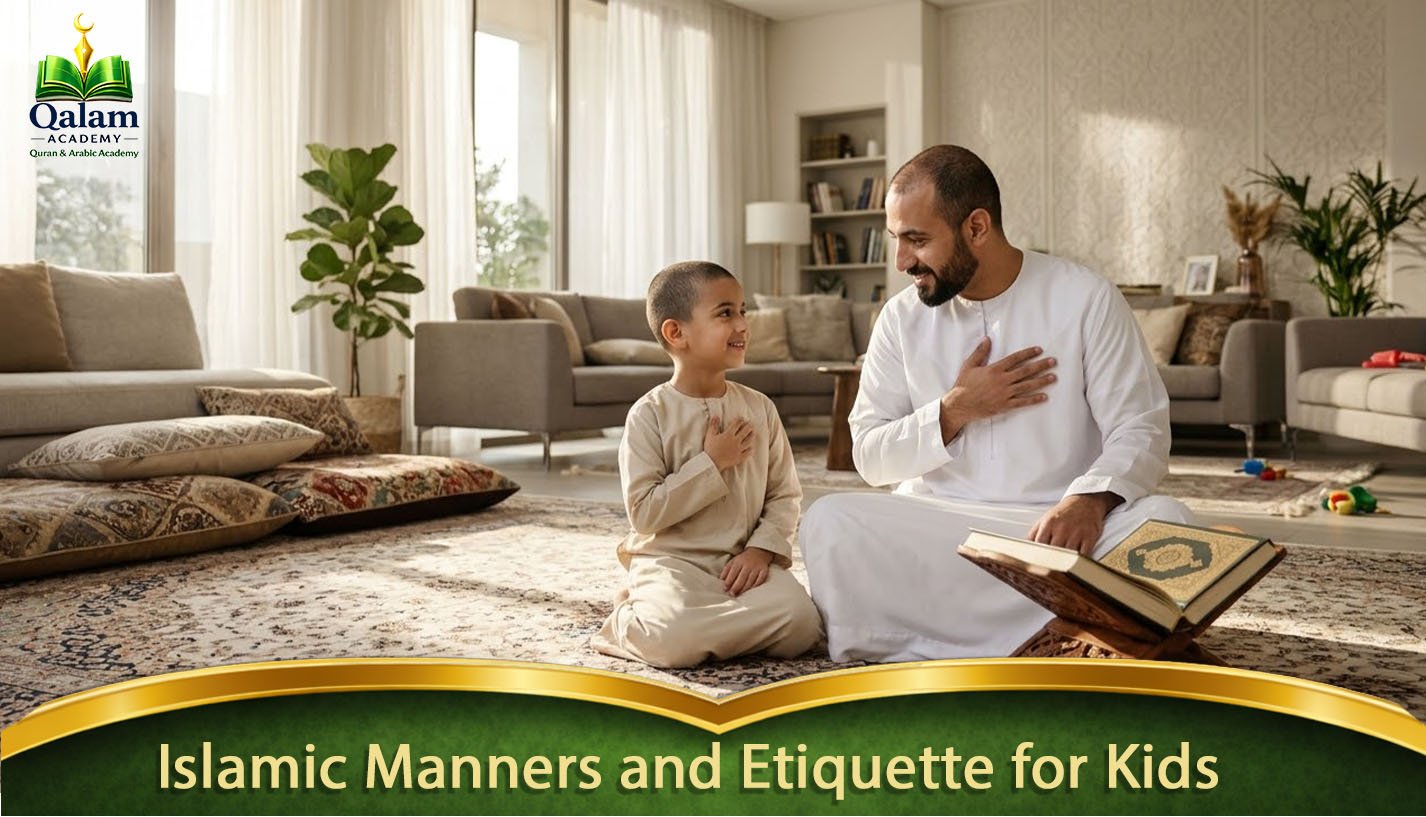
Islamic Manners and Etiquette for Kids help parents nurture respectful behavior, honesty, kindness, and good character from an early age. Children gradually develop these qualities through everyday examples, family routines, conversations, and age-appropriate Islamic learning.
However, teaching good manners involves more than asking children to follow rules. They also need to understand why telling the truth matters, how their words affect others, and when they should respect another person’s boundaries. Therefore, parents can combine Islamic guidance with practical activities, gentle reminders, and consistent encouragement.
This guide explains 15 essential Islamic manners, offers practical ways to teach them at home, and explores how parents can help children apply these values at school, with friends, and in their communities.
Why Do Islamic Manners and Etiquette for Kids Matter?
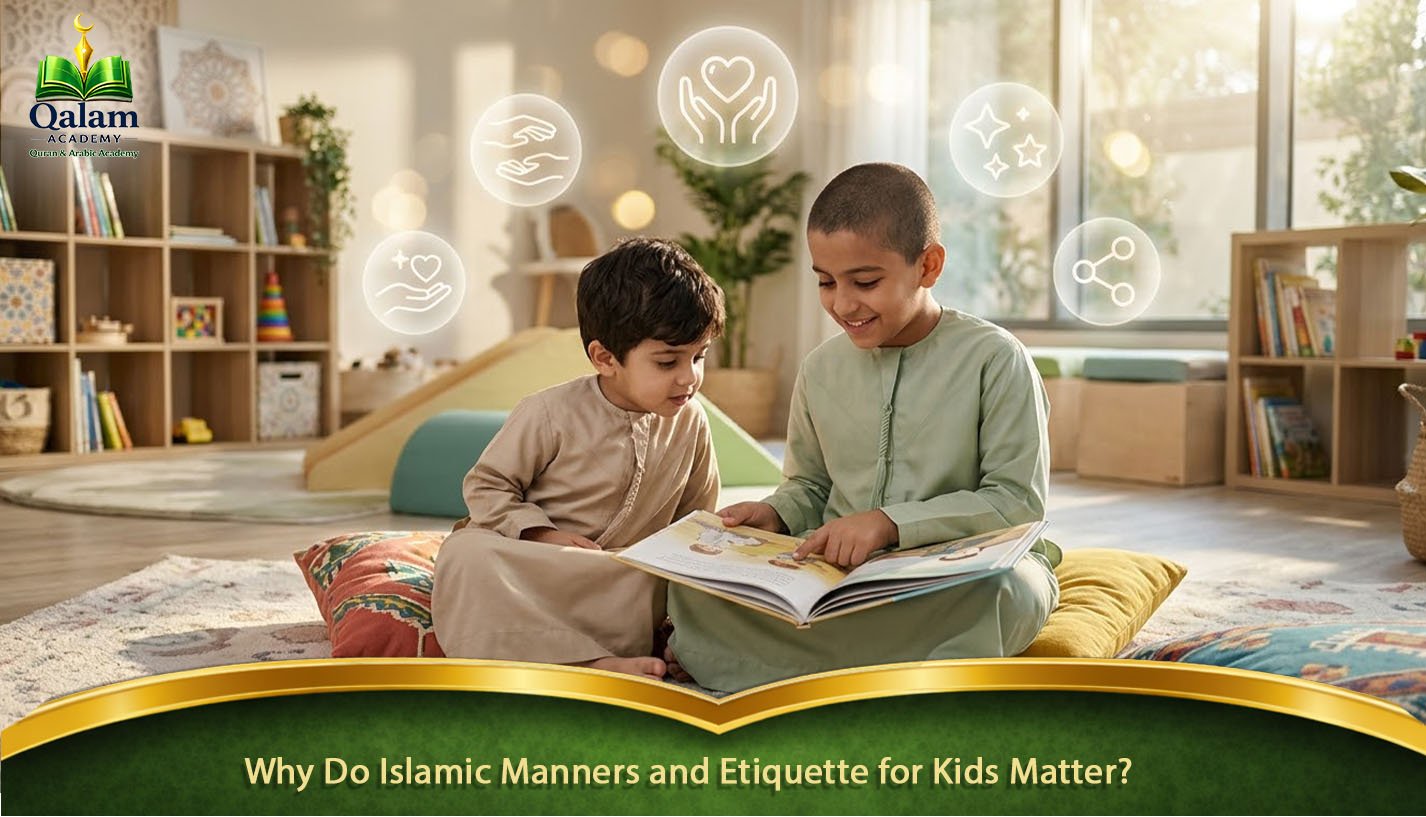
Good manners influence how children communicate, handle disagreements, treat family members, and respond to people around them. By learning these values early, children can gradually develop habits that support healthy relationships and responsible decision-making.
Islamic teachings connect faith with everyday behavior. For example, greeting others politely, expressing gratitude, helping someone in need, and keeping shared spaces clean are practical opportunities to demonstrate good character.
Moreover, children learn at different speeds. A younger child may need repeated demonstrations, whereas an older child may benefit from discussing the reasons behind a particular behavior. Consequently, parents should adjust their approach to each child’s age, understanding, and needs.
The goal is not perfect behavior every day. Instead, families can create a supportive environment where children learn from mistakes, apologize when necessary, and try again.
Start Learning with Qalam Online Quran Academy Today
Take the first step toward a stronger connection with the Quran and Islamic knowledge. At Qalam Online Quran Academy, our qualified teachers provide personalised one-on-one classes for children, adults, and beginners. Enjoy flexible schedules, interactive lessons, and a supportive learning environment designed to help you achieve your goals. Begin your Quran learning journey with confidence.

15 Essential Islamic Manners and Etiquette for Kids to Practice
The following lessons introduce practical habits that children can use in everyday life. Parents can begin with a few simple behaviors and gradually introduce others as children become more confident.
1. Islamic Manners for Kids: Saying Bismillah
Saying Bismillah means beginning in the name of Allah. Parents can encourage children to say it before eating, starting homework, or beginning another appropriate activity.
Explain the meaning in simple language rather than treating the phrase as a rule children must repeat without understanding. For example, tell them that remembering Allah helps them approach everyday activities with awareness and gratitude.
Parents can model this habit naturally. When adults say Bismillah before a meal, children have an opportunity to observe and imitate the behavior.
As children grow, they can learn more about remembrance of Allah and the importance of intention. Keep explanations suitable for their understanding, and welcome questions without making children feel embarrassed.
2. Islamic Etiquette for Kids: Greeting Others Politely
The greeting Assalamu Alaikum expresses a wish for peace upon the person being greeted. Teaching children to use it helps them develop welcoming habits and recognize others when they meet.
Parents can demonstrate the greeting when entering a room, meeting relatives, or welcoming visitors. Encourage children to speak clearly and warmly, while explaining that a greeting should be sincere rather than forced.
Children can also learn to respond politely when someone greets them. Practicing these exchanges at home makes the habit easier to remember in other settings.
Importantly, respectful greetings do not require unwanted physical contact. Children can greet people courteously while maintaining personal boundaries and choosing whether they feel comfortable with a hug or kiss.
3. Islamic Manners for Children: Respecting Parents and Elders
Respect includes listening carefully, speaking politely, showing consideration, and recognizing the needs of others. Children can practice these behaviors when talking with parents, grandparents, relatives, and older family members.
For example, encourage children to avoid interrupting, respond without shouting, and offer help when someone needs assistance. These lessons become more meaningful when adults demonstrate the same courtesy toward children.
Islam emphasizes kindness to parents. Nevertheless, teaching respect should involve meaningful explanations rather than demands for unquestioning obedience. Children need opportunities to express concerns, ask questions, and discuss disagreements calmly.
They should also understand that respect does not require keeping unsafe secrets or accepting inappropriate behavior. Encourage children to approach a trusted adult whenever an interaction makes them feel uncomfortable or unsafe.
4. Islamic Manners and Etiquette for Kids: Speaking Kindly and Telling the Truth
Honesty and thoughtful speech are important elements of Islamic character. Children should learn to tell the truth, avoid insults, and consider how their words affect other people.
Start with familiar situations. If a child breaks a toy, explain that admitting what happened helps everyone find a solution. Responding calmly can make it easier for the child to be honest in the future.
Similarly, teach children to disagree without name-calling. They can say, “I do not agree,” or “That made me feel upset,” instead of using hurtful language.
Good communication also involves listening. Encourage children to let others finish speaking before responding, especially during family discussions.
When a child makes a mistake, focus on the behavior and its consequences rather than labeling the child as bad. This approach encourages accountability while protecting the child’s confidence.
5. Islamic Manners for Kids: Practicing Gratitude and Daily Duas
Gratitude helps children recognize blessings and appreciate the people who support them. Parents can introduce Alhamdulillah as an expression of praise and thanks to Allah in appropriate situations.
For example, children can say it after eating or when reflecting on something they appreciate. Parents may also introduce simple daily duas gradually, explaining their meanings instead of asking children to memorize unfamiliar words without understanding.
A family gratitude routine can make the lesson practical. During dinner, each person might mention one thing they appreciated that day. As a result, children can learn to notice kindness, effort, and ordinary experiences.
However, gratitude does not mean pretending that sadness or disappointment does not exist. Children can be thankful while expressing difficult feelings and asking for help when needed.
6. Islamic Etiquette for Kids: Knocking and Respecting Privacy
Respecting privacy helps children understand personal boundaries within the home and beyond it. They should learn to knock before entering a closed room, wait for permission, and avoid looking through another person’s belongings without consent.
Parents can demonstrate this practice by knocking before entering a child’s room when appropriate. Mutual respect makes the lesson more meaningful than applying the rule only to children.
Explain that people sometimes need privacy while changing clothes, praying, studying, resting, or having a conversation. Waiting for permission shows consideration for their needs.
Privacy lessons should also include digital behavior as children begin using devices. They should ask before reading someone else’s messages, sharing photographs, or posting information about another person.
At the same time, explain that safety concerns are different from ordinary privacy. Children should speak to a trusted adult when something online or offline makes them uncomfortable.
7. Islamic Eating Manners for Kids: Practicing Courtesy at Meals
Mealtimes offer a convenient opportunity to practice courtesy, gratitude, and self-control. Parents can teach children to say Bismillah before eating, use the right hand when following the Prophetic eating practice, and avoid wasting food. These habits are part of learning Islamic manners in everyday life.
Children should also learn to sit appropriately, chew with their mouths closed, and speak politely at the table. These habits make shared meals more comfortable for everyone. Parents can reinforce these values by discussing daily duas every muslim should know in English and explaining when children can use simple supplications in daily routines.
Rather than correcting every small mistake, choose one or two behaviors to practice at a time. For younger children, a brief reminder is often more effective than a long explanation during dinner.
Parents can involve children in setting the table, serving appropriate portions, and clearing their dishes afterward. These tasks teach responsibility as well as consideration for family members.
If a child dislikes a particular food, encourage polite communication instead of ridicule or unnecessary pressure. Good manners should help create a respectful atmosphere, not make mealtimes stressful.
8. Islamic Manners for Children: Saying JazakAllahu Khairan
The expression JazakAllahu Khairan is commonly used to thank someone and ask Allah to reward them with goodness. Children can learn it alongside familiar expressions such as “thank you.”
Explain that gratitude is not limited to receiving gifts. A child can thank a sibling for sharing, a teacher for explaining a lesson, or a friend for offering help.
Parents should model appreciation consistently. When children contribute to household tasks, acknowledge their effort rather than allowing helpful actions to go unnoticed.
Children can also learn that gratitude involves actions. Returning borrowed items, looking after a gift, and helping someone in return can demonstrate appreciation beyond words. The goal is meaningful communication, not simply repeating a phrase whenever an adult asks.
9. Islamic Character Education for Kids: Honesty and Trustworthiness
Trustworthiness means keeping promises when possible, looking after belongings responsibly, and being truthful about mistakes. These behaviors help children build reliable relationships with family members, classmates, and friends.
Start with manageable responsibilities. A child might return a borrowed book, put away a toy, or deliver a message accurately. Praise the effort involved in completing the task honestly.
When children cannot keep a promise, help them explain the situation and consider how to make things right. They should learn that responsible people acknowledge difficulties instead of hiding them.
Parents should also avoid making promises they cannot reasonably keep. Following through on commitments demonstrates that trustworthiness applies to adults as well as children.
Mistakes provide useful teaching opportunities. Encourage children to admit what happened, apologize when appropriate, and take practical steps to repair any harm. Parents can connect honesty with wider Islamic values by discussing the virtues of Ramadan and how to prepare, and how fasting encourages self-discipline, patience, and responsible behavior.
10. Islamic Etiquette for Kids: Understanding Modesty and Respect
Modesty in Islam includes more than clothing. It can also involve respectful speech, considerate conduct, and awareness of how personal choices affect others.
Parents can discuss age-appropriate clothing expectations, privacy, and respectful behavior without shaming children about their bodies. Explanations should reflect the family’s understanding of Islamic guidance while remaining clear and compassionate.
Children also need to understand that modesty does not mean being ashamed to ask questions, express feelings, or seek help. They should feel comfortable speaking to a trusted adult about confusing situations or inappropriate behavior.
As children grow older, conversations can address social media, photographs, online interactions, and the importance of respecting other people’s boundaries.
Practical examples work particularly well. Discuss how to speak politely in public, avoid mocking someone’s appearance, and behave considerately when visiting another household. Families can also use etiquette of reading the quran to explain how respect, cleanliness, and attentiveness apply when handling and reciting the Quran.
11. Islamic Manners for Kids: Showing Kindness and Empathy
Kindness helps children recognize that other people have feelings, needs, and experiences of their own. Parents can encourage children to share when appropriate, assist someone who is struggling, and include others in activities.
For example, a child might help a younger sibling find a toy or offer a classmate support after a disappointing experience. These small actions create opportunities to practice empathy.
However, kindness should not mean giving away belongings unwillingly or accepting mistreatment. Children can learn to be generous while maintaining reasonable boundaries and asking adults for support when needed.
Discuss different perspectives by asking questions such as, “How do you think your friend felt?” or “What could you do to help?” These conversations encourage reflection instead of relying solely on instructions.
Families can also volunteer together or prepare suitable donations. When children participate in helping others, they begin to understand compassion as a practical responsibility. Parents can connect good character with worship by explaining how to perform salah step by step and encouraging children to approach prayer with respect, patience, and consistency.
Parents may also introduce the virtue of Surah Al-Kahf on Friday when teaching children about Friday routines and the importance of building meaningful Islamic habits.
12. Islamic Manners for Kids: Respecting Teachers and Knowledge
Teachers help children develop knowledge, skills, and confidence. Parents can encourage respectful listening, polite questions, preparation for lessons, and appreciation for the effort involved in teaching.
Children should learn to wait their turn, follow reasonable classroom expectations, and express disagreement appropriately. If they do not understand something, asking for clarification is a positive learning behavior.
Respect also involves recognizing that teachers and other adults are human. Children should not be taught to conceal inappropriate conduct simply because it involves an authority figure. They need to know how to report bullying, unfair treatment, or unsafe behavior to a trusted adult.
At home, parents can reinforce learning by asking what children discovered during the day. Showing genuine interest helps children value knowledge and recognize the work involved in learning.
13. Islamic Manners for Kids: Cleanliness and Environmental Care
Cleanliness is an important part of everyday Muslim life. Children can learn to wash their hands, keep their clothing reasonably clean, put rubbish in bins, and care for shared spaces.
Parents can make these lessons practical by establishing simple routines. For example, children can put toys away after playing, wash their hands before meals, and help tidy a suitable area of the home.
Environmental responsibility can also begin with small actions. Encourage children to avoid wasting water, switch off unnecessary lights, and treat plants and public spaces with care.
Explain why these habits matter instead of presenting them as arbitrary rules. A clean shared environment supports everyone’s comfort, while reducing waste helps preserve resources.
Age-appropriate responsibilities build independence. Younger children may put toys into a basket, while older children can help sort recyclable materials or prepare their belongings for the next day.
14. Islamic Manners for Kids: Avoiding Backbiting and Hurtful Words
Children may repeat insults or discuss classmates without understanding the consequences. Parents can explain that gossip, backbiting, and humiliating speech can damage relationships and cause emotional harm.
Use familiar examples. If a child laughs at a classmate’s mistake, ask how the classmate might feel and discuss a kinder response. This approach encourages reflection without publicly embarrassing the child.
Teach children to distinguish between harmful gossip and seeking help. Reporting bullying, abuse, or a genuine safety concern to a trusted adult is not the same as spreading rumors for entertainment.
Parents should also monitor the language used at home and online. Children learn from conversations, television, games, and social media, so consistent adult examples matter.
When hurtful words are used, guide the child toward accountability. Depending on the situation, this may involve apologizing, correcting a false statement, or changing the behavior in future interactions.
15. Islamic Character for Kids: Practicing Humility
Humility helps children appreciate their abilities without believing they are better than other people. It encourages gratitude, openness to learning, and respect for people regardless of their wealth, appearance, background, or achievements.
Parents can demonstrate humility by admitting mistakes, thanking others for their help, and speaking respectfully about people with different abilities or circumstances.
Children can also learn to accept losing a game, congratulate a successful friend, and recognize the contributions of others during group activities.
Importantly, humility does not mean having low self-esteem. Children should feel proud of sincere effort, celebrate progress, and understand that confidence can coexist with kindness.
Encourage them to focus on learning rather than constantly comparing themselves with others. This perspective helps children appreciate improvement while remaining considerate and willing to learn from mistakes.
How to Teach Islamic Manners and Etiquette for Kids at Home?
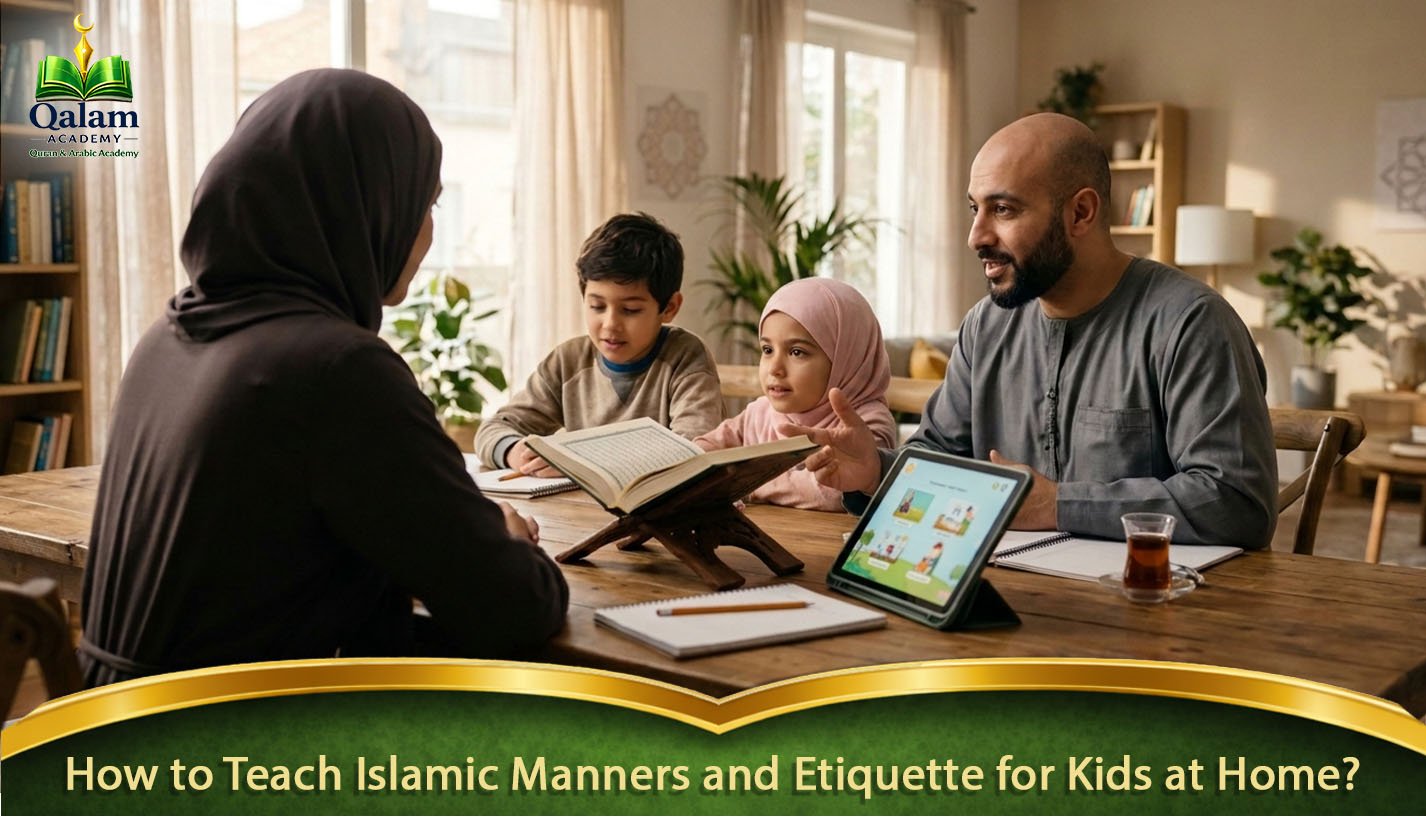
Teaching good manners works best when lessons are practical, consistent, and suitable for a child’s developmental stage. Parents do not need to introduce every behavior at once. Instead, choose a small number of habits and practice them during familiar activities.
Model Islamic Manners for Kids Through Your Own Behavior
Children often copy the behavior they observe. Therefore, parents should demonstrate honesty, patience, gratitude, and respectful speech in their interactions with family members and others.
For example, apologize when you make a mistake, thank someone who helps you, and speak calmly during disagreements. These actions show children how values translate into real situations.
Use Gentle Reminders to Teach Islamic Etiquette
Correct mistakes calmly and explain the expected behavior. A short reminder such as “Let’s wait until your sister finishes speaking” can be more effective than repeated criticism.
Recognize genuine effort when children remember a greeting, share responsibly, or admit a mistake. Specific praise helps them understand which behavior they are developing.
Nevertheless, avoid making every act of kindness dependent on rewards. Encourage children to understand why the behavior matters and how it affects others.
Teach Islamic Manners Through Stories and Games
Stories about the Prophets, including examples from the life of Prophet Muhammad ﷺ, can introduce Islamic values in an engaging and age-appropriate way. Choose reliable material and explain the lesson in language children can understand.
Role-playing can also help. Practice greeting a guest, asking permission to enter a room, or responding politely when disappointed. Children can rehearse different responses before encountering similar situations.
Games, picture cards, and simple family challenges may make repeated practice more enjoyable. Keep activities brief and adjust them to the child’s interests and attention span.
Connect Islamic Manners for Children With Daily Routines
Daily routines provide repeated opportunities to reinforce good habits. Families can practice greetings when entering the home, gratitude at mealtimes, privacy before entering bedrooms, and responsibility when putting away belongings.
Parents can introduce a weekly focus, such as honesty or kindness, and discuss examples they notice during the week. This approach creates structure without overwhelming children with too many new expectations.
Encourage Questions About Islamic Manners and Etiquette for Kids
Children may ask why certain behaviors are encouraged or why a rule applies in one situation but not another. Welcome reasonable questions and explain the principles behind the guidance.
When you are unsure about a religious ruling, consult a reliable and qualified source instead of presenting an uncertain answer as definitive.
Open conversations help children develop understanding rather than merely memorizing instructions. They also give parents opportunities to correct misunderstandings before they become established habits.
Common Challenges in Teaching Islamic Manners and Etiquette for Kids
Children will not remember every lesson immediately. They may interrupt, forget to say thank you, or respond impatiently when tired or upset. Such moments are part of learning and do not necessarily indicate that previous teaching has failed.
First, consider the situation. Hunger, tiredness, stress, and difficulty managing emotions can affect a child’s behavior. Addressing these needs may be more effective than repeating a rule.
Next, give clear and consistent reminders. If a child interrupts, calmly explain that everyone deserves a chance to speak and help them practice waiting.
Avoid comparing siblings or using humiliating labels. Comparisons can create resentment and distract from the specific behavior that needs improvement.
Finally, look for progress over time. A child who begins apologizing independently or remembers a greeting more often is developing a useful habit, even if mistakes still happen.
Islamic Manners and Etiquette for Kids in Everyday Family Life
Islamic character education becomes more meaningful when children see how values apply in different situations. A lesson about kindness can influence behavior at home, in the classroom, on the playground, and online.
Families can support this process through short discussions, shared responsibilities, regular reading, and opportunities to help others. These activities do not need to be complicated or time-consuming.
Consistency matters more than creating a perfect schedule. A few minutes spent discussing a real situation may teach more than a long lecture that children struggle to follow.
Parents should also remember that character develops gradually. Encourage reflection, acknowledge sincere effort, and give children opportunities to repair mistakes. Over time, repeated practice can help children connect Islamic teachings with their choices and relationships.
Islamic Manners for Kids With Qalam Online Quran Academy
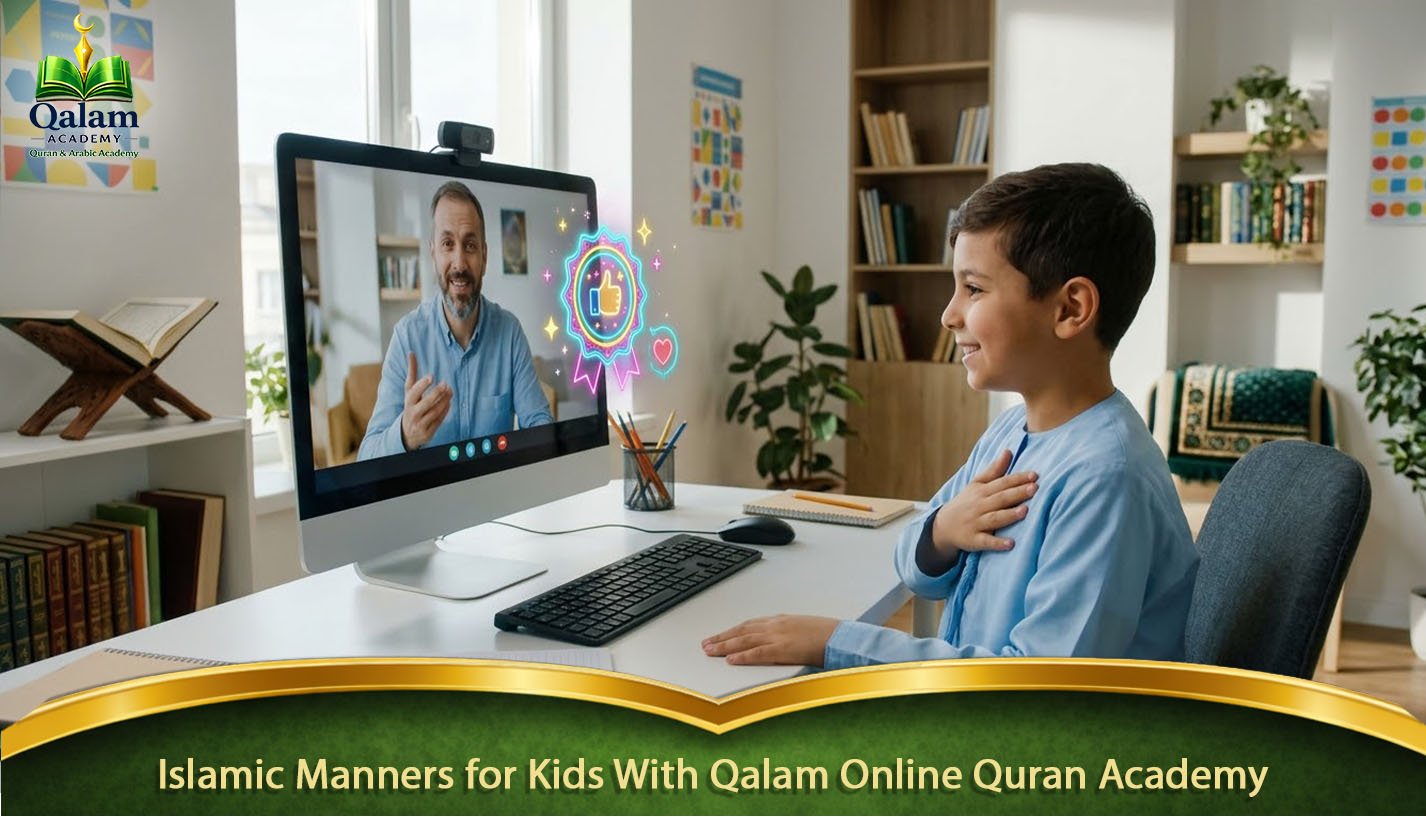
Parents can support their children’s Islamic learning by combining Quran education with daily practice of good manners. Qalam Online Quran Academy may be an option for families exploring structured online Quran lessons. Before choosing a course, parents should consider:
- Age and learning level: Select lessons suitable for the child’s current abilities and experience.
- Course content: Ask about Quran reading, recitation, and the skills covered.
- Teaching methods: Understand how lessons are delivered and how children participate.
- Schedule: Check whether lesson times fit the family’s routine.
- Progress updates: Ask how parents can follow their child’s development.
Alongside formal lessons, children need regular opportunities to practice honesty, kindness, respect, and gratitude at home. Parents can reinforce these values by setting a positive example, offering gentle reminders, and discussing everyday situations.
By reviewing the available course details and maintaining consistent family guidance, parents can support both Quran learning and the development of good Islamic character.
Frequently Asked Questions About Islamic Manners and Etiquette for Kids
Explore common questions about Islamic manners and etiquette for kids, including practical ways parents can teach respect, honesty, kindness, and good character.
At What Age Should Children Start Learning Islamic Manners?
Children can begin learning simple habits in early childhood, such as greeting family members, saying thank you, and putting away toys. As their understanding develops, parents can introduce more detailed explanations about honesty, responsibility, and Islamic values.
How Can Parents Teach Good Manners Without Making Children Feel Pressured?
Introduce one or two habits at a time, demonstrate the behavior, and offer calm reminders. Praise sincere effort rather than demanding perfection, and allow children to ask questions or explain their feelings.
How Can Parents Encourage Good Manners Outside the Home?
Practice realistic situations at home, discuss expectations before visits or school activities, and model respectful behavior in public. Afterward, talk about what went well and identify one useful improvement without embarrassing the child.
What Should Parents Do When Children Repeatedly Forget Their Manners?
Consider whether the behavior is related to age, tiredness, stress, or an unclear expectation. Restate the rule calmly, demonstrate the appropriate response, and provide consistent opportunities to practice. If difficulties persist, look for underlying needs rather than relying only on punishment.
Conclusion
Islamic Manners and Etiquette for Kids are best taught through practical examples, patient guidance, and regular opportunities to practice. From saying Bismillah and greeting others to showing honesty, humility, and kindness, each habit can help children understand how Islamic values relate to everyday choices.
Parents do not need to teach every lesson at once. Instead, they can build a supportive home environment, encourage questions, correct mistakes respectfully, and celebrate gradual progress. With consistency and age-appropriate guidance, children can develop habits that strengthen their relationships and support their growing understanding of Islamic character.