


Sunnah Prayers Every Muslim Should Know are voluntary acts of worship that help Muslims follow the example of Prophet Muhammad ﷺ and strengthen their daily connection with Allah. Although these prayers are not obligatory like the five daily salah, they offer additional opportunities to earn rewards, develop consistency, and approach worship with greater focus.
Many Muslims want to practice the Sunnah but feel uncertain about which prayers to perform, how many rak‘ahs each includes, and when to offer them. Fortunately, learning these details can make daily worship easier to organize. By understanding the confirmed Sunnah prayers first, you can establish a manageable routine and gradually include additional voluntary prayers.
This guide explains the main types of Sunnah prayers, their recommended times, their spiritual benefits, and the practical steps for performing them. It also clarifies the difference between Sunnah and Nafl prayers, helping you make informed choices without feeling overwhelmed. With guidance from Qalam Online Quran Academy, learners can also deepen their understanding of Islamic worship and develop greater confidence in their religious practice.
What Are Sunnah Prayers in Islam?
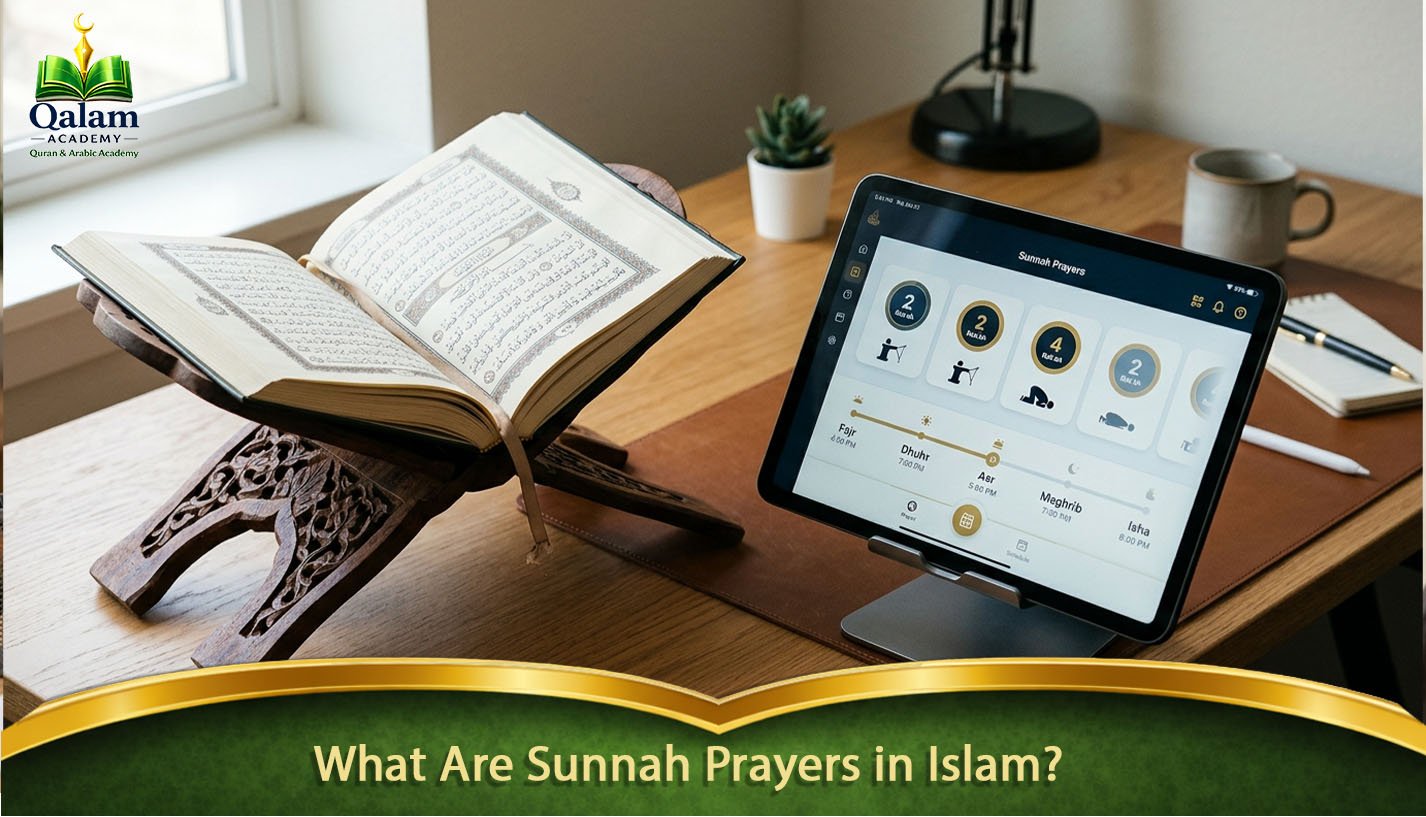
Sunnah prayers are voluntary prayers associated with the teachings and practice of Prophet Muhammad ﷺ. Muslims perform them to follow his example, seek Allah’s pleasure, and strengthen the habits of daily worship.
Unlike the five obligatory prayers, missing a voluntary Sunnah prayer does not carry the same ruling as deliberately neglecting an obligatory salah. Nevertheless, regularly observing the established Sunnah prayers is a valued practice in Islam, particularly when a Muslim can maintain it consistently. Scholars commonly distinguish between two categories:
- Sunnah Mu’akkadah: Emphasized Sunnah prayers that the Prophet ﷺ regularly performed and encouraged Muslims to observe.
- Sunnah Ghayr Mu’akkadah: Less strongly emphasized voluntary prayers associated with the Prophet’s practice, including prayers he performed on certain occasions.
These categories help Muslims understand which prayers deserve particular attention when organizing their daily routines. However, individual rulings and classifications can differ among Islamic schools of jurisprudence.
Furthermore, Sunnah prayers are not simply extra movements performed before or after obligatory salah. They are acts of worship that encourage mindfulness, discipline, and a closer relationship with Allah. Understanding their purpose can make the practice more meaningful than following a timetable without reflection.
Start Learning with Qalam Online Quran Academy Today
Take the first step toward a stronger connection with the Quran and Islamic knowledge. At Qalam Online Quran Academy, our qualified teachers provide personalised one-on-one classes for children, adults, and beginners. Enjoy flexible schedules, interactive lessons, and a supportive learning environment designed to help you achieve your goals. Begin your Quran learning journey with confidence.

Why Do Sunnah Prayers Every Muslim Should Know Matter4?
The value of Sunnah prayers extends beyond the number of additional rak‘ahs a person performs. They encourage believers to follow the Prophet’s example while making worship a regular part of everyday life.
One of their most significant benefits concerns the spiritual completion of obligatory prayer. An authentic hadith explains that voluntary prayers may help compensate for deficiencies in obligatory prayers on the Day of Judgment. This gives Muslims another reason to take their voluntary worship seriously while continuing to prioritize the five daily prayers. Sunnah prayers can also help believers develop several beneficial habits:
- Consistency: Following a regular prayer routine encourages discipline throughout the day.
- Mindfulness: Additional time in salah creates opportunities to concentrate on recitation and supplication.
- Spiritual growth: Voluntary worship helps Muslims seek closeness to Allah beyond their minimum obligations.
- Following the Prophet ﷺ: Observing established Sunnah practices connects everyday worship with prophetic guidance.
- Personal reflection: Quiet moments in prayer can encourage gratitude, repentance, and renewed intention.
Nevertheless, the goal is not to perform as many prayers as possible while neglecting other responsibilities. Instead, Muslims should build a balanced routine that protects obligatory worship, fulfills their duties, and allows voluntary acts to become sustainable habits.
For learners who want to understand Islamic practices more thoroughly, Qalam Online Quran Academy can be a starting point for exploring Quranic learning and related aspects of Islamic education.
Sunnah Prayers Every Muslim Should Know Throughout the Day
The daily Sunnah prayers associated with the five obligatory prayers are an excellent place to begin. Their timing makes them easier to remember because they fit naturally around the established salah schedule.
A widely recognized set of twelve emphasized rak‘ahs consists of two before Fajr, four before Dhuhr, two after Dhuhr, two after Maghrib, and two after ‘Isha. This arrangement is supported by an authentic narration from Umm Habibah (may Allah be pleased with her).
The following sections explain these prayers individually so that you can understand their timing and significance.
Sunnah Prayers Every Muslim Should Know Before Fajr
The two rak‘ahs before Fajr are among the most strongly emphasized Sunnah prayers. Their special status is reflected in an authentic hadith in which the Prophet ﷺ described the two rak‘ahs of Fajr as better than the world and everything in it.
These prayers are performed after the true dawn begins and before the obligatory Fajr prayer. Therefore, they should not be confused with voluntary prayers offered before dawn enters.
Although these rak‘ahs are short, they provide an opportunity to begin the day with worship and attention to Allah. Many Muslims maintain this practice even when they have limited time in the morning. To establish the habit:
- Prepare for prayer before the Fajr time begins.
- Perform the two Sunnah rak‘ahs after dawn enters.
- Follow them with the obligatory Fajr prayer.
- Avoid lengthy recitation if doing so would make you miss the congregational prayer.
The emphasis on these rak‘ahs does not mean that other obligatory duties should be neglected. Rather, they offer a practical way to strengthen the beginning of your daily worship.
Sunnah Prayers Every Muslim Should Know Before Dhuhr
The Sunnah prayers before Dhuhr provide an opportunity to pause before the midday obligatory prayer. Four rak‘ahs before Dhuhr are included in the commonly taught twelve-rak‘ah daily routine.
A Muslim may perform these four rak‘ahs as two sets of two, which is a straightforward arrangement for voluntary prayer. The specific manner of performing some voluntary prayers may differ according to the school of jurisprudence being followed.
This practice can be particularly helpful for people whose mornings are busy with work, study, or family responsibilities. Rather than treating the prayer as an additional burden, they can use the time surrounding Dhuhr to create a deliberate break for worship.
When learning the routine, focus first on remembering the timing. Once the habit becomes established, you can pay more attention to your recitation, concentration, and understanding of what you say during salah.
Sunnah Prayers Every Muslim Should Know After Dhuhr
After completing the obligatory Dhuhr prayer, Muslims commonly perform two emphasized Sunnah rak‘ahs. These prayers form another part of the twelve-rak‘ah routine.
Because they follow an obligatory prayer, they can be easier to remember than voluntary prayers scheduled at a separate time. For example, a person who already pauses for Dhuhr at work can incorporate the additional rak‘ahs before returning to other responsibilities.
However, the quality of worship should not be measured only by completing a checklist. It is better to learn the prayer correctly and approach it with sincerity than to rush through it without understanding.
Together, the four rak‘ahs before Dhuhr and two after it create a structured pattern around the midday salah. Muslims can learn Islam step by step through this arrangement, particularly if they are only beginning to practice the regular Sunnah prayers.
Sunnah Prayers Every Muslim Should Know After Maghrib
The two Sunnah rak‘ahs after Maghrib are performed after the obligatory Maghrib prayer. They are part of the emphasized daily Sunnah and offer a natural opportunity to continue worship as evening begins.
For families, this period can become a shared reminder to protect time for salah. Parents may also use the occasion to help children recognize the difference between obligatory prayers and additional voluntary worship. Parents who want to encourage Quranic learning at home can also explore how to help a child memorize Quran with a weak memory.
Nevertheless, the practice should be taught patiently. Children and new learners benefit from clear explanations, practical demonstrations, and age-appropriate expectations rather than pressure to memorize every detail immediately.
After Maghrib, Muslims may also engage in remembrance of Allah and other established supplications. These acts complement a broader routine of worship, although they should not be confused with the two specific Sunnah rak‘ahs.
Sunnah Prayers Every Muslim Should Know After ‘Isha
The final two rak‘ahs in the widely recognized twelve-rak‘ah daily routine are performed after the obligatory ‘Isha prayer.
These prayers allow Muslims to finish the evening with an additional act of worship. They can be especially helpful for people who prefer to complete their regular Sunnah prayers immediately after the obligatory salah rather than postpone them.
A consistent evening routine may also encourage greater awareness of the day’s spiritual priorities. Instead of treating prayer as an interruption, Muslims can recognize it as an organizing principle around which their responsibilities are arranged.
Once these five groups of prayers become familiar, the twelve-rak‘ah routine is easier to remember. The key is to understand each prayer’s timing and gradually build consistency without allowing voluntary worship to interfere with obligatory duties or essential responsibilities.
Additional Sunnah Prayers Every Muslim Should Know
Beyond the twelve emphasized daily rak‘ahs, other voluntary prayers are associated with the Prophet’s practice. Their classifications and recommended forms may differ, so learners should distinguish established practices from general voluntary worship.
Four Rak‘ahs Before ‘Asr
A narration encourages praying four rak‘ahs before ‘Asr and mentions Allah’s mercy for the person who maintains them. These prayers are commonly taught as a recommended voluntary practice, although they are not included in the standard twelve-rak‘ah set of emphasized daily Sunnah prayers.
They provide an opportunity to prepare spiritually for the afternoon obligatory prayer. Someone with a flexible schedule may find it convenient to perform them before joining the congregation.
At the same time, Muslims should avoid delaying the obligatory ‘Asr prayer or allowing additional worship to interfere with its proper timing. The priority remains clear: fulfill the obligation first, and observe recommended prayers when circumstances allow.
Two Rak‘ahs Before Maghrib
Voluntary prayer before Maghrib is also reported in prophetic guidance. The Prophet ﷺ encouraged prayer before Maghrib, while indicating that the practice should not be treated as an obligation.
Because the time between sunset and the obligatory Maghrib prayer is relatively short, these rak‘ahs require attention to timing. A Muslim should not delay the obligatory prayer in pursuit of additional voluntary worship.
This example illustrates an important principle: understanding Sunnah prayers involves learning not only how to perform them but also how to balance them with the established obligations of salah.
Voluntary Prayer Before ‘Isha
Some Muslims perform additional voluntary rak‘ahs before the obligatory ‘Isha prayer. Such prayers fall within the broader practice of voluntary worship, although they should not automatically be presented as a universally emphasized Sunnah with the same status as the twelve established daily rak‘ahs.
When studying these practices, it is helpful to distinguish between a prayer supported by a specific prophetic narration, a recommended practice discussed by scholars, and a general voluntary prayer.
This distinction prevents confusion and helps Muslims build their routines on sound knowledge rather than assuming every commonly practiced prayer has the same legal classification.
The Spiritual Rewards of Regular Sunnah Prayers
Islamic teachings explain the benefits of voluntary prayer without promising guaranteed worldly outcomes. Through these prayers, Muslims can seek Allah’s pleasure, follow the Prophet ﷺ, and develop habits that support a more attentive religious life.
- They Help Address Shortcomings in Obligatory Prayer:
An authentic hadith explains that voluntary prayers may help address deficiencies in a person’s obligatory prayers. This teaching highlights the value of maintaining voluntary worship alongside the five daily obligations. However, Muslims should never interpret this teaching as permission to neglect obligatory salah. Instead, they should take both their required prayers and additional acts of worship seriously.
- They Encourage Consistency and Self-Discipline:
Regular Sunnah prayers establish a rhythm around the five daily prayers. Over time, this habit can make worship a natural part of the day instead of another task to schedule. For example, performing the two rak‘ahs after Maghrib immediately after the obligatory prayer removes the need to find another time later. Similarly, maintaining the Fajr Sunnah can encourage better preparation for the morning.
- They Create Opportunities for Reflection:
Additional prayer gives Muslims more time to recite the Quran, remember Allah, and reflect on their intentions. Although each person experiences worship differently, approaching salah with attention can make the experience more meaningful. Furthermore, voluntary worship can nurture gratitude and humility. It reminds believers that their relationship with Allah extends beyond fulfilling the minimum required acts.
- They Strengthen the Practice of Prophetic Guidance:
By observing established Sunnah prayers, Muslims bring the Prophet’s example into their everyday lives. Rather than treating his guidance as abstract information, they apply it through regular acts of worship. This practical connection explains why many Muslims value structured learning about the Sunnah. Qalam Online Quran Academy may interest learners who want Quranic study to support a broader understanding of Islamic practice.
How to Perform Sunnah Prayers Correctly?

Muslims perform Sunnah prayers by following the general structure of salah. They begin with the intention in their hearts, say the opening takbir, recite the Quran, bow, prostrate, and complete the required rak‘ahs.
Beginners can learn the process through this guide on how to perform salah step by step. Follow these basic steps when performing Sunnah prayers:
- Prepare for prayer: Perform wudu when required, check the prayer time, and choose a clean place.
- Form the intention: Decide which prayer you intend to perform. You generally do not need to declare your intention aloud.
- Begin with takbir: Say “Allahu Akbar” to enter the prayer.
- Recite the Quran: Recite Surah Al-Fatihah and any additional passage according to the applicable rulings.
- Perform ruku‘ and sujud: Bow, prostrate, and recite the appropriate remembrances with composure.
- Complete the rak‘ahs: Follow the required sequence of movements, sitting, and recitation.
- Finish the prayer: Complete the final sitting and salutation according to the prayer’s structure.
Muslims generally perform regular Sunnah prayers in sets of two rak‘ahs. However, some details vary according to the specific prayer and school of Islamic jurisprudence.
Learning the etiquette of reading the Quran can also help Muslims develop better recitation habits. For questions about specific rulings, consult a qualified teacher or reliable Islamic source.
Qalam Online Quran Academy may help learners seeking structured Quranic education and improved recitation. Muslims can also review is it is permissible to read Quran without wudu to understand relevant guidance about ritual purity and Quran reading.
Sunnah and Nafl Prayers: What Is the Difference?
Sunnah and Nafl prayers share an important characteristic: both involve voluntary worship rather than the five obligatory prayers. However, scholars do not always use the terms in precisely the same way, and their meanings can overlap.
- Sunnah prayers: This term commonly describes voluntary prayers connected to the Prophet’s practice or specifically encouraged in prophetic teachings. Islamic jurisprudence also uses the term when discussing the classification of religious acts.
- Nafl prayers: This term generally describes additional voluntary prayers beyond obligatory salah. Depending on the scholarly context, people may also describe a Sunnah prayer as a form of Nafl worship.
Therefore, the terms do not always represent two completely separate categories. Instead, they can emphasize different aspects of voluntary worship. Consider these examples:
- Muslims recognize the two rak‘ahs before Fajr as an established, strongly emphasized Sunnah.
- The regular Sunnah prayers surrounding Dhuhr, Maghrib, and ‘Isha also form part of established daily practice.
- Muslims may perform additional voluntary prayers when appropriate, provided they observe the relevant rulings about prayer times and circumstances.
Understanding these distinctions helps readers interpret Islamic books and lessons more accurately. When two sources use the terms differently, examine their context and scholarly framework instead of assuming that one source must be wrong.
How to Build a Sustainable Sunnah Prayer Routine?
Learning about voluntary prayers provides the first step. The next challenge involves building a routine that fits your circumstances without making worship feel unmanageable. A gradual approach can help beginners and returning practitioners alike.
- Start with the emphasized daily prayers. Learn the twelve-rak‘ah routine and understand when each group belongs. If you already observe some of these prayers, identify the ones you can maintain more consistently.
- Connect each prayer to an existing habit. Perform the Sunnah prayers immediately before or after the relevant obligatory salah whenever appropriate. This approach reduces the need to remember a separate schedule.
- Improve your recitation gradually. Review Surah Al-Fatihah, the short surahs you commonly recite, and the basic movements of salah. Accurate pronunciation and a calm pace can help you gain confidence.
- Learn the relevant rulings. Understand which prayers scholars classify as emphasized, which they recommend more generally, and when you should avoid voluntary prayer. Reliable instruction helps prevent avoidable mistakes.
- Avoid an all-or-nothing mindset. If you miss a voluntary prayer, return to your routine instead of abandoning it. Realistic expectations and continued effort help you build consistency.
- Review your progress periodically. Check whether your routine remains sustainable and whether you need help understanding a particular prayer or ruling.
If you want help improving your Quran recitation, you can explore educational options at Qalam Online Quran Academy. Before enrolling, review the available course details and confirm that the instruction matches your learning goals.
Common Mistakes to Avoid When Practicing Sunnah Prayers
Even sincere Muslims can become confused about voluntary prayer, especially when they encounter conflicting explanations online. Recognizing common mistakes helps you approach worship with greater confidence.
- Treating Every Voluntary Prayer as Equally Emphasized: Scholars distinguish between different categories of voluntary prayer. The twelve emphasized daily rak‘ahs have a different status from additional recommended prayers and general voluntary worship. Therefore, consult reliable Islamic sources to understand each practice instead of relying solely on social media lists.
- Delaying Obligatory Prayer for Additional Worship: Never allow voluntary prayers to make you miss or improperly delay an obligatory salah. When time becomes limited, protect the obligatory prayer first. This principle matters particularly before Maghrib, when the available time for additional prayer may be short.
- Assuming There Is Only One Valid Scholarly Explanation: Recognized schools of Islamic jurisprudence sometimes differ in how they explain or classify voluntary prayers. A difference in classification does not automatically make a source unreliable. If you follow a particular school or qualified teacher, learn the reasoning behind the guidance and apply it consistently.
- Rushing Through the Movements: Prayer requires prescribed movements and recitations, which Muslims should perform with composure. Adding voluntary rak‘ahs should never lead you to neglect the proper manner of salah. If you are still learning, focus on accuracy first. As your knowledge develops, you can gradually add more voluntary practices.
- Confusing General Advice With Religious Evidence: Online articles can summarize Islamic teachings, but important religious claims require reliable hadith evidence and recognized scholarship. Pay particular attention to claims about a prayer’s reward, timing, or legal status. By checking the evidence and consulting qualified teachers when necessary, Muslims can avoid treating unsupported claims as established religious guidance.
Frequently Asked Questions About Sunnah Prayers
Find clear answers to common questions about Sunnah prayers, their timing, how to perform them, and their role in daily worship.
1. Can I perform Sunnah prayers if I have missed an obligatory prayer?
If you miss an obligatory prayer, first learn and follow the relevant rulings about making it up. The details depend on your circumstances and the school of jurisprudence you follow, so consult a qualified scholar for guidance.
2. Should I recite a particular surah in every Sunnah prayer?
No single additional surah applies to every regular Sunnah prayer. Follow the applicable recitation requirements, including Surah Al-Fatihah, and consult reliable scholarly guidance about any specific recitations that prophetic reports recommend for particular prayers.
3. Can I pray Sunnah prayers while traveling?
Travel affects certain prayer rulings, and scholars discuss how Muslims should observe regular Sunnah prayers during a journey. The guidance may depend on the prayer, travel circumstances, and school of jurisprudence. Consult a reliable source rather than assuming that every traveler follows identical rulings.
4. Is it better to pray Sunnah prayers at home or in the mosque?
Islamic guidance encourages Muslims to perform many voluntary prayers at home, although circumstances may make the mosque more practical. Consider the specific prayer, congregation arrangements, and relevant Sunnah evidence. Choose a setting that supports sincere and consistent worship while following reliable guidance.
Conclusion
Sunnah Prayers Every Muslim Should Know offer a practical way to follow Prophet Muhammad’s example ﷺ and enrich daily worship. By starting with the emphasized twelve-rak‘ah routine, Muslims can establish a foundation before exploring additional voluntary prayers.
The most helpful approach combines correct timing, a clear understanding of relevant rulings, and consistent practice without neglecting obligatory salah. Furthermore, improving Quran recitation and studying reliable Islamic guidance can make each prayer more informed and meaningful.
If you need additional educational support, consider exploring Qalam Online Quran Academy as part of your learning plan. Choose resources that match your goals, review course details before enrolling, and build your worship through knowledge, patience, and steady effort.
Ultimately, voluntary prayer should strengthen your relationship with Allah rather than create unnecessary pressure. Begin with a routine you can maintain, seek sound knowledge, and allow consistent practice to deepen your understanding over time.