


Learn Quran online via Zoom to practice recitation with a teacher, receive pronunciation corrections, and follow lessons from home. Whether you are a beginner, a parent arranging lessons for a child, or an adult returning to Quran study, online classes can provide a flexible way to develop your reading skills.
However, successful online learning involves more than joining a video call. You need a suitable teacher, a clear learning plan, regular feedback, and enough time to practice between lessons. Your choice should also reflect your current reading level and whether your main goal is Quran reading, Tajweed, memorization, or another area of study.
This guide explains how Quran lessons via Zoom work, what equipment you need, how to choose a teacher, and how to evaluate your progress. It also outlines what to consider when exploring Qalam Online Quran Academy.
How Quran Lessons Work on Zoom?
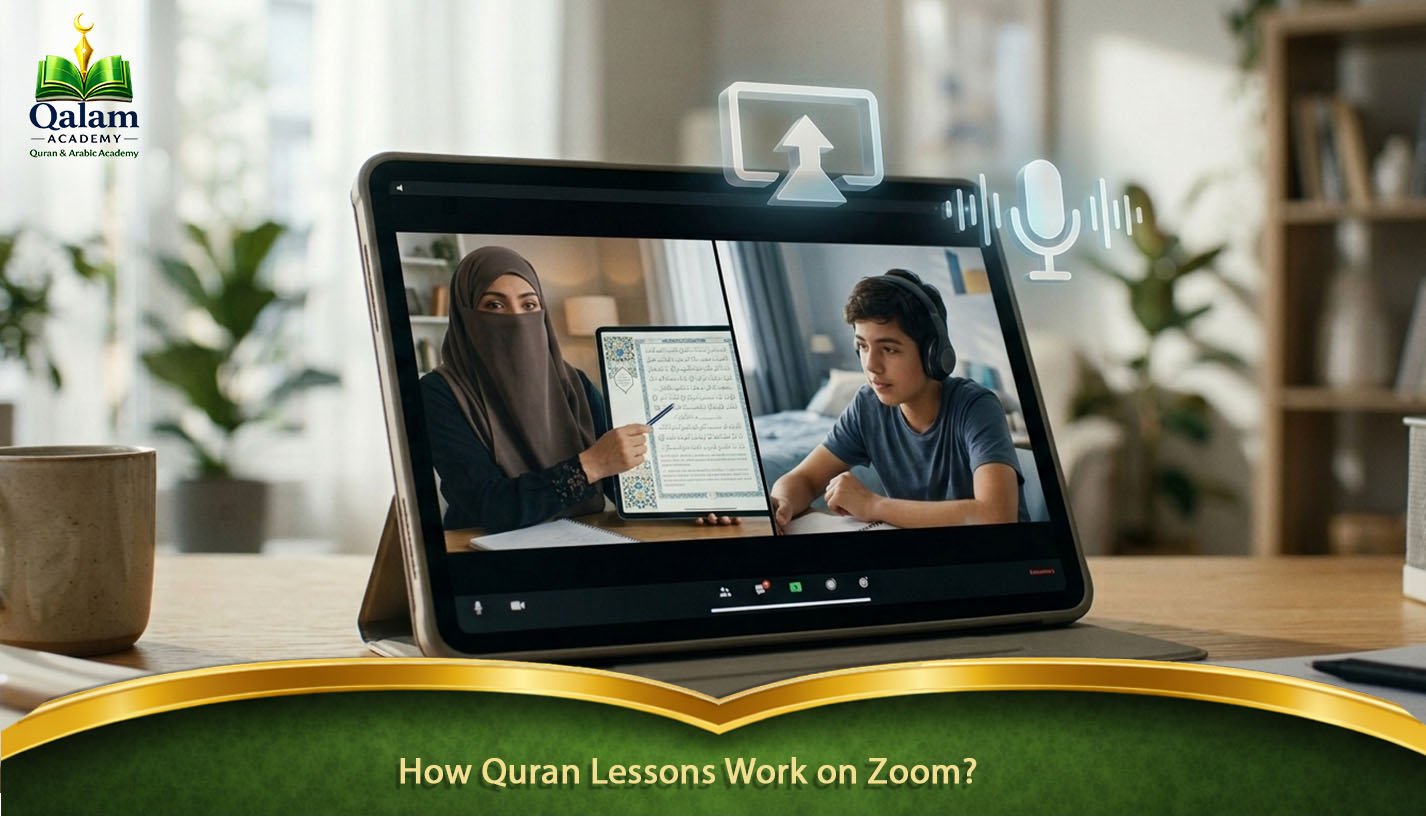
Learning Quran online via Zoom means attending live lessons through a video conferencing platform. Instead of traveling to a classroom, you connect with a teacher who can listen to your recitation, explain mistakes, and guide you through the material in real time.
Unlike prerecorded videos, live lessons allow you to ask questions and receive feedback on your own performance. This is particularly useful when learning Arabic letter pronunciation, improving reading fluency, or applying Tajweed rules during recitation. Depending on your level and learning goals, a lesson may include:
- Arabic reading fundamentals: Recognizing letters, understanding vowel marks, and reading connected words.
- Quran recitation: Practicing verses while working on accuracy and fluency.
- Tajweed: Learning the rules that guide Quranic pronunciation and recitation.
- Hifz: Memorizing selected passages and revising previously learned verses.
- Quranic understanding: Studying selected meanings or related subjects when included in the curriculum.
- Progress review: Revisiting earlier material and identifying areas that need more practice.
The exact content depends on the teacher and course. Therefore, ask about the curriculum before enrolling rather than assuming every online Quran program covers the same subjects.
Start Learning with Qalam Online Quran Academy Today
Take the first step toward a stronger connection with the Quran and Islamic knowledge. At Qalam Online Quran Academy, our qualified teachers provide personalised one-on-one classes for children, adults, and beginners.
Enjoy flexible schedules, interactive lessons, and a supportive learning environment designed to help you achieve your goals. Begin your Quran learning journey with confidence.

Why Learn Quran Online via Zoom?
Online Quran lessons can make regular study easier for people whose schedules or locations limit their access to in-person teaching. Nevertheless, convenience is only one factor to consider; the teaching method must also meet your needs.
Flexible Scheduling for Children and Adults
Parents may need lessons outside school hours, while adults often balance Quran study with work and family responsibilities. Online classes can reduce travel time and may offer scheduling options that fit these commitments, depending on the teacher’s availability.
They can also help students who live far from suitable local instructors. Before choosing a schedule, consider how often you can realistically attend and how much time you can devote to practice between sessions.
Individual Feedback During Recitation
Reading the Quran accurately requires more than recognizing Arabic words. Students must also develop correct pronunciation, distinguish similar sounds, and apply relevant recitation rules.
During a live lesson, the teacher can listen to a passage, identify a specific error, and explain how to correct it. You can then repeat the word or verse and receive further guidance.
This process is particularly valuable when a mistake is difficult to recognize independently. However, improvement depends on the quality of the feedback and your willingness to practice after the lesson.
Learning From a Familiar Environment
Studying at home may feel more comfortable for beginners and students returning to Quran learning after a long break. It also allows parents to prepare a familiar learning space for children.
To benefit from this arrangement, choose a quiet location and keep distractions to a minimum. Students who find it difficult to concentrate online may need parental support, shorter sessions, or a more interactive teaching approach.
Lessons Matched to Different Learning Goals
Students do not all begin at the same level. A beginner may need help with Arabic letters, while an experienced reader may want to refine Tajweed or follow a memorization plan.
Before choosing a course, explain your current ability and intended outcome. A suitable program should provide a learning path that reflects those needs rather than assigning identical material to every student.
How to Learn Quran Online via Zoom Step by Step?
Preparing for online Quran lessons becomes easier when you understand the process. Registration and assessment procedures vary, but the following steps can help you choose a suitable learning arrangement.
Define Your Goals to Learn Quran Online via Zoom
Start by identifying the skill you want to develop when you learn Quran online via Zoom. Your goal will influence the course, teacher, lesson structure, and amount of practice required. Common goals include:
- Learning to read: Recognizing Arabic letters, vowel marks, and connected words.
- Improving Tajweed: Understanding and applying recitation rules.
- Memorizing the Quran: Learning new passages while revising earlier portions.
- Improving fluency: Reading more smoothly while maintaining accuracy.
- Studying Quranic meanings: Exploring selected meanings when this instruction is available.
If you also want to develop your spoken Arabic, exploring the best way to learn Arabic conversation online can help you identify suitable learning methods for that separate goal.
You may have more than one goal, but it helps to identify your main priority first. You can then discuss additional objectives with the teacher as your skills develop.
Assess Your Reading Level Before You Learn Quran Online via Zoom
Your starting level determines which skills need the most attention. For example, someone who can read Arabic but struggles with specific pronunciation rules may not need to repeat the entire alphabet.
A teacher may ask you to recognize letters, read a short passage, or recite a familiar surah. This assessment helps identify strengths and areas that require further instruction.
Be honest about your experience. An initial assessment is not a test you need to pass; it helps determine the right starting point for your online Quran lessons.
Choose a Qualified Teacher to Learn Quran Online via Zoom
Look for an instructor who has relevant Quranic knowledge, explains concepts clearly, and provides specific corrections. If you intend to study advanced Tajweed or pursue an Ijazah, ask about the qualifications and training relevant to that goal.
If you prefer to study with a woman, you can explore the available Female Quran tutor options and check whether the instructor’s experience matches your learning needs.
Also, confirm whether lessons are individual or held in groups. Sisters looking for a learning environment suited to their preferences can explore Online Quran classes for sisters when comparing available lesson formats.
Prepare Your Schedule and Equipment to Learn Quran Online via Zoom
Before your first lesson, confirm the class time, meeting arrangements, and required materials. Test your internet connection, microphone, and speakers or headphones in advance.
Your location may affect which lesson times are convenient. For example, learners looking for Online Quran classes in the UK can check scheduling options that fit their local time and daily commitments.
If the teacher shares Quranic text or other materials on screen, make sure your device can display them clearly. Joining a few minutes early can also help you resolve basic technical problems.
Practice Regularly When You Learn Quran Online via Zoom
Live instruction gives you direction, but it does not replace independent practice. Review the teacher’s corrections, repeat assigned passages, and prepare the material for the next session.
For children who find memorization difficult, applying suitable revision techniques can make practice more manageable. Parents may find additional guidance in this resource on how to help a child memorize the Quran with a weak memory.
Consistent practice helps reinforce what you learn during each class. If you are unsure which mistakes to focus on, ask your teacher to prioritize the exercises that will best support your progress. A short, focused practice routine can help reinforce what you learned. Ask your teacher how to prioritize exercises if you are unsure which mistakes or passages require the most attention.
What Equipment Do You Need to Learn Quran Online via Zoom?
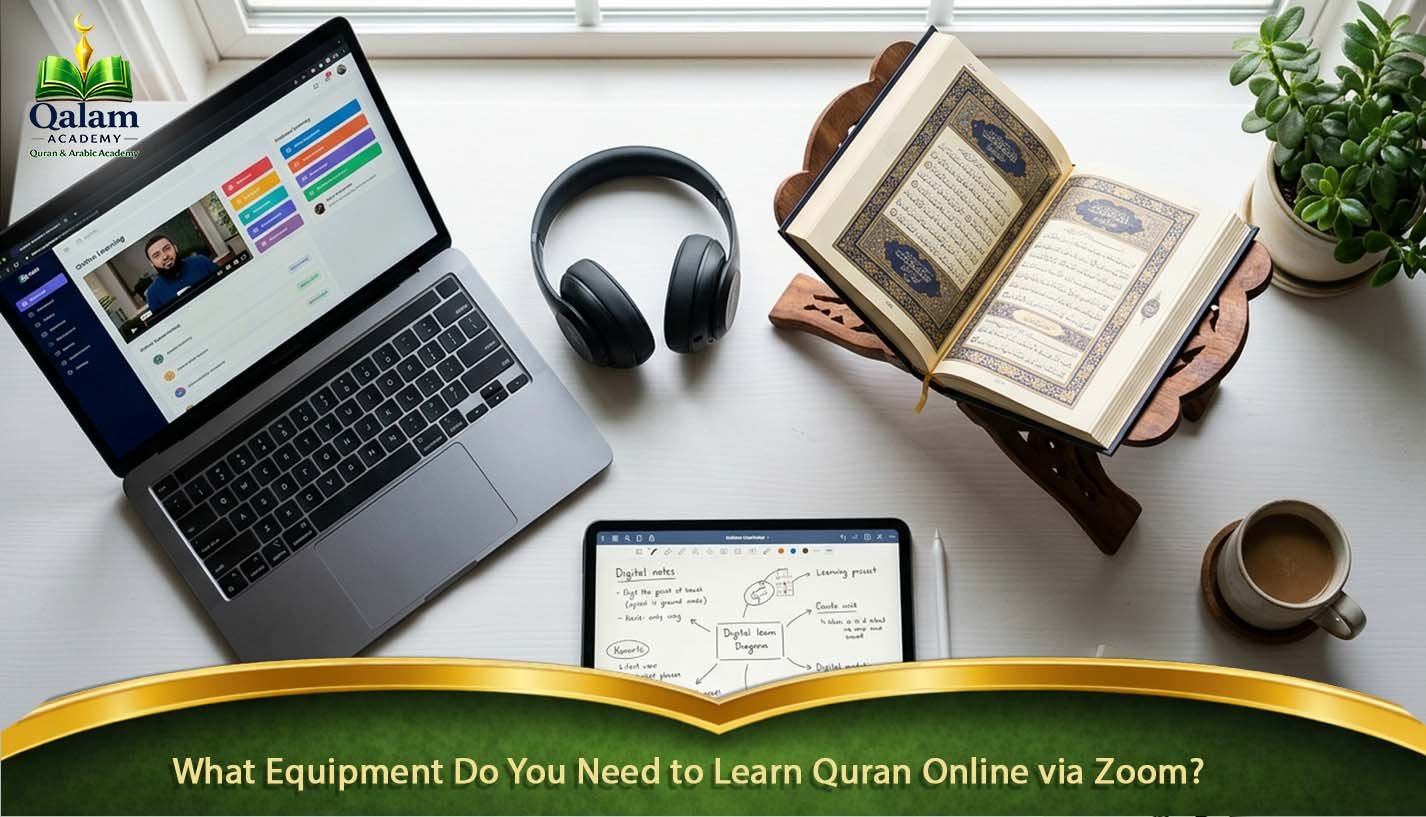
You do not need an expensive home studio to attend online Quran lessons. A compatible device, clear audio, a reliable internet connection, and a quiet place to study are usually sufficient.
- A Smartphone, Tablet, or Computer
Most compatible smartphones, tablets, and computers can support video lessons. However, tablets and computers often provide a larger screen, making it easier to read Quranic text or follow shared materials.
If you use a smartphone, place it on a stable surface and adjust the text size when necessary. Choose a device that allows you to hear the teacher clearly and read without straining. - A Reliable Microphone and Headphones
Clear audio helps the teacher identify pronunciation errors. Headphones may reduce surrounding distractions, while a functioning microphone helps transmit your recitation more clearly.
Test your audio before the lesson. If your voice repeatedly cuts out or sounds distorted, check the microphone settings and internet connection before continuing. - A Quran and Learning Materials
Keep a physical Quran or an appropriate digital copy available, along with any materials requested by the teacher. A notebook can help you record corrections, unfamiliar Tajweed rules, and practice assignments.
Organizing these materials before class reduces interruptions and makes it easier to review the lesson afterward. - A Quiet and Comfortable Study Space
Choose a location where conversations, television, and phone notifications are unlikely to interrupt the lesson. A quiet environment helps you concentrate on the teacher’s explanations and allows the instructor to hear your recitation more clearly.
A camera may be useful for interaction, but requirements vary by course. Ask the provider which equipment is necessary and whether lessons use screen sharing or digital materials.
Can You Learn Quran Online via Zoom on Your Phone?
Yes. A smartphone may be sufficient for lessons focused on listening, recitation, and verbal correction. However, a small screen can make Arabic text harder to read, especially for beginners who are still learning letter shapes.
If possible, use a tablet or computer for lessons involving detailed text or screen sharing. The best choice is the device that lets you participate comfortably and hear the teacher without difficulty.
What Happens During a Typical Zoom Quran Lesson?
A productive lesson usually includes review, guided learning, practice, and feedback. The exact sequence depends on the student’s level and the teacher’s approach. A session may follow this structure:
- Review: The teacher checks previous material or listens to assigned verses.
- New learning: The student works on a letter, reading pattern, Tajweed rule, or passage.
- Guided practice: The teacher demonstrates the correct approach and asks the student to repeat it.
- Correction: Difficult sounds, words, or rules receive additional attention.
- Practice assignment: The teacher identifies what to review before the next class.
For example, a beginner may practice connecting Arabic letters, while an experienced reader may work on vowel accuracy or stopping rules. The teacher should check whether you understand each correction. Identifying a mistake is only the first step; you also need opportunities to apply the explanation during recitation.
Learn Quran Online via Zoom With Tajweed Guidance
Tajweed concerns the rules and principles that guide Quranic recitation. Learning these rules involves listening, explanation, repetition, and feedback because some pronunciation errors are difficult to identify without guidance.
Which Tajweed Rules Can You Study Online?
- Makharij: The articulation points from which Arabic letters are pronounced.
- Sifaat: The characteristics that distinguish the sounds of Arabic letters.
- Noon Sakinah and Tanween: Rules governing these sounds in different recitation contexts.
- Meem Sakinah: Rules for pronouncing meem sakin in relevant contexts.
- Madd: Rules governing the elongation of sounds.
- Ghunnah: Nasalization in the relevant recitation contexts.
- Qalqalah: The characteristic sound associated with specific letters under particular conditions.
- Waqf and Ibtida: Principles related to stopping and beginning during recitation.
Students should not expect to master every rule immediately. A teacher may introduce one concept, demonstrate it through examples, and then help the student apply it to Quranic passages. The appropriate order and pace depend on the student’s existing knowledge. Ask how the teacher combines explanations with practical recitation instead of relying on theory alone.
How Does Live Feedback Improve Quran Recitation?
A prerecorded example can demonstrate correct recitation, but it cannot identify your individual mistakes. A live teacher can listen to your reading, explain a problem, and assess your next attempt. For example, beginners may confuse two letters with similar sounds.
Guided practice can help them understand the distinction and apply it more consistently. Clear audio is essential for this process. If the connection distorts your voice or repeatedly interrupts the lesson, the teacher may need you to repeat a passage after the technical problem is resolved.
Is Learning Quran Online via Zoom Suitable for Beginners?
Yes, provided the course starts at the appropriate level. Beginners may need to learn letter shapes, vowel marks, connected forms, and basic reading patterns before progressing to longer passages. A suitable teacher should allow enough time to develop these foundations.
Moving ahead before the student understands the basics can create confusion and make later correction more difficult. If you are starting from zero, ask whether the course includes a structured beginner curriculum and how the teacher checks readiness for the next stage.
Individual vs. Group Quran Lessons via Zoom
Both formats can support Quran learning, but they provide different experiences. The right choice depends on how much individual feedback you need, your learning preferences, and the structure of the available classes.
| Factor | Individual lessons | Group lessons |
|---|---|---|
| Teacher attention | Focused on one student | Shared among participants |
| Lesson pace | Easier to adjust individually | Usually follows a shared plan |
| Recitation feedback | More time for personal correction | Depends on group size and lesson design |
| Peer interaction | Limited | Opportunities to learn alongside others |
| Learning needs | Useful for targeted practice | Can suit students at similar levels |
When Are One-to-One Quran Lessons More Suitable?
Individual lessons may be helpful for beginners, students with recurring pronunciation errors, and learners following a personal Hifz plan. Because the teacher works with one student, it may be easier to spend additional time on difficult letters, particular Tajweed rules, or passages that require repeated practice. However, individual instruction is not automatically the best choice for everyone. A well-organized group class may suit students with similar abilities who benefit from shared activities.
What Should You Ask About Group Quran Classes?
Before joining a group, ask how many students attend, how much time each learner receives to recite, and whether the teacher provides individual feedback. If your main goal is pronunciation correction, the instructor needs sufficient time to hear you. A class focused mainly on general explanations may not provide the practice you require. Evaluate the actual lesson format rather than choosing solely by the course label.
How to Choose the Right Online Quran Teacher?
A teacher’s ability to explain and correct mistakes influences what you gain from each lesson. Qualifications matter, but so do communication, patience, and the ability to adapt instruction to your current level.
Check Quranic Knowledge and Teaching Experience
Ask about the instructor’s Quranic education, Tajweed training, memorization background, and relevant teaching experience. If you intend to study advanced recitation or pursue an Ijazah, ask about the qualifications relevant to that specific goal.
Correct recitation is essential, but teaching requires additional skills. An instructor must identify the student’s difficulty, explain the correction clearly, and select examples that help the student apply the rule.
Look for Clear and Respectful Corrections
A useful teacher does not merely say that a word is incorrect. Instead, the instructor explains what needs to change and allows the student to repeat the word or passage. For example, a beginner may need help distinguishing two Arabic letters. An experienced reader might need a more precise explanation of an elongation rule or a stopping point. In both situations, feedback should be specific enough for the student to apply during later practice.
Make Sure Lessons Have a Clear Structure
A structured lesson should have an identifiable purpose. The teacher might review previous material, introduce a new concept, supervise practice, and assign an appropriate task for the next session.
However, the structure should remain flexible. If the student repeatedly struggles with a particular sound, spending more time on that issue may be more productive than immediately introducing a new topic.
When assessing Qalam Online Quran Academy, ask how instructors organize lessons and review student development. Clear answers can help you determine whether the teaching approach matches your expectations.
Can You Learn Quran Online via Zoom for Hifz?

Live online lessons can support Quran memorization when they include a realistic plan, regular testing, and revision. Memorizing new verses is only one part of Hifz; students must also retain earlier passages and recite them accurately.
How a Hifz Teacher Can Support Your Progress
- Assigning a manageable portion for new memorization.
- Listening to recitation without the student looking at the text.
- Correcting pronunciation and memorization errors.
- Testing previously memorized passages.
- Setting revision targets for the following days.
- Adjusting the workload when retention becomes difficult.
The appropriate amount of new material depends on the student’s age, available practice time, reading ability, and retention. Memorizing more verses is not necessarily better if previously learned passages are repeatedly forgotten.
Why Revision Matters in Quran Memorization
Without regular revision, students may struggle to recall material learned weeks or months earlier. Therefore, a Hifz plan should reserve time for both new memorization and previously learned passages.
A student might review an earlier portion before learning new verses, then revisit both during later practice. The teacher can monitor recurring mistakes and adjust the revision schedule when needed. This approach helps students focus on accurate retention rather than simply increasing the amount of material memorized.
How to Choose an Online Quran Academy?
Choosing a learning provider requires more than comparing course descriptions. You should understand how lessons are organized, how teachers correct mistakes, and how the provider assesses progress.
When considering Qalam Online Quran Academy, review the available course information and ask questions that relate directly to your goals. Consider these factors:
- Course suitability: Is there instruction appropriate for your current reading level?
- Teacher qualifications: What Quranic education and relevant teaching experience do instructors have?
- Lesson structure: Does each session include practice, correction, and review?
- Scheduling: Are the available lesson times compatible with your routine?
- Progress assessment: How does the teacher identify improvement and recurring difficulties?
- Communication: How can students or parents discuss concerns about lessons?
- Technical arrangements: What device, platform, and learning materials are required?
These questions help you assess whether the teaching approach meets your needs. Avoid assuming that a provider offers a particular schedule, qualification, trial lesson, or progress report unless this has been confirmed.
If you contact Qalam Online Quran Academy, explain your current level and main objective. A beginner learning Arabic letters needs a different starting point from a student seeking focused Tajweed practice or a structured memorization plan. The most suitable option is one that clearly explains its teaching arrangements and provides instruction relevant to your learning goals.
Are Online Quran Lessons via Zoom Suitable for Children?
Online lessons can work well for children when the teaching approach reflects their age, attention span, and reading ability. Younger learners often need clear instructions, manageable activities, and encouragement throughout the lesson.
How to Keep Children Engaged During Quran Lessons?
Children generally benefit from participating rather than listening for the entire session. A teacher might introduce a small number of letters, ask the child to identify their sounds, and then practice reading them in simple combinations. Useful strategies include:
- Breaking difficult tasks into smaller steps.
- Using activities suited to the child’s age and ability.
- Recognizing effort and improvement while correcting mistakes.
- Reviewing familiar material before introducing new concepts.
- Setting achievable practice goals between lessons.
Parents can also establish a consistent learning routine. A child who knows when lessons take place and what materials to prepare may find it easier to settle into the session.
How Can Parents Support Online Quran Learning?
Parents do not need to teach the lesson themselves. Their role is to help create a suitable environment, support practice, and communicate with the teacher when necessary.
Before class, check the device, prepare the Quran or learning materials, and minimize distractions. Younger children may need an adult nearby to help with technical issues or provide appropriate supervision.
After the lesson, ask what the child learned and encourage practice of the assigned material. Avoid turning every practice session into a test; children also need patience and encouragement as they develop their skills.
How Adults Can Learn Quran Online via Zoom After a Long Break?
Adults returning to Quran study may remember the Arabic alphabet but struggle with fluency, or they may read comfortably and want to improve Tajweed. Others may need to rebuild their reading skills from the beginning. Start by assessing your current ability rather than assuming you must repeat every basic lesson. A teacher can identify which skills need attention and recommend an appropriate learning path.
Setting Realistic Quran Learning Goals for Adults
- Choose a primary goal, such as improving reading fluency or correcting specific Tajweed mistakes.
- Select a lesson schedule you can maintain.
- Reserve time for practice between sessions.
- Review the teacher’s feedback before the next lesson.
- Reassess your progress periodically and adjust the plan when necessary.
For example, an adult who struggles with a few pronunciation rules may benefit more from practicing those rules carefully than from rushing through several new topics. Online lessons can make Quran study more accessible for adults who cannot travel regularly. However, convenience alone does not guarantee improvement; consistent attendance and focused practice remain essential.
How to Overcome Embarrassment About Making Mistakes
Some adults hesitate to resume Quran learning because they worry about reading incorrectly or being judged for their current ability.
Mistakes can help identify which skills need more attention. A supportive teacher should explain corrections respectfully and provide enough time for the student to practice them.
Rather than comparing your progress with someone else’s, focus on changes in your own accuracy, fluency, and confidence. Set goals that challenge you without making Quran study impossible to fit into your daily routine.
Can Women Learn Quran Online via Zoom With a Female Teacher?
Yes, women can study Quran online through programs that offer suitable instructors and class arrangements. If you prefer a female teacher, confirm availability before enrolling rather than assuming every course offers this option.
Teaching ability, Quranic knowledge, communication, and experience with your learning goals remain important considerations. You should also ask about class times, lesson format, and the process for requesting a different instructor if your needs change.
Parents arranging lessons for daughters can use the same questions to assess whether the learning environment meets their family’s requirements.
Can New Muslims Learn Quran Online via Zoom?
Online lessons can provide a starting point for new Muslims who have little or no previous experience with Quran reading. A suitable teacher can introduce concepts gradually instead of assuming the student already knows Arabic. Depending on the student’s needs, an introductory course may cover:
- Recognizing and pronouncing Arabic letters.
- Understanding basic vowel marks.
- Reading short words and simple passages.
- Practicing selected short surahs.
- Learning relevant Islamic vocabulary.
- Developing the reading skills needed for further Quran study.
The order of instruction should reflect the student’s previous knowledge and personal goals. Some learners may already know the Arabic alphabet, while others need to begin with the fundamentals.
Patience is particularly valuable during the early stages. Rather than trying to learn everything at once, focus on achievable tasks and regular opportunities to ask questions.
How Long Should an Online Quran Lesson Last?
There is no single lesson duration that suits every student. The appropriate length depends on age, concentration, reading ability, learning objectives, and the amount of material covered.
Younger children may benefit from shorter, focused sessions, while older students and adults may be comfortable with longer lessons.
The goal is to use the available time effectively. A shorter session with focused recitation and meaningful corrections may provide more value than a longer lesson in which the student becomes distracted.
Ask the teacher how lesson duration is determined and whether the schedule can be adjusted as your needs change. Remember that progress also depends on independent practice outside class.
How Often Should You Attend Online Quran Lessons?
The best frequency is one you can maintain while leaving enough time for practice and revision. Regular lessons help students revisit previous material and address recurring mistakes.
A beginner may need frequent opportunities to practice letter recognition and reading patterns. A student working on Hifz may need a schedule that balances new memorization with revision. Meanwhile, an adult with limited availability may prefer fewer lessons supported by a consistent home practice routine. Before choosing a schedule, consider:
- How much time you can realistically devote to lessons.
- Whether your goal requires frequent teacher feedback.
- How long you need to practice between sessions.
- Whether the routine fits around school, work, or family commitments.
- Whether you can maintain the schedule over time.
Instead of choosing the most intensive schedule available, select one that supports steady improvement without creating unnecessary pressure.
How to Improve Audio Quality During Zoom Quran Lessons?
Clear audio is essential because the teacher needs to hear your pronunciation accurately. Even a knowledgeable instructor may struggle to identify subtle mistakes when sound repeatedly cuts out or becomes distorted. Several practical adjustments can improve the experience:
- Test your microphone: Confirm that the correct microphone is selected before joining.
- Choose a quiet room: Reduce television sounds, conversations, and other background noise.
- Use a stable connection: Move closer to your router or use a wired connection when practical.
- Position your device appropriately: Keep the microphone close enough to capture your voice clearly.
- Close unnecessary applications: Reduce competing demands on your device and connection.
- Check your headphones: Make sure you can hear the teacher without difficulty.
- Prepare a backup option: If possible, keep another device or connection available for unexpected problems.
If the connection becomes unstable, tell the teacher rather than continuing when neither of you can hear clearly. You may need to repeat a short passage after the audio improves so that the teacher can assess your pronunciation accurately.
How to Keep Children Safe During Online Quran Lessons?
Parents should understand how online lessons are conducted before allowing a child to attend independently. The aim is to support learning while maintaining appropriate supervision and clear communication. Before enrolling, ask the provider about:
- How instructors are selected and their identities verified.
- Whether lessons use video, audio, or screen sharing.
- How teachers communicate with students outside scheduled sessions.
- Whether lessons are recorded and, if so, how recordings are handled.
- What procedures apply to safeguarding concerns.
- How parents can discuss progress or report a problem.
Parents should also review the platform’s privacy settings and the provider’s policies. Do not assume that all programs follow identical procedures. Younger children may need an adult nearby during lessons. Supervision can be adjusted as children grow more independent, while maintaining appropriate boundaries and communication.
How to Measure Progress in Online Quran Lessons?
Progress should be evaluated against your starting point and learning goals rather than a fixed timeline. Some students improve quickly in basic reading, while others need sustained practice to correct long-standing pronunciation habits.
- Signs of Improvement in Quran Reading
You may become more confident recognizing letters, reading connected words, and maintaining fluency. Your teacher may also notice fewer recurring mistakes or improved accuracy with vowel marks. - Signs of Improvement in Tajweed
Progress may include a better understanding of particular rules, more consistent application during recitation, and greater awareness of errors that previously went unnoticed.
Understanding a rule in theory is only one part of learning. You also need to demonstrate that you can apply it during actual recitation. - Signs of Improvement in Hifz
For memorization, useful indicators include recalling passages accurately, making fewer mistakes during testing, and retaining earlier portions through revision.
A teacher should help distinguish lasting improvement from temporary familiarity with recently practiced material. - Review Your Progress Regularly
Periodically compare your current performance with an earlier reading sample or assessment. Ask which skills have improved and what deserves attention next.
This process helps you determine whether the pace is appropriate, whether more practice is necessary, or whether the learning plan needs adjustment. When considering Qalam Online Quran Academy, ask how progress is reviewed and whether feedback about your development is available. A clear process can help you identify achievements and address difficulties early.
Common Mistakes to Avoid When You Learn Quran Online via Zoom
Online lessons become more effective when students prepare properly and use teacher feedback between sessions. However, several common habits can slow progress even when the instructor is experienced.
- Attending Classes Without Practicing
A live lesson cannot replace independent practice. Reviewing corrections between sessions helps you reinforce what you learned and identify questions for the next class. - Moving Ahead Before Mastering the Basics
Beginners sometimes attempt longer passages before they can consistently recognize letters and vowel sounds. Building a reliable foundation first can reduce confusion later. - Ignoring Repeated Pronunciation Errors
A mistake that appears in several lessons deserves focused attention. Ask your teacher for specific exercises rather than repeatedly reading the same passage without understanding what needs to change. - Choosing Convenience Over Teaching Quality
Flexible scheduling matters, but it should not be the only selection criterion. Assess the curriculum, teacher communication, individual feedback, and progress monitoring together. - Setting Unrealistic Learning Targets
Trying to memorize too much or master several Tajweed rules at once can make practice overwhelming. Choose manageable targets and increase the difficulty as your skills develop.
Consistent attendance, focused practice, and useful teacher feedback provide a more practical foundation for improvement than simply increasing the number of lessons.
How to Prepare for Your First Quran Lesson via Zoom?
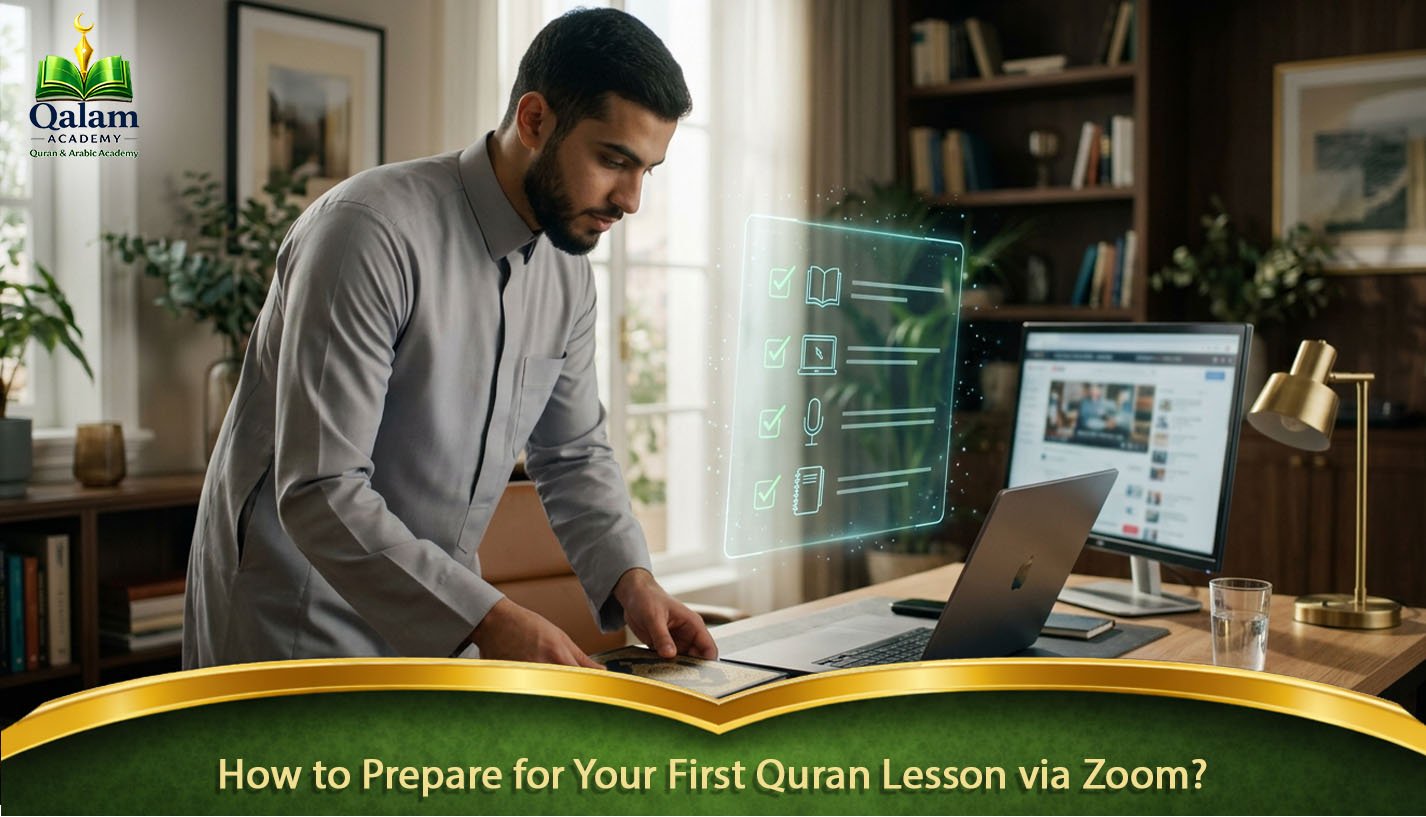
Your first class is an opportunity to understand the teaching approach and identify your starting level. Preparing a few details beforehand can make the session more productive. Before attending, use this checklist:
- Write down your primary learning goal.
- Check your device, microphone, and internet connection.
- Prepare a Quran or the materials requested by the teacher.
- Choose a quiet place where you can concentrate.
- Note any reading difficulties or questions you want to discuss.
- Confirm the meeting details and scheduled time.
- Be ready to demonstrate your current level honestly.
During the lesson, pay attention to how the teacher explains mistakes and responds to questions. You should understand what you are learning, why a correction matters, and what to practice afterward.
If you are considering Qalam Online Quran Academy, use your initial discussion or any available introductory session to clarify course suitability, scheduling, and teaching arrangements. Confirm whether a trial lesson is available rather than assuming every program offers one.
Frequently Asked Questions About Learning Quran Online via Zoom
This section answers common questions about learning Quran online via Zoom, including lesson structure, teacher selection, and preparation.
1. Can I change my learning plan if my Quran goals change?
Often, yes. Discuss the new goal with your teacher, review your current abilities, and agree on a suitable progression. Depending on the course, you may need to adjust the lesson content or choose a different class.
2. What should I do if I cannot understand my teacher’s explanations?
Explain which part is unclear and ask the teacher to demonstrate it using a simpler example. You can also request a slower explanation or another opportunity to practice before moving forward.
3. Can I continue Quran lessons while traveling?
This may be possible if you have a reliable connection, a suitable device, and access to a quiet place. Confirm attendance and rescheduling policies before traveling, particularly if your location or time zone changes.
4. How can I tell whether an online Quran course matches my current level?
Ask how the course determines placement and whether the teacher assesses your reading before assigning lessons. The course should address your existing abilities without repeatedly teaching material you have already mastered or introducing concepts before you are ready.
In conclusion, learn Quran online via Zoom with a clear goal, suitable instruction, and a practice routine you can maintain. Online lessons can make Quran education more accessible, but progress still depends on the quality of teaching, regular attendance, and focused practice.
Before choosing a program, identify your learning needs, assess your current level, and ask how teachers provide feedback. Make sure the schedule, lesson format, and required equipment fit your circumstances.
If you are considering Qalam Online Quran Academy, review its available course information and confirm the teaching arrangements before enrolling. Choose a program based on how well it meets your needs rather than relying on general promotional claims.
With realistic goals, regular practice, and a suitable teacher, you can work steadily toward better Quran reading, more accurate recitation, or stronger memorization.