


How to choose the best online quran tutor is an important question for parents who want their children to develop accurate Quran reading, correct pronunciation, and a positive relationship with the Holy Quran. Finding a suitable teacher involves more than checking qualifications or comparing lesson prices. Parents also need to consider teaching experience, communication skills, lesson structure, and the ability to understand each child’s learning needs.
Online Quran education has made it easier for families to access teachers regardless of their geographical location. However, having many available options does not automatically make choosing a teacher easier. Some instructors specialize in beginners, while others focus on Tajweed, fluent recitation, or Quran memorization. Therefore, parents should understand their children’s current abilities before selecting an educational program.
A suitable online Quran tutor should create a comfortable learning environment where children can ask questions, correct mistakes, and gradually develop their skills. Additionally, parents need to understand how lessons are organized and how progress can be evaluated over time.
This guide explains how to choose the best online quran tutor by examining essential qualifications, teaching methods, lesson formats, and common warning signs. It also discusses practical learning experiences and important considerations when evaluating Qalam Online Quran Academy.
Why Choosing the Best Online Quran Tutor Matters for Your Child?
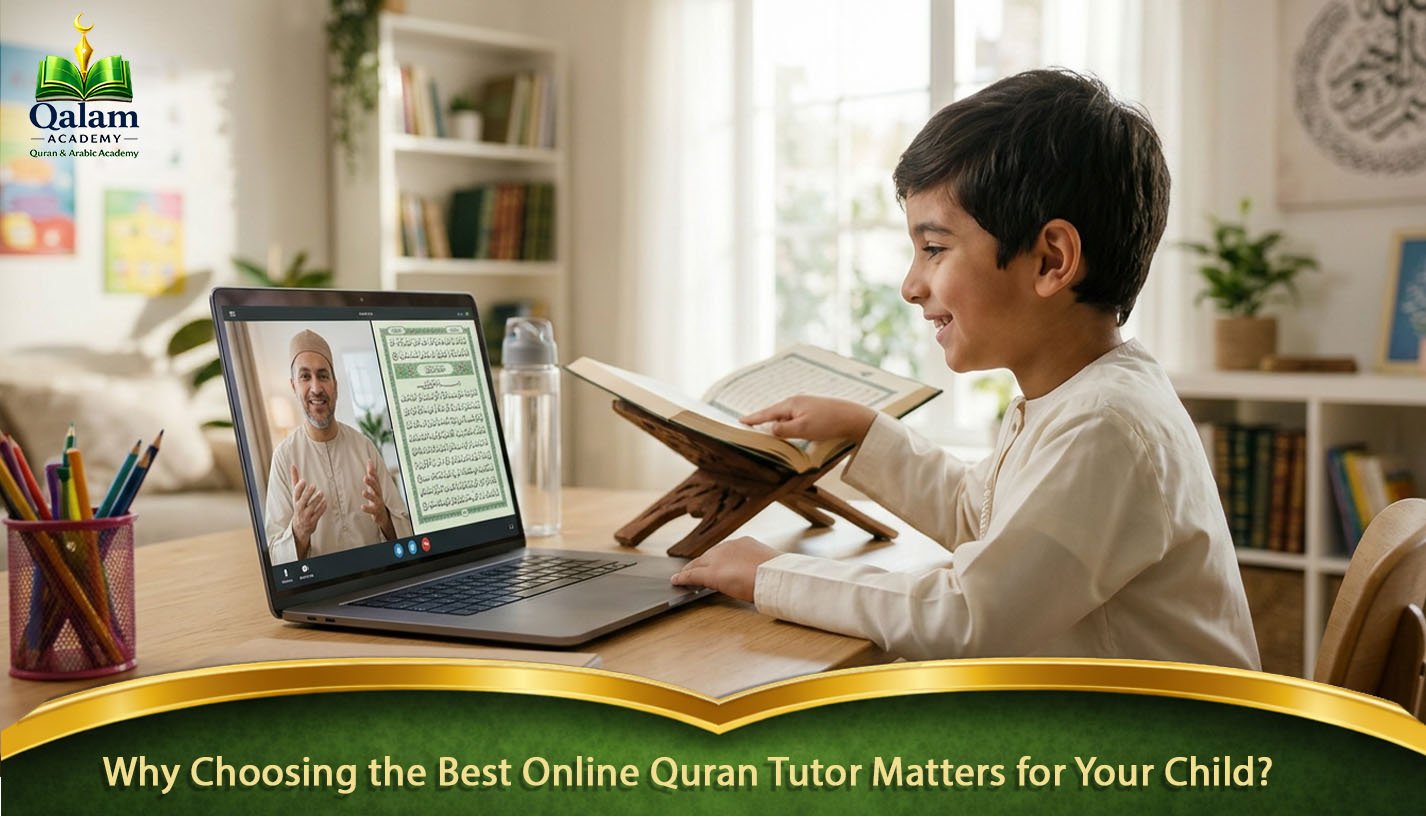
Selecting a Quran teacher can influence how children approach religious learning throughout their early years. Their first experiences often shape their confidence, willingness to practice, and attitude toward reading the Quran.
A supportive teacher helps children understand that making mistakes is a normal part of learning. Instead of creating pressure, the teacher explains corrections patiently and encourages students to practice until they understand the lesson.
On the other hand, unsuitable teaching methods may make children feel frustrated or lose interest. For example, a beginner who struggles with Arabic pronunciation may become discouraged if the teacher moves quickly through lessons without checking understanding. There are several reasons why choosing the right teacher deserves careful attention:
- Correct Quranic pronunciation: Children need regular guidance to recognize Arabic letters and pronounce them accurately.
- Appropriate learning pace: Every child develops reading and memorization skills differently.
- Consistent motivation: Encouragement can help children maintain interest in their lessons.
- Structured education: Organized lessons prevent unnecessary repetition and support gradual development.
- Positive learning experiences: A respectful teacher can make Quran education more comfortable and enjoyable.
Furthermore, parents should remember that academic progress is not measured only by the number of pages a child reads. Understanding pronunciation, applying Tajweed rules, and developing independent reading skills are equally important.
Choosing a suitable teacher therefore means finding someone who can balance Quranic knowledge with effective communication and child-centered instruction.
Start Learning with Qalam Online Quran Academy Today
Take the first step toward a stronger connection with the Quran and Islamic knowledge. At Qalam Online Quran Academy, our qualified teachers provide personalised one-on-one classes for children, adults, and beginners. Enjoy flexible schedules, interactive lessons, and a supportive learning environment designed to help you achieve your goals. Begin your Quran learning journey with confidence.

How to Choose the Best Online Quran Tutor: Teacher Qualifications?
A teacher’s qualifications provide an important starting point when evaluating their suitability. Although professional certificates alone cannot guarantee effective teaching, they help parents understand the teacher’s educational background and Quranic knowledge.
Before enrolling your child, ask about the teacher’s Quran recitation training, Tajweed education, and relevant teaching experience. These details can help you distinguish between someone who simply reads the Quran correctly and someone who can you memorize quran without a teacher explaining its pronunciation rules.
However, qualifications should always be considered alongside practical teaching ability.
Online Quran Tutor Qualifications: Ijazah and Tajweed
An Ijazah is a recognized authorization granted by a qualified Quran teacher to someone who has demonstrated proficiency in a particular Quranic recitation or memorization tradition.
It is associated with a transmission chain connecting the reciter to earlier qualified teachers and ultimately to the Prophet Muhammad (peace be upon him).
For parents, understanding this qualification can help clarify a teacher’s recitation background. Nevertheless, an Ijazah and a general Tajweed certificate are not necessarily interchangeable.
When reviewing a teacher’s qualifications, consider asking:
- Does the teacher hold an Ijazah in Quran recitation or memorization?
- Which Quranic narration or recitation has the teacher studied?
- Where did the teacher receive their Quranic education?
- Can the teacher explain Tajweed rules clearly to beginners?
- Does the teacher have experience correcting common pronunciation mistakes?
Importantly, parents should verify qualifications rather than relying exclusively on descriptions published in advertisements.
Choosing an Online Quran Tutor With Child Teaching Experience
Teaching children requires different skills from teaching adult learners. Young students may have shorter attention spans, different levels of Arabic familiarity, and varying abilities to understand religious terminology.
Consequently, a qualified online Quran tutor should understand how to introduce new information gradually.
For example, a child learning the Arabic alphabet may benefit from visual examples, repetition, and short pronunciation exercises. Meanwhile, an older student who already reads Arabic may need more advanced Tajweed explanations and practical recitation exercises.
Ask potential teachers about their experience with different age groups. Their answers should demonstrate an understanding of children’s educational needs rather than focusing exclusively on their own Quranic knowledge.
How to Choose the Best Online Quran Tutor for Your Child’s Learning Style?
Every child approaches learning differently. Some children understand new information quickly through listening, while others benefit from visual examples or repeated practical exercises.
Therefore, the teaching method should match the child’s current abilities and learning preferences.
A teacher who uses the same approach for every student may struggle to maintain engagement. In contrast, an adaptable teacher can change explanations, exercises, and lesson activities according to the child’s needs.
Qualities of the Best Online Quran Tutor for Children
Patience is one of the most important qualities parents should look for in a Quran teacher. Children sometimes confuse similar Arabic letters, forget previously learned rules, or repeat pronunciation mistakes. These situations require careful correction rather than criticism.
A supportive teacher should:
- Allow children enough time to pronounce unfamiliar letters.
- Explain mistakes using simple and understandable language.
- Encourage questions whenever students feel confused.
- Recognize improvement without creating unnecessary pressure.
- Maintain respectful communication throughout the lesson.
Moreover, effective communication helps children understand what they are expected to accomplish during each session.
For instance, instead of telling a student that their recitation is incorrect, the teacher can demonstrate the proper pronunciation and ask the child to repeat it slowly.
This approach makes correction part of the learning process rather than an embarrassing experience.
Online Quran Teaching Methods for Different Ages
A five-year-old beginner does not need the same teaching structure as a twelve-year-old student preparing for Quran memorization.
Younger children generally benefit from shorter activities, familiar examples, and frequent encouragement. Older learners may be ready for longer recitation exercises, written explanations, and more detailed Tajweed discussions.
Parents should therefore consider whether the teacher can adjust lessons according to:
- The child’s current Quran reading ability.
- Their familiarity with Arabic letters and pronunciation.
- Their attention span and learning pace.
- Their preferred learning activities.
- Their short-term and long-term educational goals.
An appropriate teaching plan should challenge children without making lessons unnecessarily difficult.
One-on-One vs. Group Online Quran Tutoring for Children
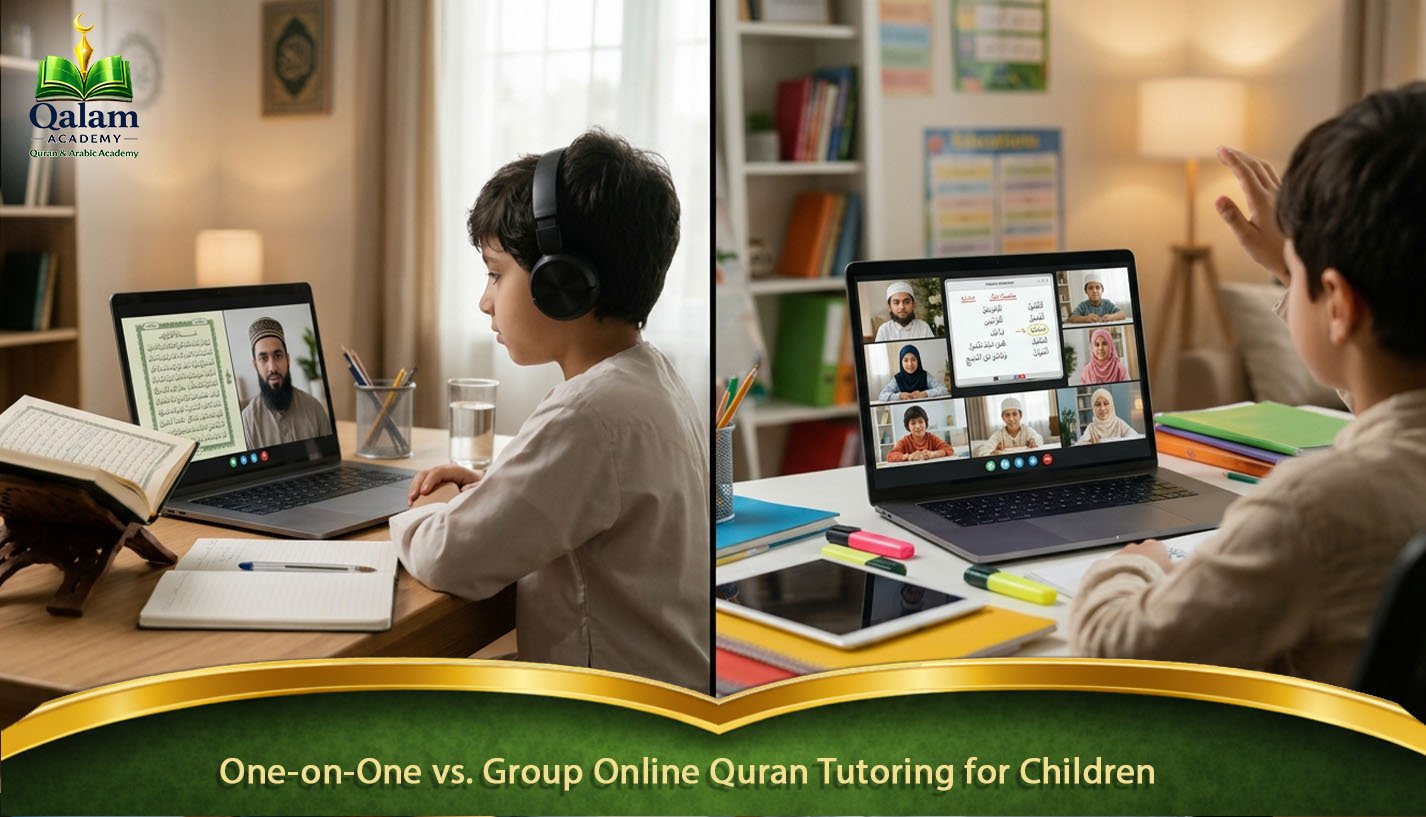
When comparing online Quran programs, parents often need to decide whether individual or group lessons are more suitable for their children. Both formats can support Quran education; however, their effectiveness depends on the student’s age, learning needs, and ability to participate.
Understanding these differences is another important step in choosing the best online quran tutor, particularly when children are still developing their reading and pronunciation skills.
Advantages of One-on-One Online Quran Lessons
Individual lessons allow teachers to concentrate on one student’s performance throughout the session. This arrangement can be particularly helpful for beginners who need frequent pronunciation corrections.
Some important advantages include:
- Individual attention: The teacher can focus entirely on the child’s recitation and questions.
- Personalized pacing: Lessons can move forward according to the student’s understanding.
- Immediate correction: Pronunciation mistakes can be addressed during recitation.
- Flexible learning goals: Teachers can focus on reading, Tajweed, or memorization according to the student’s needs.
- Greater participation: Children have more opportunities to practice and communicate directly.
For example, a beginner who struggles to distinguish between similar Arabic letters may need additional exercises before starting connected Quranic words. Individual instruction makes it easier to provide that focused practice.
When Group Online Quran Lessons May Be Suitable
Group lessons can also provide educational benefits, especially for children who enjoy learning alongside other students.
They may help learners:
- Listen to different recitation examples.
- Develop confidence when participating in discussions.
- Practice taking turns during reading activities.
- Experience a shared learning environment.
Nevertheless, parents should check the number of students in each group and understand how much individual recitation time each child receives.
A large group may limit opportunities for detailed pronunciation correction. Therefore, children with significant reading difficulties may benefit from more individualized attention.
What the Best Online Quran Tutor Should Teach at Each Stage?
A structured curriculum helps parents understand whether their children are developing the necessary skills gradually. Rather than moving between unrelated topics, lessons should follow a logical progression based on the student’s current ability. Parents can also explore how to learn Quran online via Zoom to understand how online lessons can support regular learning.
When considering how to choose the best online quran tutor, examine whether the teacher can explain what children should learn at different stages.
Online Quran Reading Lessons for Beginners
Children who cannot read Arabic should begin with the basic building blocks of Quranic reading.At this stage, lessons generally introduce:
- Arabic alphabet recognition.
- Different letter shapes and their positions.
- Short vowel marks, known as Harakat.
- Basic letter pronunciation.
- Connecting letters to form simple words.
- Reading short exercises with increasing accuracy.
The teacher should make sure that children understand each foundation before introducing more complicated reading material.
For instance, recognizing an Arabic letter independently is different from identifying it when it appears at the beginning, middle, or end of a word. Therefore, repeated practice and gradual instruction are essential.
Online Quran Tutor Guidance for Tajweed and Pronunciation
After developing basic reading skills, children need guidance in applying Tajweed rules during Quran recitation. A structured Quran recitation course can help learners understand how Arabic letters should be articulated and how different recitation rules affect pronunciation. Important areas include:
- Makharij Al-Huruf: the articulation points of Arabic letters.
- Sifat Al-Huruf: the characteristics of Arabic letters.
- Noon Sakinah and Tanween rules.
- Meem Sakinah rules.
- Madd and its different types.
- Qalqalah and other relevant pronunciation rules.
- Appropriate stopping and continuation during recitation.
However, children should not be overwhelmed with technical terminology before understanding the practical examples. A good teacher introduces these concepts gradually and connects explanations with actual Quranic recitation.
Quran Memorization and Revision With an Online Tutor
Some children begin Quran memorization after developing sufficient reading and pronunciation skills. Others may need additional time to strengthen their foundations first.
In either situation, memorization requires a clear balance between learning new verses and reviewing previously memorized passages.A suitable learning routine may include:
- Listening carefully to the assigned verses.
- Reading each verse with the teacher.
- Repeating smaller sections until they become familiar.
- Connecting consecutive verses.
- Reviewing previously memorized material.
- Reciting the assigned passage during subsequent lessons.
Revision deserves particular attention because memorizing additional verses without reviewing earlier material can make retention more difficult. Parents should also ask how the teacher checks memorization accuracy and addresses recurring mistakes.
Red Flags When Choosing the Best Online Quran Tutor
Not every teacher who offers online Quran lessons will necessarily meet your child’s educational needs. Therefore, parents should recognize potential warning signs before committing to a long-term learning arrangement.
Identifying these problems early can prevent frustration and help families make better decisions. Parents can also reinforce learning at home through discussions about Islamic manners and etiquette for kids, alongside their children’s Quran lessons.
Warning Signs That Deserve Attention
Pay attention if you notice any of the following situations:
- Repeated pronunciation mistakes: The teacher rarely corrects errors during Quran recitation.
- Unorganized lessons: Sessions lack clear objectives or meaningful connections with previous lessons.
- Unrealistic expectations: The teacher expects beginners to memorize or read difficult passages too quickly.
- Limited communication: Parents receive little information about the child’s learning activities.
- Uncomfortable interactions: The child appears consistently anxious or afraid to make mistakes.
- Insufficient explanation: The teacher demonstrates pronunciation without helping the student understand it.
- No meaningful assessment: The teacher cannot explain how the child’s current level is evaluated.
One difficult lesson does not automatically mean the teacher is unsuitable. Children sometimes need time to adjust to unfamiliar teaching methods.
However, repeated problems should encourage parents to discuss their concerns and reconsider the arrangement when necessary.
How to Evaluate the Best Online Quran Tutor Before Enrollment?
Reading a teacher’s profile can provide useful information, but observing an actual lesson offers a clearer picture of their teaching approach.
A trial or introductory session, when available, allows parents to evaluate communication, lesson organization, and the teacher’s interaction with their child.
This practical assessment is especially valuable when deciding how to choose the best online quran tutor without relying entirely on advertisements or promotional descriptions.
Evaluating an Online Quran Tutor During a Trial Lesson
Parents should pay attention to several details while the child participates.
- The teacher’s introduction: Does the teacher introduce themselves in a friendly and understandable manner? Children should feel comfortable before beginning unfamiliar activities.
- Explanation of the lesson: Notice whether instructions are appropriate for the child’s age and reading ability.
- Correction of mistakes: Observe how the teacher responds when the child mispronounces an Arabic letter or forgets a rule.
- Student participation: A useful lesson should give children opportunities to read, repeat, ask questions, and demonstrate understanding.
- Lesson organization: The session should have a clear purpose rather than consisting entirely of unplanned reading exercises.
- The child’s reaction: Afterward, ask whether the child understood the lesson and felt comfortable communicating with the teacher.
Parents should also consider the wider Islamic learning environment at home. For example, introducing children to Sunnah prayers every Muslim should know can complement their understanding of Islamic practices.
Questions to Ask Before Choosing an Online Quran Tutor
Asking specific questions helps families understand what they can expect from an online Quran learning arrangement.
| Question | Why It Matters |
|---|---|
| What qualifications do you hold in Quran recitation? | Helps establish the teacher’s educational background. |
| Have you taught children before? | Reveals relevant teaching experience. |
| How do you assess a beginner’s reading level? | Explains how lessons are adjusted to individual abilities. |
| How do you correct recurring pronunciation mistakes? | Shows the teacher’s approach to practical instruction. |
| What happens if my child struggles with a lesson? | Clarifies how learning difficulties are handled. |
| How can parents communicate their concerns? | Establishes expectations for parent-teacher communication. |
| How are lesson objectives determined? | Helps clarify whether learning follows a structured approach. |
Parents should compare the answers carefully instead of choosing the teacher who simply makes the most impressive promises.
Choosing Qalam Online Quran Academy for Your Child’s Quran Learning
Choosing an educational institution is another consideration for parents who prefer organized online Quran lessons. Besides evaluating individual teachers, families should understand the learning environment, available educational options, and communication arrangements.
Qalam Online Quran Academy is the academy targeted in this guide for parents exploring online Quran education. Before enrolling, families should review its available courses and teaching arrangements to determine whether they match their children’s requirements.
When evaluating Qalam Online Quran Academy, parents should consider the following points:
- Learning objectives: Understand what the child is expected to achieve during the lessons.
- Course suitability: Check whether the available learning options match the child’s current Quran reading level.
- Teacher compatibility: Consider whether the assigned teacher communicates effectively with young learners.
- Lesson organization: Ask how lessons are structured and how new material is introduced.
- Parent communication: Clarify how parents can discuss questions or concerns about their child’s education.
Furthermore, Qalam Online Quran Academy should be evaluated according to the same educational standards parents would apply to any Quran learning provider.
The name of an academy alone does not establish the quality of its teaching. Instead, parents should examine the actual learning experience, verify relevant information, and determine whether the teaching approach suits their children.
Qalam Online Quran Academy: Learning Options for Different Levels
Children do not necessarily begin their Quran education with the same knowledge. Some recognize Arabic letters, while others can already read short Surahs but need help improving their pronunciation.
Therefore, parents considering Qalam Online Quran Academy should first identify their child’s current level.
A useful assessment should establish whether the student needs:
- Basic Arabic alphabet instruction.
- Practice connecting letters and reading words.
- Guidance with Quranic pronunciation.
- Further development of Tajweed application.
- Structured Quran memorization and revision.
This information makes it easier to discuss suitable learning objectives before starting regular lessons. Additionally, families should ask whether the teaching arrangement can accommodate changes in the child’s needs as their abilities develop.
Online Quran Learning Experiences: What Parents Should Notice
Understanding how children respond to online Quran lessons can help parents make better educational decisions. Although every child develops differently, certain situations illustrate what effective instruction should look like in practice.
An Online Quran Tutor Helping Beginners Improve Pronunciation
Imagine a child who recognizes most Arabic letters but struggles to pronounce certain sounds correctly. During the first lessons, the child repeatedly confuses two similar letters. Initially, reading complete words becomes difficult because the pronunciation problem affects several exercises.
Instead of rushing through the curriculum, the teacher identifies the specific difficulty and introduces focused pronunciation practice.
The child listens to the correct articulation, repeats individual sounds, and gradually applies them within simple words.
After several practice sessions, the child may become more confident when reading unfamiliar words. However, continued correction remains necessary because pronunciation improvement requires regular practice.
This example highlights why parents should examine how teachers handle individual difficulties rather than judging progress by the number of completed lessons.
Online Quran Tutoring and Quran Memorization for Schoolchildren
Consider another child who wants to memorize the Quran while attending regular school. The child enjoys memorization but sometimes forgets previously learned verses when concentrating on new passages.
A more balanced learning approach would divide available study time between new memorization and revision. For example, the child might review previously memorized verses before introducing a small new passage. The teacher can then listen to the recitation and identify sections requiring additional practice.
Parents can support this process by establishing a realistic home routine that does not interfere excessively with schoolwork or rest.
This scenario demonstrates that successful Quran education requires consistency, appropriate expectations, and cooperation between the teacher and family.
Common Mistakes When Choosing the Best Online Quran Tutor
Even well-intentioned parents sometimes make decisions based on factors that do not adequately reflect a teacher’s suitability.
Avoiding these mistakes can make the selection process more practical and reduce the possibility of choosing an unsuitable learning arrangement.
Choosing a Teacher Based Only on Price
Affordability is important for families planning regular lessons. Nevertheless, the cheapest available option does not automatically provide the most suitable educational experience.
Parents should compare teaching qualifications, lesson organization, communication, and learning arrangements before making a decision. Similarly, a higher price should not be interpreted as proof of better teaching quality.
Ignoring the Child’s Opinion
Parents naturally make many educational decisions for younger children. However, their observations and feedback should also influence the final choice.
A child who feels comfortable asking questions may participate more actively than someone who feels intimidated during lessons.
Therefore, discuss the experience with your child after the initial sessions and take repeated concerns seriously.
Expecting Immediate Results
Learning Quranic reading and Tajweed involves several interconnected skills. Children need time to recognize letters, develop accurate pronunciation, understand reading rules, and apply them consistently.
Expecting complete fluency within a few lessons can create unnecessary pressure.
Instead, parents should look for gradual improvement in specific skills and maintain realistic expectations.
Overlooking the Importance of Revision
Another common mistake is focusing entirely on new lessons while neglecting previously learned material.
Revision helps children strengthen their reading abilities and retain memorized passages. Consequently, parents should understand how review activities fit into the learning routine.
Selecting a Program Without Checking Its Learning Approach
Before choosing Qalam Online Quran Academy, families should review the information available about its educational arrangements.
Parents should not assume that every online program follows the same curriculum or provides identical teaching services.
A direct discussion about learning objectives, teacher suitability, and available arrangements can prevent misunderstandings later.
Key Factors to Consider Before Choosing an Online Quran Tutor

After reviewing qualifications, teaching methods, lesson formats, and learning objectives, parents can compare their available options more confidently.
If you are still considering how to choose the best online quran tutor, focus on the complete educational experience rather than one attractive feature.
Use this practical checklist before making your final decision:
- Identify your child’s current Quran reading and recitation level.
- Decide whether the main objective is reading, Tajweed, or memorization.
- Review the teacher’s qualifications and experience.
- Discuss the teaching method and expected lesson structure.
- Observe how the teacher communicates with your child.
- Understand the arrangements for reviewing previous lessons.
- Compare available options without relying exclusively on promotional claims.
For families considering Qalam Online Quran Academy, these steps provide a useful framework for evaluating whether its educational arrangements meet their expectations.
Remember that choosing a Quran teacher is not simply an administrative decision. It involves finding an educational relationship that supports your child’s knowledge, confidence, and continued interest in learning.
FAQs About How to Choose the Best Online Quran Tutor
Parents often have additional questions when comparing Quran teachers and online learning arrangements. The following answers address practical concerns that can influence their final decision.
1. At What Age Can a Child Start Learning the Quran Online?
Children can begin developing Quran learning skills at different ages, depending on their readiness, attention span, and familiarity with Arabic. Younger children may start with letter recognition and simple listening activities before progressing to formal reading lessons.
2. How Many Online Quran Lessons Should a Child Take Each Week?
The appropriate number depends on the child’s age, learning objectives, and ability to practice between sessions. Parents should discuss a manageable schedule with the teacher and consider whether the child has enough time for independent revision.
3. Can a Child Learn Quran Online Without Knowing Arabic?
Yes. Children who do not speak Arabic can begin with Arabic alphabet recognition, letter pronunciation, and basic reading exercises. However, they need structured instruction and sufficient opportunities to practice unfamiliar sounds.
4. How Can Parents Support Quran Learning Between Online Lessons?
Parents can encourage children to review previously learned material, listen to correct recitation, and maintain a quiet study environment. They should also communicate with the teacher when the child repeatedly struggles with particular letters or reading exercises.
Conclusion
How to choose the best online quran tutor depends on your child’s needs and finding a teacher with suitable qualifications, patience, and effective teaching methods.
A good Quran tutor should correct pronunciation, explain Tajweed clearly, and adapt lessons to the child’s level. Parents should also consider lesson organization, revision methods, and their child’s comfort.
Before choosing Qalam Online Quran Academy, review its available learning options and discuss the teaching arrangements. Focus on clear information and realistic educational goals.
Remember that Quran learning takes time, consistent practice, and encouragement to develop accurate recitation and lasting progress.