

Can you memorize Quran without a teacher? is a common question for Muslims who want to start Hifz on their own. Yes, it is possible, but you need a clear plan, correct reading, regular revision, and a way to check your mistakes. Self-study can work well for learners who already read the Quran correctly. However, beginners may need extra support with pronunciation and Tajweed.
The main issue is not only memorizing the words. You also need to keep the correct pronunciation, verse order, and reading rules. Without feedback, small mistakes can become part of your memory.
For many learners, a mixed approach works best. You can practise and revise on your own while using a qualified teacher to check new passages. Qalam Online Quran Academy can help learners follow a clear Quran memorisation plan while they continue practising between lessons.
Can You Memorize the Quran Without a Teacher? A Practical Guide
Yes, you can memorize the Quran without a teacher if you have a good reading level and follow a clear study plan. Basic knowledge of Arabic letters and Tajweed can make self-study much easier.
Still, Quran memorization is more than remembering words. You need to keep the exact words, sounds, order, and stopping points. For this reason, some form of regular feedback is helpful.
If you choose to study alone, follow these simple steps:
- Set a small daily goal.
- Use the same Mushaf.
- Listen to a trusted reciter.
- Read each passage correctly first.
- Memorize short sections.
- Test yourself without looking.
- Review old passages every day.
- Record your reading from time to time.
- Ask a qualified person to check difficult passages.
- Focus on accuracy before speed.
Therefore, the answer to whether you can memorize the Quran without a teacher depends on your reading skills, learning habits, and ability to check your own work.
Start Learning with Qalam Online Quran Academy Today
Take the first step toward a stronger connection with the Quran and Islamic knowledge. At Qalam Online Quran Academy, our qualified teachers provide personalized one-on-one classes for children, adults, and beginners.
Enjoy flexible schedules, interactive lessons, and a supportive learning environment designed to help you achieve your goals. Begin your Quran learning journey with confidence.

Can You Memorize Quran Without a Teacher as a Beginner?
A complete beginner should not rush into large Quran memorization goals. First, you need to know the Arabic letters, vowel marks, joined letters, and common Quran reading patterns.
Otherwise, you may memorize Quran at home a word incorrectly without noticing. Once the wrong form becomes familiar, changing it can take extra time.
For that reason, beginners should build a strong reading base first.
Focus on:
- Arabic letters and their sounds.
- Short and long vowels.
- Sukoon and Shaddah.
- Tanween.
- Basic Madd rules.
- Correct word reading.
- Simple stopping rules.
- Basic Tajweed.
After these skills become stronger, self-study becomes easier.
Before memorizing any new passage, read it aloud several times. If a word feels difficult, have it checked first. This small step can prevent many mistakes later.
What Makes Quran Memorization Without a Teacher Difficult?
The main problem is not repeating a verse. Most learners can repeat a verse many times. The real challenge is knowing whether every repetition is correct.
When you study alone, you may miss:
- An incorrect letter sound.
- A missed vowel mark.
- A changed word.
- An incorrect verse connection.
- A poor stopping point.
- Confusion between similar verses.
- Weakness in older memorized passages.
Self-study can also make progress feel better than it really is. A page may become familiar after many readings. Yet familiarity does not always mean that you can recite it correctly without looking.
For this reason, regular testing is important. Close the Mushaf and recite the passage from memory. Then check your reading against the written text.
If possible, ask a qualified person to listen to your recitation from time to time. You do not need someone beside you during every study session. Periodic feedback can still help you find mistakes that you cannot notice alone.
How Can You Memorize Quran Without a Teacher Effectively?
A simple Hifz plan can make can you memorize Quran without a teacher easier to follow. The process should focus on preparation, small steps, testing, and regular revision. This approach helps you build strong memorization without rushing.
1. How Can You Memorize Quran Without a Teacher by Preparing the Passage?
Read the new verses several times from the Mushaf. Then, listen to a trusted reciter and follow the words carefully. Pay attention to difficult words before you start memorizing.
2. How Can You Memorize the Quran Without a Teacher in Small Sections?
Do not try to memorize a full page if it feels too difficult. Instead, divide the passage into short sections. Master one part before moving to the next.
3. How Can You Memorize Quran Without a Teacher by Testing Yourself?
After repeating a section, close the Mushaf and recite it from memory. If you forget a word, check the text and repeat that part until you can recite it correctly.
4. How Can You Memorize the Quran Without a Teacher by Joining the Sections?
Once each section feels strong, recite the parts together. This helps you move smoothly from one verse to another and reduces memory gaps.
5. How Can You Memorize the Quran Without a Teacher Through Regular Revision?
New memorization should not take all your study time. Keep reviewing older passages while learning new verses. Regular revision helps protect what you have already memorized.
This method gives you a clear way to measure your progress. Instead of counting study time alone, check what you can recite from memory and which parts still need more practice.
How Much Quran Should You Memorize Each Day?
There is no perfect daily amount for everyone. One learner may memorize half a page comfortably. Another may need several days for the same amount.
Consistency is more important than quantity.
Think about:
- Your free time.
- Your reading level.
- Your concentration.
- Your work or school schedule.
- Your previous Hifz experience.
- Your revision needs.
- Your personal learning speed.
For example, memorizing a few verses correctly each day may give better results than learning a whole page and forgetting much of it later.
Also, leave enough time for revision. If all your study time goes to new verses, your older memorization may become weak.
A simple session could look like this:
10–15 minutes: Review old passages
15–25 minutes: Learn new verses
10 minutes: Recite without looking
5–10 minutes: Connect the new verses with earlier ones
You can change these times to fit your daily routine.
Can You Memorize the Quran Without a Teacher Using Audio?
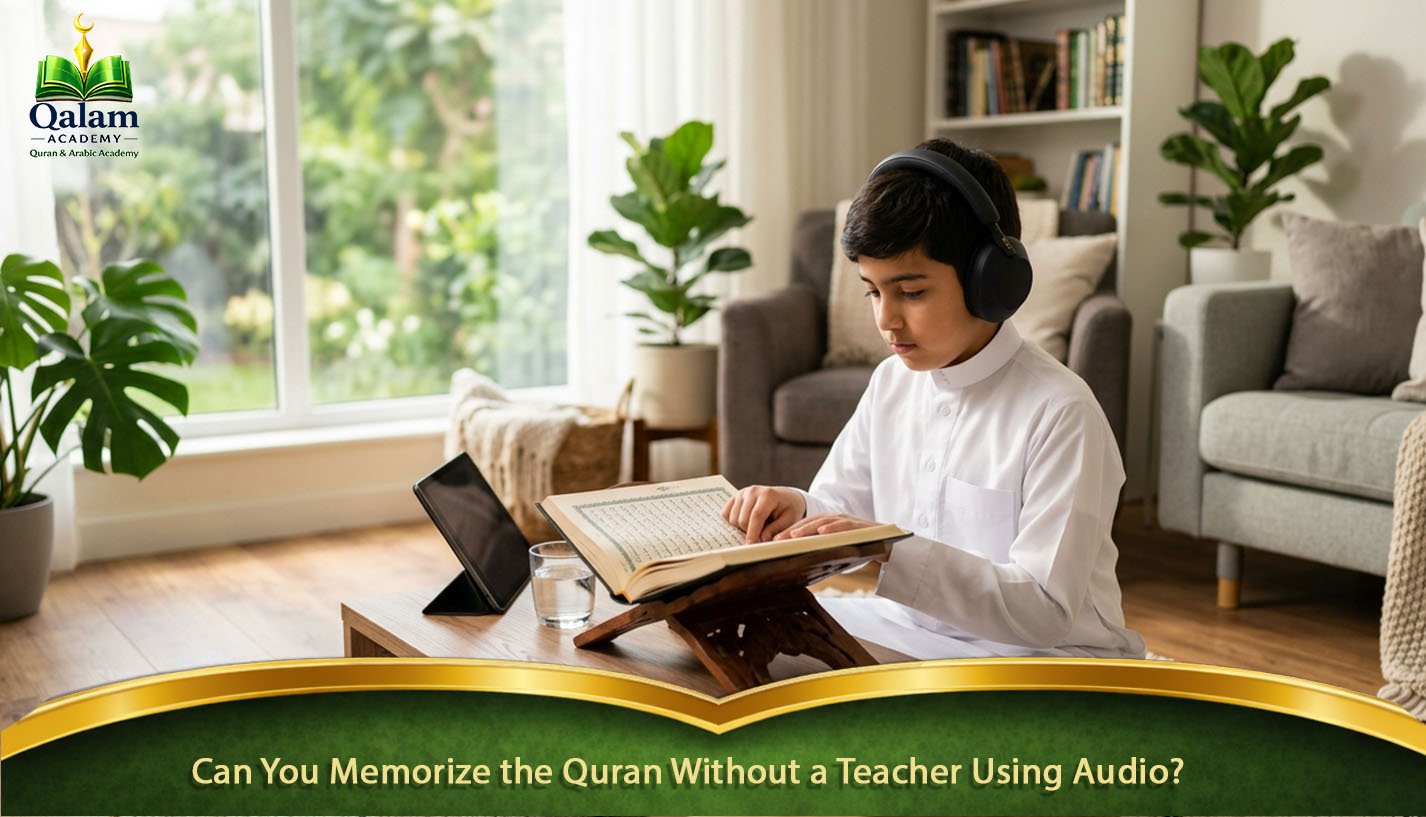
Audio is a helpful tool for Quran memorization. It lets you hear the correct words, pronunciation, rhythm, and verse endings.
However, listening should support active reading rather than replace it.
Try this method:
- Read the verse from the Mushaf.
- Listen to the verse carefully.
- Repeat while looking at the text.
- Recite without looking.
- Compare your reading with the audio.
- Repeat difficult parts.
- Test the verse again later.
It is also useful to choose one main reciter instead of changing recordings often. A steady audio model can make daily practice easier.
Still, copying a recording does not always prove that your pronunciation is correct. You may make a sound differently without noticing it.
So, use audio for listening and repetition. At the same time, use human feedback when you need help with your own pronunciation.
How Does Tajweed Affect Quran Memorization?
Tajweed matters because correct Quran memorization includes correct reading. If you memorize a word with the wrong sound, you may later need to change a habit that has become familiar.
You do not have to learn every advanced Tajweed rule before starting Hifz. Instead, learn the basic rules that affect the verses you are reading.
Pay attention to:
- Correct Arabic letter sounds.
- Madd.
- Ghunnah.
- Qalqalah.
- Noon Sakinah and Tanween.
- Meem Sakinah.
- Shaddah.
- Basic stopping and continuation rules.
For beginners, practical learning is often easier than studying long lists of rules. For example, learn and memorize quran a rule and then practise it in the verses you are memorizing. This connects the rule with real Quran reading. If you are unsure about a sound or rule, ask for correction before memorizing the passage.
Can You Memorize Quran Without a Teacher and Keep It Accurate?
Yes, but you need a simple way to check your progress. Studying alone means you must not depend only on how long does it take to memorize the quran confident you feel.
Try the three-check method:
Check 1: Compare With the Mushaf
After memorizing a passage, compare your recitation with the Mushaf. Look for missing words, skipped letters, changed endings, or mixed-up verses. This simple check can help you catch mistakes when you memorize the Quran without a teacher.
Check 2: Compare With Audio
Listen to a trusted reciter and compare difficult parts with your reading. Pay attention to pronunciation, verse endings, and pauses. If something sounds different, check the Mushaf and repeat the section slowly.
Check 3: Get Human Feedback
Ask a qualified Quran teacher or knowledgeable reader to listen to selected passages. You do not need this third check every day. Its purpose is to find mistakes that you may not hear yourself. As a result, independent Hifz becomes safer when you combine self-practice with regular checks.
Can You Memorize Quran Without a Teacher Through Repetition Alone?
Repetition is necessary, but repetition by itself is not enough. The goal is correct repetition. If you repeat a wrong passage many times, the mistake may become stronger instead of disappearing.
Unquestionably use repetition:
- Read slowly.
- Follow the words in the Mushaf.
- Listen to the passage.
- Repeat while looking.
- Recite without looking.
- Fix mistakes at once.
- Try again after a short break.
- Review the passage the next day.
It is also important to spread your practice over time. A verse may feel easy immediately after memorizing it but become harder the next day. That is normal. Regular revision helps move the passage into long-term memory.
Why is Revision Matters More Than New Memorization?
Many learners focus on how to memorize quran fast for adults, but Quran they can learn each day. However, keeping what you already know is just as important. Strong Hifz needs regular revision. You can divide your memorized Quran into three groups:
- Recent: Verses learned in the last few days.
- Middle: Verses learned during the past few weeks.
- Older: Earlier passages that still need regular review.
Each session can include all three groups. For example:
- Review yesterday’s lesson.
- Revise part of last week’s work.
- Read an older Surah.
- Learn a small new section.
This approach helps protect older memorization as your Hifz grows. Even when a passage feels easy, continue testing it. Feeling confident does not always mean that the passage is secure.
How Can You Memorize Quran Without a Teacher at Home?
Home study can work well when you create a quiet and regular routine. You do not need expensive equipment. A Mushaf, audio source, notebook, and quiet place can be enough. Choose a study time that you can follow most days. Some learners prefer:
- After Fajr.
- After another daily prayer.
- Early in the morning.
- Before going to bed.
There is no single best time. The right time is the one that fits your life and helps you stay consistent. Also, reduce distractions. If you use your phone for Quran audio, turn off unnecessary notifications. Using the same Mushaf can help as well. Over time, you may become familiar with where verses appear on the page.
Most importantly, choose a routine that you can follow for months. A short daily session is often better than a long plan that you stop after a few days.
What Should You Do If You Keep Forgetting Verses?
Forgetting does not mean that you cannot memorize the Quran. It may simply show that your revision plan needs to change.
First, find out what you are forgetting. Are you struggling with:
- Individual words?
- Verse endings?
- Verse order?
- Similar passages?
- The start of a page?
- Connections between verses?
Each problem needs a slightly different solution.
If individual words are difficult, repeat the exact phrase more often. If similar verses confuse, compare them side by side. When older passages are weak, reduce new memorization and increase revision.
You can also test your memory in different settings. Recite in another quiet place or at a different time of day. This can show whether you truly remember the passage or only remember it in one familiar setting.
Most importantly, do not panic when you forget. Use the mistake to improve your revision plan.
How Can You Avoid Mixing Up Similar Verses?
Similar verses can cause problems during Hifz because the wording may be almost the same. A learner may know both passages but accidentally combine parts of them. To avoid this, compare similar verses directly. Write down:
- How each verse begins.
- Which words are different.
- Which phrases are repeated.
- How each verse ends.
Then practise each verse separately before reciting them together. Ask yourself:“What is different between these two verses?”
This simple question helps you notice the exact difference. Also, slow down when practising similar passages. Careful repetition is often more useful than trying to recite them quickly.
Can You Memorize Quran Without a Teacher Faster?
Speed should not be your main goal. Accurate memory and long-term retention matter more.One learner may memorize a page quickly but forget it a week later. Another may take longer but remember the same page for months. The second result is more useful. To improve your speed safely:
- Improve your Quran reading.
- Learn difficult words first.
- Remove distractions.
- Use the same audio source.
- Memorize in small parts.
- Test yourself from memory.
- Review at regular intervals.
- Get enough sleep.
- Keep a realistic daily target.
Once your method becomes stronger, your speed may improve naturally. Therefore, when you ask whether you can memorize the Quran without a teacher, do not measure success only by how quickly you finish. Measure it by how well you can keep what you have learned.
When Should You Get Help From a Quran Teacher?
Self-study does not mean that you must work alone all the time. A teacher can be especially useful when you cannot check your own reading.
Consider getting regular feedback if:
- You are unsure about pronunciation.
- The same mistakes keep coming back.
- Similar verses are confusing.
- You forget new material very quickly.
- Your revision plan is difficult to follow.
- You are beginning Tajweed.
- Unfamiliar Quran words are hard to read.
- You do not know how much to memorize.
- Nobody can check your recitation.
A teacher can also help find the real reason for slow progress. Maybe the problem is not your memory. It could be weak reading, a large daily target, poor revision, distractions, or a study plan that does not fit your level.
With the right guidance, you can fix the real problem instead of simply repeating the same passage more times.
How Qalam Online Quran Academy Can Support Your Hifz Journey?
For learners who want self-practice with regular guidance, Qalam Online Quran Academy can offer a useful balance. Students can practise independently while using guided lessons for correction and progress checks.
A structured Quran memorization plan can help you:
- Set a realistic daily target.
- Read new passages correctly.
- Recite memorized verses for feedback.
- Find repeated mistakes.
- Build a clear revision plan.
- Change the pace when needed.
- Stay consistent with your Hifz routine.
The aim is not to make every study session teacher-led. Instead, live lessons can focus on the areas where personal feedback is most useful.
For example, study the assigned verses before the lesson. During the class, recite them and receive corrections. Afterward, practise the corrected passage on your own. This method gives you both flexibility and support.
A Practical Weekly Quran Memorization Schedule
A weekly plan can make it easier to memorize the Quran without a teacher while keeping new lessons and revision balanced. The goal is steady progress, not memorizing as much as possible each day.
Monday to Thursday: New Memorization
Learn a small number of verses each day. Read them correctly first, then repeat them in short sections. Keep reviewing older passages before adding new ones.
Friday: Weekly Review
Reduce new memorization and focus on the verses learned during the week. Recite them without looking at the Mushaf and note any parts that need more practice.
Saturday: Older Quran Revision
Return to earlier Surahs and passages. Regular revision protects your previous Hifz and helps prevent forgotten verses as you continue learning.
Sunday: Weekly Hifz Test
Test yourself by reciting the week’s new verses without looking. Then review any weak sections and decide what needs more attention during the next week.
A simple weekly routine can make Quran memorization without a teacher more organized. It also helps you balance new verses, older revision, and regular self-testing without creating an unrealistic study schedule.
Sunday: Weekly Test
Recite the week’s new material without looking. Mark the parts that need more work. You can also use a weekly teacher session to check selected passages.
The schedule does not need to be strict. If a passage is difficult, give yourself more time. Moving forward with weak memorization can create more work later.
Quality should always come before speed.
A Simple Daily Routine for Independent Hifz
If you are still asking Can you memorize the Quran without a teacher, begin with a small routine that you can follow every day.
Try these steps:
- Step 1: Review older memorization.
- Step 2: Read the new passage carefully.
- Step 3: Listen to a trusted reciter.
- Step 4: Divide the passage into small parts.
- Step 5: Repeat each part while looking.
- Step 6: Recite each part without looking.
- Step 7: Join the parts together.
- Step 8: Test the full passage later that day.
- Step 9: Review it again the next day.
- Step 10: Get difficult passages checked.
This routine keeps your study simple while giving you a clear path from reading to online hifz course UK.
Common Mistakes to Avoid When Memorizing Quran Without a Teacher
If you want to memorize Quran without a teacher, avoiding common mistakes can make your Hifz journey easier and more accurate. Small habits can affect both your progress and your ability to retain what you have learned.
Memorizing Before Correct Reading
Do not start memorizing a passage before you can read it correctly. Read the verses from the Mushaf and listen to a trusted reciter first. If you are unsure about a word or pronunciation, get it checked before repeating it many times.
Learning Too Much at Once
A large daily target may seem productive, but it can leave little time for revision. Instead, choose a small amount that matches your ability and schedule. Consistent progress is usually better than memorizing a lot and forgetting it later.
Forgetting Older Lessons
New verses can feel more exciting, but older memorization needs regular review. Set aside time each day to revise previous passages before adding too much new material.
Changing Reciters Often
Using one main reciter can make your practice more consistent. It also helps you become familiar with the pronunciation and flow of the verses.
Relying Only on Apps
Apps can support listening, repetition, and review. However, they cannot replace personal feedback in every situation. A qualified person can notice mistakes that you may not recognize yourself.
Studying Without Testing
Reading while looking at the Mushaf can create false confidence. Close the Mushaf and recite from memory to check your real progress.
Delaying Corrections
Fix mistakes as soon as you notice them. Repeating an error many times can make it harder to change later.
How to Know Whether Your Self-Study Method Is Working
Study time alone does not show whether your method is successful. Instead, look at what you can actually do. Your method is working when you can:
- Recite new passages without looking.
- Remember them several days later.
- Keep correct pronunciation.
- Move smoothly between verses.
- Tell similar passages apart.
- Maintain older memorization.
- Find your weak points.
- Apply corrections after feedback.
On the other hand, your plan may need changes if you keep forgetting new lessons, repeat the same pronunciation mistakes, or cannot tell whether your reading is correct.
In that case, simply studying for longer may not help. You may need more revision, smaller targets, or direct feedback from a qualified teacher.
Is Hybrid Hifz Better Than Memorizing Quran Without a Teacher?
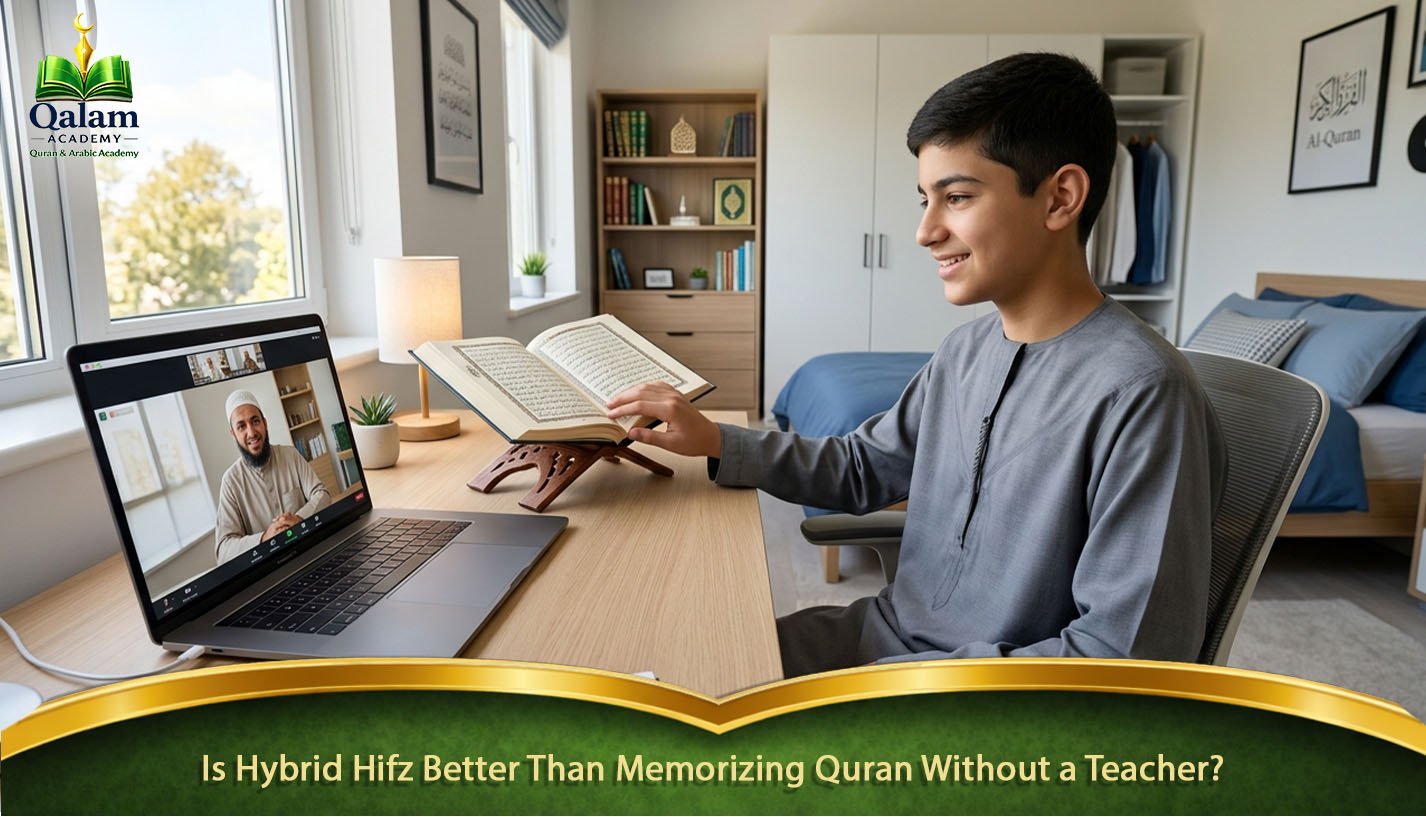
For many learners, a mixed approach offers a practical solution. Independent study gives you freedom. You can repeat a verse as many times as needed, choose your preferred study time, and revise older passages at your own pace.
Teacher guidance adds another benefit. A qualified teacher can listen to your reading, point out mistakes, explain corrections, and help you choose the next suitable step.
Therefore, the two methods can work together. A simple hybrid routine could be:
- Before the lesson: Study the assigned verses.
- During the lesson: Recite and receive corrections.
- After the lesson: Practise the corrected material.
- Later in the week: Recite the passage again.
- End of the week: Test your memory.
This approach uses teacher time for correction while keeping repetition and revision in your own hands.
Frequently Asked Questions About Can You Memorize Quran Without a Teacher
Find clear answers to common questions about memorizing the Quran without a teacher, including self-study, review, Tajweed, and effective memorization methods.
1. Can you memorize the Quran without a teacher?
Yes, you can memorize the Quran without a teacher if you have good Quran reading skills, basic Tajweed knowledge, and a consistent memorization plan.
2. Is it difficult to memorize the Quran without a teacher?
It can be more challenging because you may not notice pronunciation or memorization mistakes on your own. Regular self-testing and occasional feedback can make the process easier.
3. How can I check my Quran memorization without a teacher?
You can record yourself reciting, compare your recitation with a trusted reciter, test yourself without looking at the Mushaf, and review previously memorized passages regularly.
4. Can beginners memorize Quran without a teacher?
Beginners may find it difficult to start completely alone. Learning basic Quran reading and Tajweed first can provide a stronger foundation for independent memorization.
In conclusion, can you memorize the Quran without a teacher? Yes, it is possible when you have a clear plan, correct Quran reading, and strong revision habits. Independent Hifz gives you the freedom to choose your study time and repeat verses as often as needed. However, learning alone also requires you to check your pronunciation, test your memory, and correct mistakes early.
Start with a small daily target instead of trying to memorize too much at once. Read every new passage correctly before learning it, use reliable audio, and review older Surahs regularly. Most importantly, test yourself without looking at the Mushaf so you can see your real progress.
If you are unsure about your pronunciation or keep repeating the same mistakes, teacher feedback can make your journey easier. Qalam Online Quran Academy can provide structured support while allowing you to continue practising independently between lessons.
With consistency, patience, and the right balance between self-study and guidance, you can build stronger memorization and protect the Quran you have already learned.