
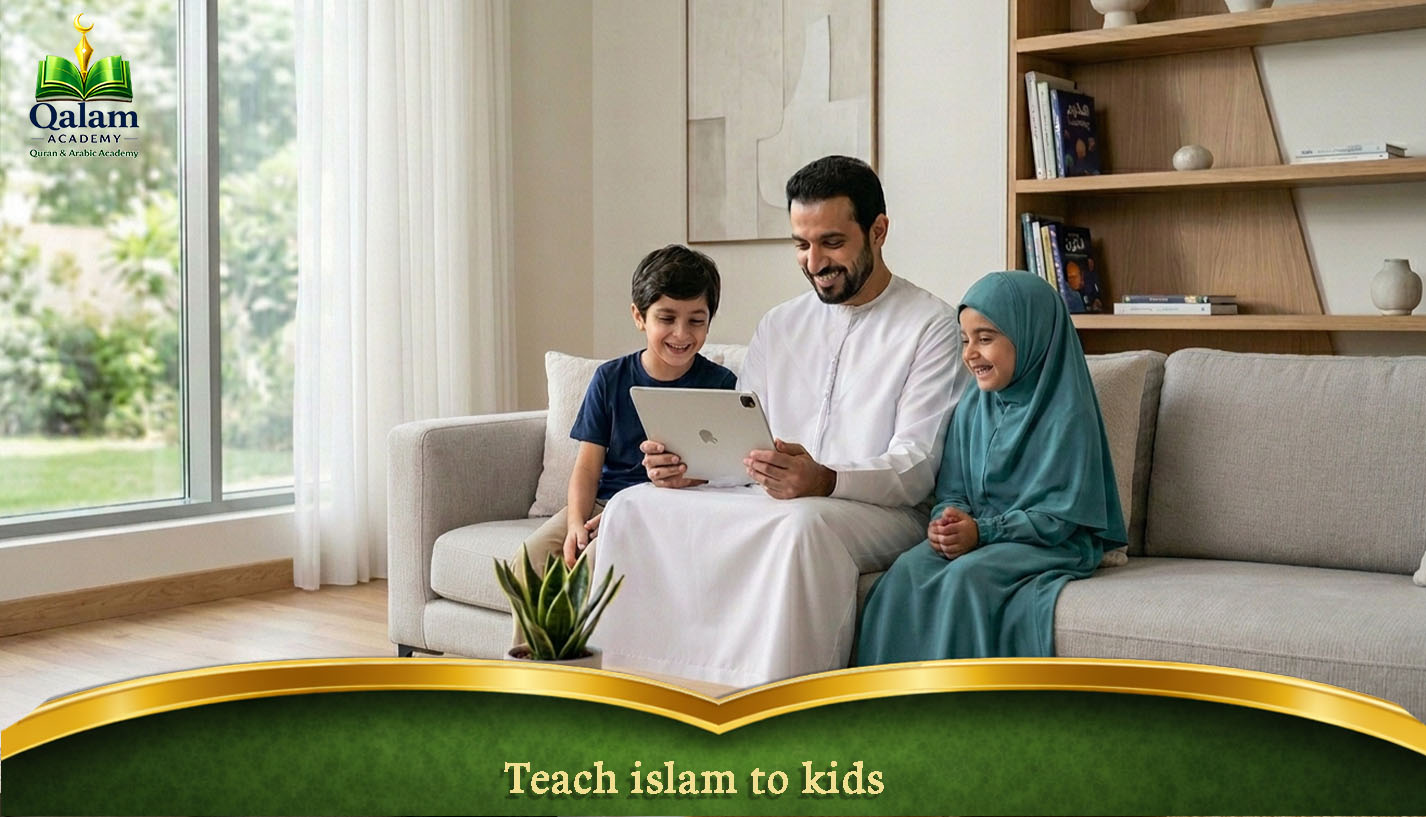
Teach Islam to kids is one of the most important responsibilities for Muslim parents who want to build a strong foundation of faith, character, and values in their children’s lives. From an early age, children are naturally curious and eager to learn, making childhood the perfect time to introduce Islamic teachings simply and engagingly.
Moreover, teaching Islam is not limited to memorizing information; it also involves helping children understand the importance of kindness, honesty, prayer, and a strong connection with Allah. Therefore, many families seek reliable educational support to complement learning at home.
Through structured lessons and experienced teachers, Qalam Quran Academy helps parents provide meaningful Islamic education that encourages children to learn Islam step by step, practice, and appreciate their faith with confidence.
How to Teach Islam to Kids in a Simple and Meaningful Way?
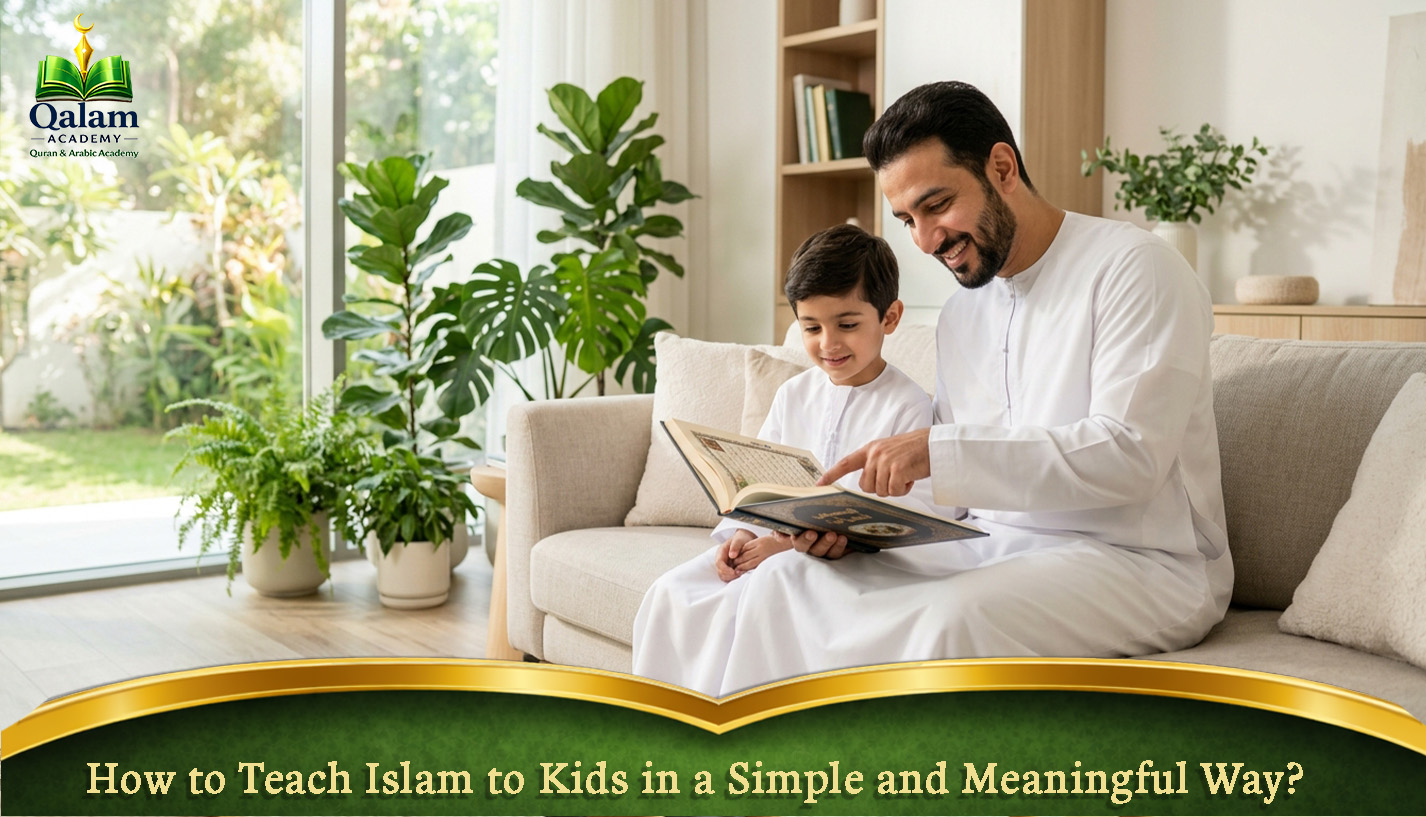
Teaching children about Islam is one of the most rewarding responsibilities for Muslim parents. Every child is born with a natural curiosity about the world, and early Islamic education helps shape that curiosity into a strong connection with Allah, good character, and a clear sense of purpose. The goal is not simply to help children memorize information but to help them understand Islamic values and apply them in everyday life.
Many parents wonder where to begin and how to make Islamic learning enjoyable rather than overwhelming. The answer lies in teaching gradually, using age-appropriate methods, and creating positive experiences that help children love their faith. When Islamic education becomes part of daily life, children develop confidence in their Muslim identity and build habits that stay with them as they grow.
Online Quran Academy Qalam
A Qalam Quran Academy offers a flexible and convenient way for students to learn the Quran and Islamic studies from the comfort of their homes. As a result, families can access quality Islamic education regardless of their location.
Moreover, online classes allow students to learn at a pace that suits their individual needs while receiving guidance from qualified teachers. Qalam Quran Academy provides structured lessons that help students improve Quran recitation, memorization, and understanding. Therefore, learners can build strong Islamic knowledge in an engaging and supportive learning environment.

Why Early Islamic Education Is Important?
Childhood is the stage when values, habits, and beliefs begin to take shape. Children learn Islam step by step primarily from what they see, hear, and experience at home. When parents introduce Islamic teachings from an early age, children become familiar with Islamic practices naturally.
Islamic education provides much more than religious knowledge. It teaches honesty, kindness, patience, gratitude, and responsibility. These values help children build strong relationships with family members, friends, and their wider community.
For families living in multicultural societies, Islamic education for kids at home also helps children understand who they are and where they belong. A strong foundation enables them to face challenges with confidence while remaining connected to their faith.
Building a Strong Foundation Through Daily Practice
Children learn Islam basics online best through repetition and consistency. Small daily practices often have a greater impact than occasional lessons. Parents can begin by introducing simple Islamic phrases and routines that become part of everyday life. Some examples include:
- Saying Bismillah before eating.
- Saying Alhamdulillah after finishing a meal.
- Greeting others with Assalamu Alaikum.
- Making short duas before sleeping.
- Thanking Allah for blessings throughout the day.
These simple habits help children understand that Islam is not limited to specific occasions but is a way of life that guides everyday actions.
Introducing the Five Pillars of Islam
The Five Pillars are the foundation of Islamic practice. Children should become familiar with them gradually so they can understand their importance as they grow older.
Shahada (Declaration of Faith)
The Shahada teaches the core belief of Islam: that there is no god but Allah and that Prophet Muhammad (peace be upon him) is His Messenger.
Young children can learn the words through repetition and simple explanations. As they mature, parents can discuss what it means to believe in one Creator and how faith influences everyday choices.
Salah (Prayer)
Prayer strengthens a child’s connection with Allah. Children often become interested in prayer by watching their parents pray regularly. Parents can encourage participation by:
- Allowing children to stand beside them during prayer.
- Providing a child-sized prayer mat.
- Teaching prayer movements gradually.
- Explaining the meaning behind the actions.
Creating positive experiences around prayer helps children develop love for worship instead of viewing it as an obligation.
Zakat (Charity)
Children naturally understand the concept of helping others. Teaching charity at an early age develops compassion and generosity. Parents can encourage charitable behavior by:
- Donating toys and clothes.
- Helping neighbors.
- Supporting community projects.
- Setting aside part of the allowance money for charity.
Sawm (Fasting)
Ramadan offers valuable opportunities for teaching self-discipline and gratitude. While young children are not required to fast, they can participate in age-appropriate ways. Many families encourage children to:
- Fast for a few hours.
- Join family iftar gatherings.
- Help prepare meals.
- Learn about the purpose of Ramadan.
Hajj (Pilgrimage)
Children enjoy learning about Muslims from around the world gathering to worship Allah. Parents can explain the significance of Makkah, the Kaaba, and the rituals of Hajj using stories, pictures, and educational activities. Learning about Hajj helps children appreciate the unity of the global Muslim community.
Teaching the Six Articles of Faith
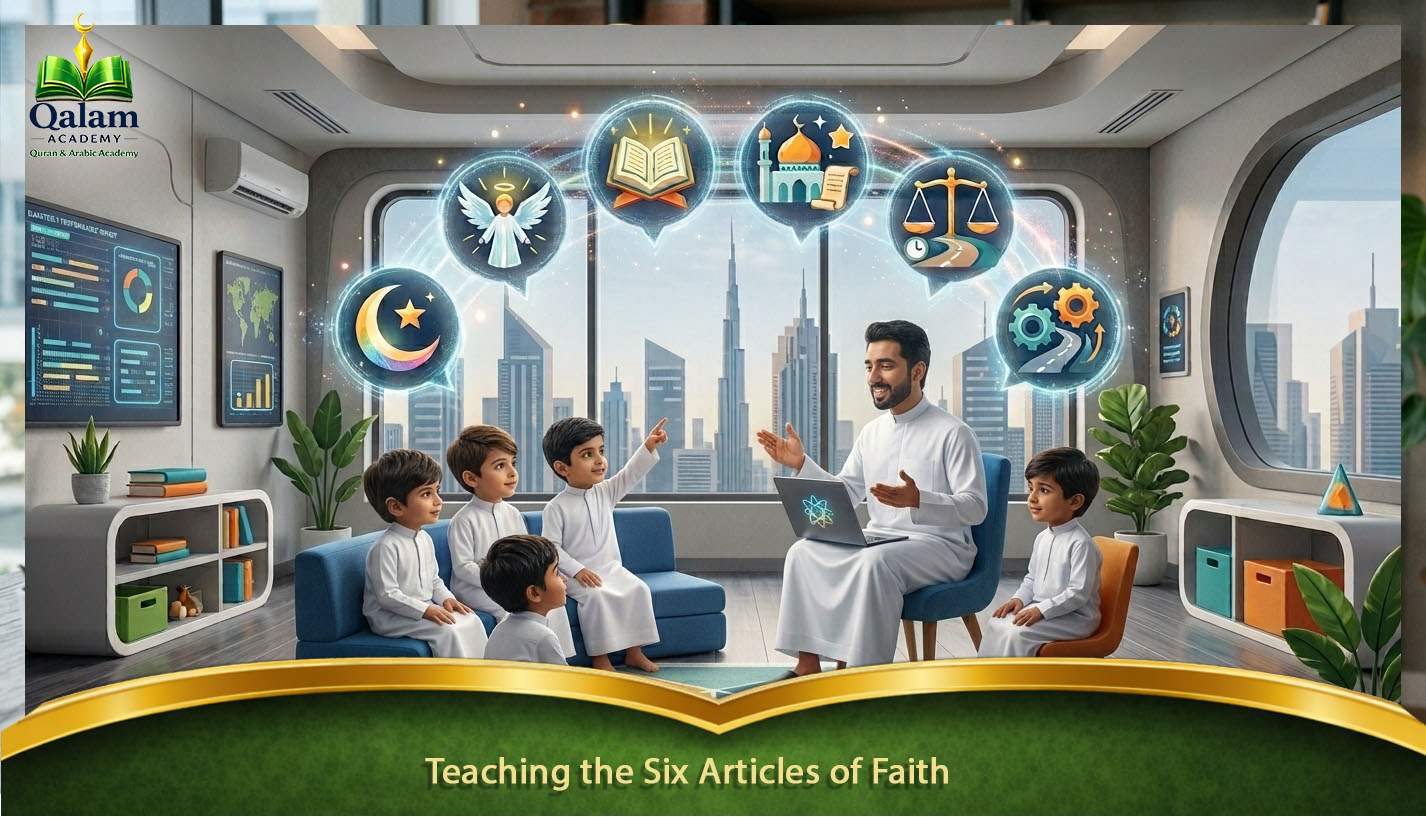
Alongside the Five Pillars, children should learn the basic beliefs of Islam simply and engagingly.
Belief in Allah
Children naturally ask questions about creation. Parents can encourage reflection by discussing nature, animals, and the universe. These conversations help children recognize Allah’s power and wisdom.
Belief in Angels
Children are often fascinated by angels. Explain that angels are special creations of Allah who carry out His commands and record people’s deeds.
Belief in Divine Books
Children should understand that Allah sent guidance through revealed books, including the Quran, which remains the final and preserved message for humanity.
Belief in Prophets
Stories of the prophets are among the most effective ways to teach Islamic values. Children learn lessons about patience, honesty, courage, and trust in Allah through these inspiring examples.
Belief in the Day of Judgment
This belief can be introduced by explaining that Allah is perfectly fair and that every person will be accountable for their actions.
Belief in Divine Decree
Children can learn that Allah knows everything and that believers trust His wisdom, even when they do not fully understand certain situations.
Age-Based Approach to Islamic Learning
Every child learns differently, so Islamic education should match their age and level of understanding. Teaching children according to their developmental stage helps them absorb knowledge naturally and build a stronger connection with Islam over time.
Ages 3–5
During these early years, children learn mainly through observation, repetition, and imitation. This is the ideal time to introduce simple Islamic habits and positive associations with faith. Children can learn:
- Simple daily duas.
- Basic Islamic phrases such as Bismillah and Alhamdulillah.
- Love for Allah and His blessings.
- Respect for parents and elders.
- Good manners and kindness.
Ages 6–9
Children become more curious and begin asking questions about what they learn. They can understand basic explanations and start practicing Islamic teachings more independently. Focus areas include:
- Stories of the prophets.
- Memorizing short Quran surahs.
- Learning prayer step by step.
- Islamic manners and character.
- Understanding right and wrong.
Ages 10–12
At this stage, children develop stronger reasoning skills and a deeper understanding of religious concepts. They are ready to learn not only what Islam teaches but also why it teaches it. Parents can introduce:
- Quran meanings and lessons.
- Islamic history.
- Personal responsibility.
- The wisdom behind Islamic rulings.
- Applying Islamic values in daily life.
Teen Years
Teenagers often seek answers about identity, purpose, and modern challenges. Islamic education should help them strengthen their faith while addressing real-life situations they face. Key focus areas include:
- Building a personal relationship with Allah.
- Understanding the Quran more deeply.
- Strengthening Islamic identity.
- Discussing contemporary issues from an Islamic perspective.
- Encouraging independent learning.
A supportive and understanding environment helps teenagers remain confident in their faith and stay connected to Islam as they mature.
Fun Activities That Help Children Learn Islam
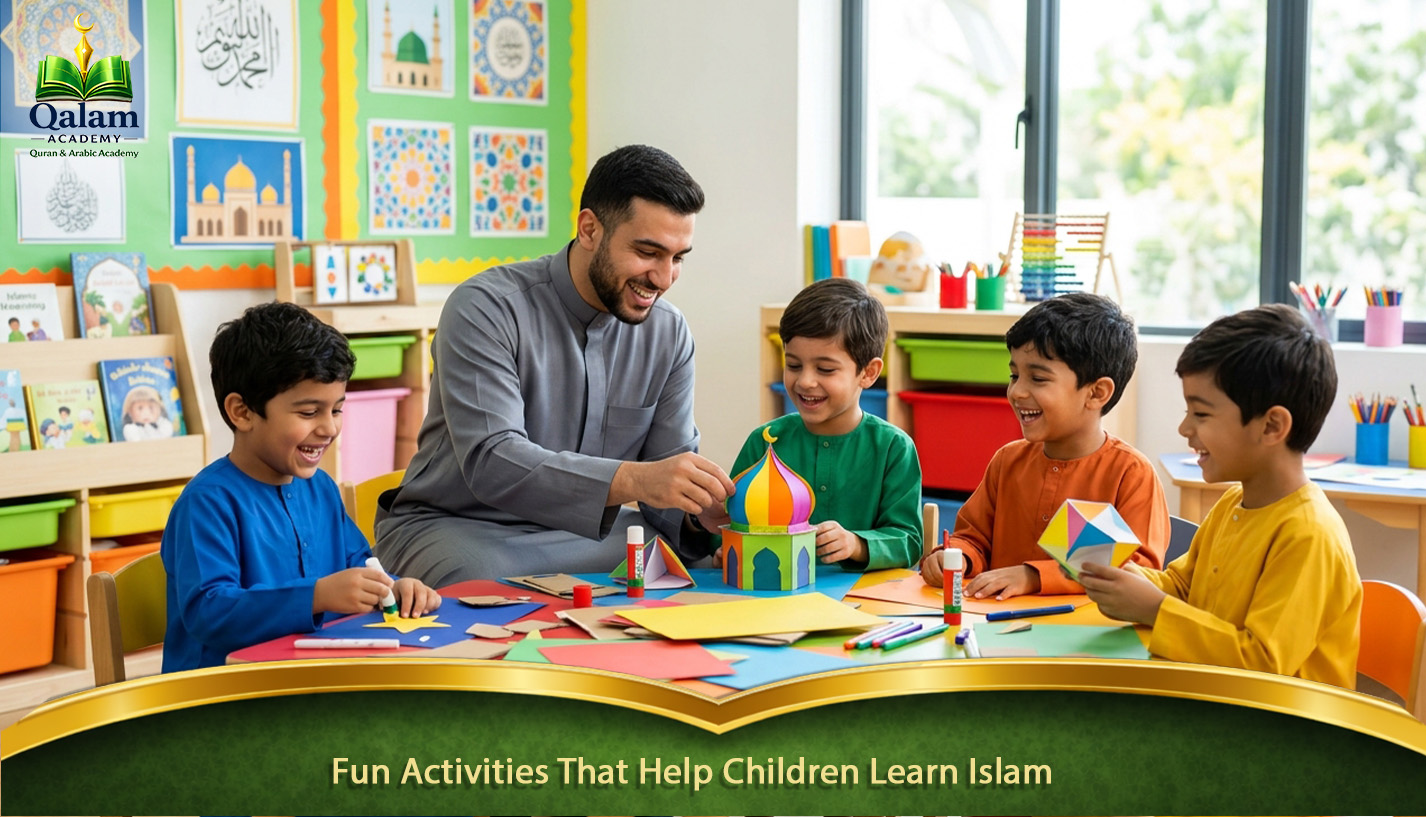
Children learn best when lessons are both educational and enjoyable. Therefore, adding interactive activities to daily learning can help children stay interested and remember Islamic teachings more effectively. These activities also allow parents to teach islam to kids in a natural and engaging way.
Storytelling Sessions
Stories of the prophets are an excellent way to introduce Islamic values. Not only do they capture children’s attention, but they also teach important lessons about patience, honesty, and faith. In addition, reading together before bedtime can become a meaningful family tradition.
Islamic Craft Projects
Creative projects help children connect with Islamic concepts through hands-on learning. For example, children can create Ramadan calendars, Kaaba models, Islamic artwork, or good deed charts. As a result, learning becomes both memorable and enjoyable.
Quran Memorization Challenges
Setting small memorization goals can make Quran learning easier and more motivating. Furthermore, celebrating achievements encourages children to stay consistent and confident as they progress.
Family Islamic Quiz Nights
Quiz nights provide a fun way to review Islamic knowledge. Moreover, friendly competitions help children remember important information while enjoying quality time with their families.
Charity Projects
Participating in charitable activities teaches children the value of generosity and compassion. Whether donating toys, helping neighbors, or supporting community initiatives, these experiences allow parents to teach Islam to kids through practical examples that can have a lasting impact.
By combining learning with enjoyable activities, parents can help children develop a stronger connection with Islam while making the educational journey both meaningful and rewarding.
Common Challenges Parents Face
Many parents encounter difficulties when teaching Islam to their children. These challenges are normal and can be overcome with patience.
Lack of Interest
If children lose interest, parents should adjust their teaching methods rather than forcing lessons. Interactive activities often work better than lectures.
Limited Time
Busy schedules can make regular lessons difficult. Even a few minutes of daily learning can produce meaningful results over time.
Difficult Questions
Children naturally ask challenging questions. Parents do not need to know every answer. Researching together can become a valuable learning experience.
Inconsistent Practice
Building habits takes time. Gentle encouragement and positive reinforcement are usually more effective than strict pressure.
How Qalam Quran Academy Supports Parents
Many parents want to provide their children with a strong Islamic foundation. However, balancing work, family responsibilities, and education can sometimes be challenging. Therefore, many families look for additional support to help their children learn Islam in a structured and effective way.
Qalam Quran Academy offers organized learning programs that help children develop Quranic knowledge and a better understanding of Islamic values. In addition, qualified teachers use age-appropriate teaching methods that make lessons both engaging and easy to follow. As a result, students can build confidence while making steady progress in their learning journey.
Moreover, personalized instruction allows each child to learn according to their abilities and pace. This approach not only improves Quran recitation and memorization but also helps students understand what they are learning. Consequently, parents can feel confident that their children are receiving guidance that complements the Islamic education provided at home.
Teach Islam to Kids with Love and Understanding
Children are more likely to embrace Islam when they see it as a source of guidance, peace, and purpose. Moreover, positive examples from parents and open communication help strengthen their connection with faith.
.Children are generally more likely to embrace Islam when they:
- See positive examples from their parents.
- Feel comfortable asking questions.
- Receive kindness and encouragement.
- Participate in meaningful Islamic activities.
- Understand the wisdom behind Islamic teachings.
Furthermore, a supportive environment allows faith to grow naturally over time. Therefore, children can develop confidence in their beliefs and carry Islamic values with them throughout their lives.
The Role of Qalam Quran Academy in Modern Islamic Learning
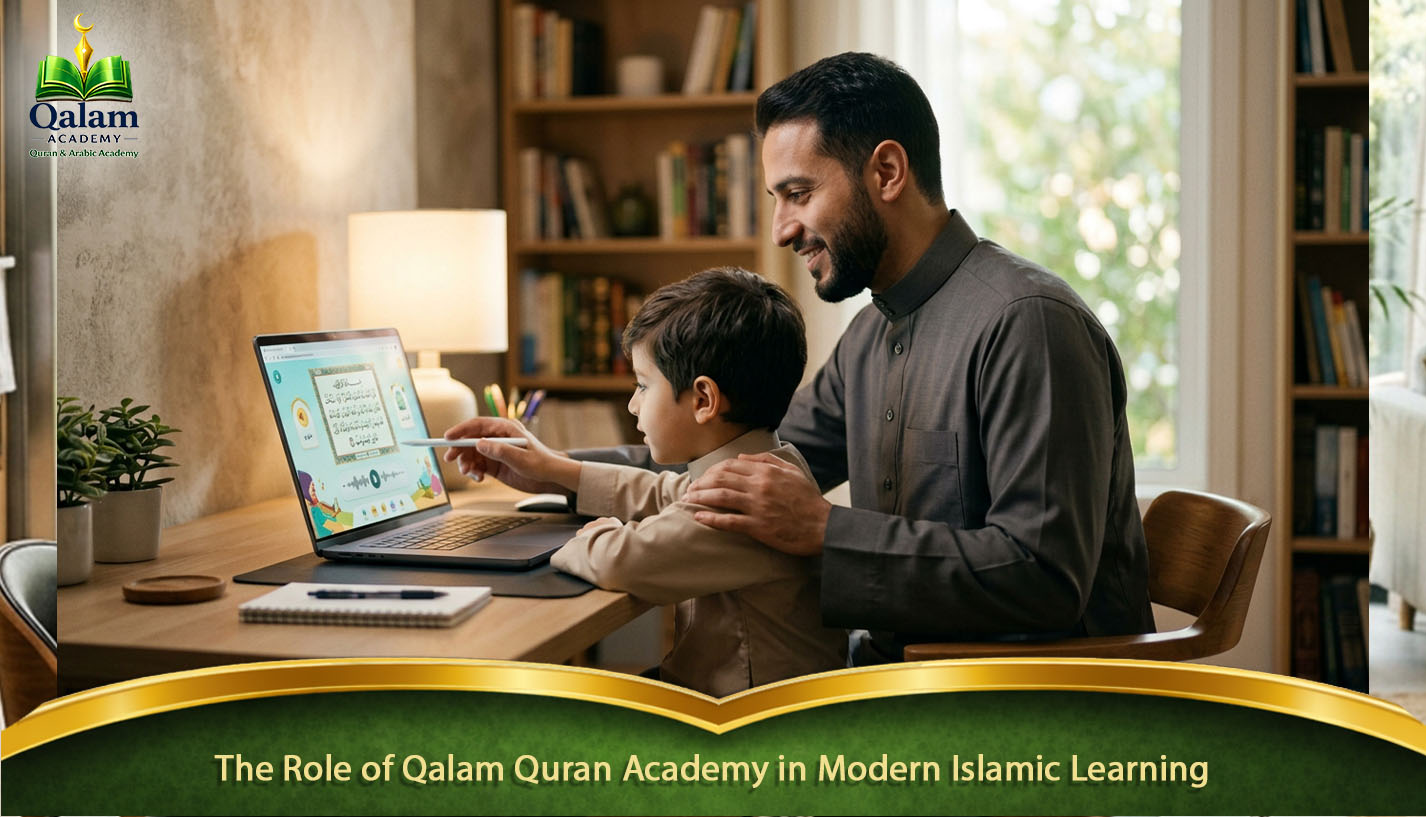
Today, technology has made learning more accessible than ever before. As a result, many families prefer educational options that offer both flexibility and quality. In this changing environment, Qalam Quran Academy helps meet the needs of modern Muslim families by combining traditional Quranic education with convenient online Islamic classes.
Through a structured online Islamic center for kids, students can learn from experienced teachers without leaving their homes. Moreover, they can improve their Quran recitation, memorization, and Islamic knowledge through regular and well-organized lessons. At the same time, parents can easily include these classes in their daily schedules.
In addition, personalized learning plans help students progress at a comfortable pace. Consequently, they can build confidence while developing strong Quranic and Islamic skills. As online education continues to grow, Qalam Quran Academy provides an effective way for families to access quality Islamic learning regardless of where they live.
Frequently Asked Questions About Teaching Islam to Kids
Below are answers to some common questions parents ask about how to teach Islam to kids and make Islamic learning simple, engaging, and effective.
What is the best age to start teaching Islam to children?
Children can begin learning simple Islamic concepts from an early age. For example, they can learn short duas, basic Islamic phrases, and good manners through daily routines and family interactions.
How can parents make Islamic learning enjoyable?
Parents can make learning more engaging through storytelling, educational games, creative projects, and interactive activities. In addition, positive encouragement can help children stay motivated and interested.
Can online Islamic classes benefit children?
Yes. Online classes can provide structured learning, regular guidance, and access to qualified teachers. Moreover, they offer flexibility, making it easier for families to maintain consistent Islamic education at home.
In conclusion, teach islam to kids is a long-term journey that begins with small daily lessons and positive experiences. By introducing Islamic values in a simple and engaging way, parents can help children develop a strong connection with Allah and a deeper appreciation for their faith.
Moreover, consistent guidance, patience, and encouragement can make Islamic learning both meaningful and enjoyable. With support from family and trusted educational resources such as Qalam Quran Academy, children can build the knowledge, character, and confidence needed to practice Islam throughout their lives.