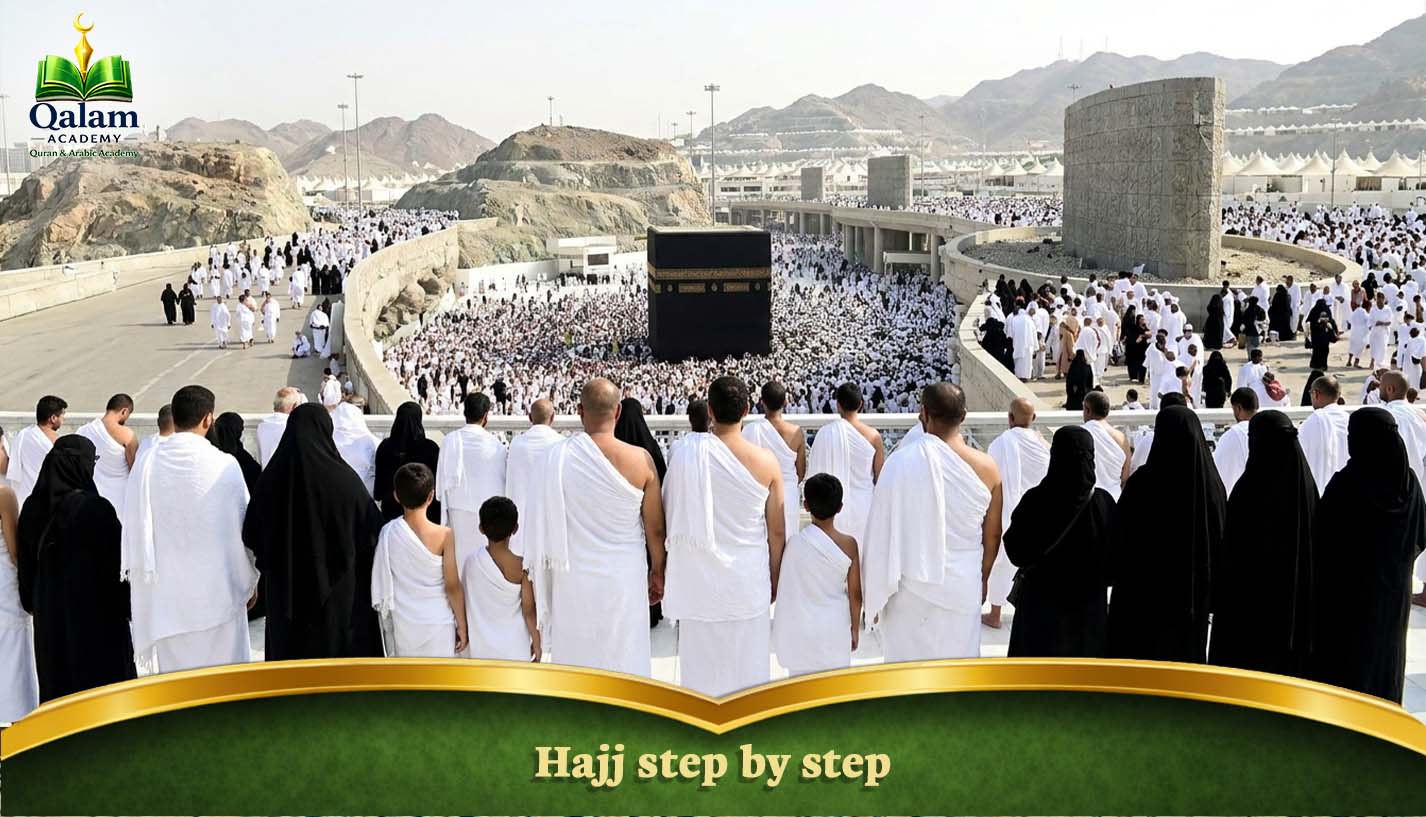

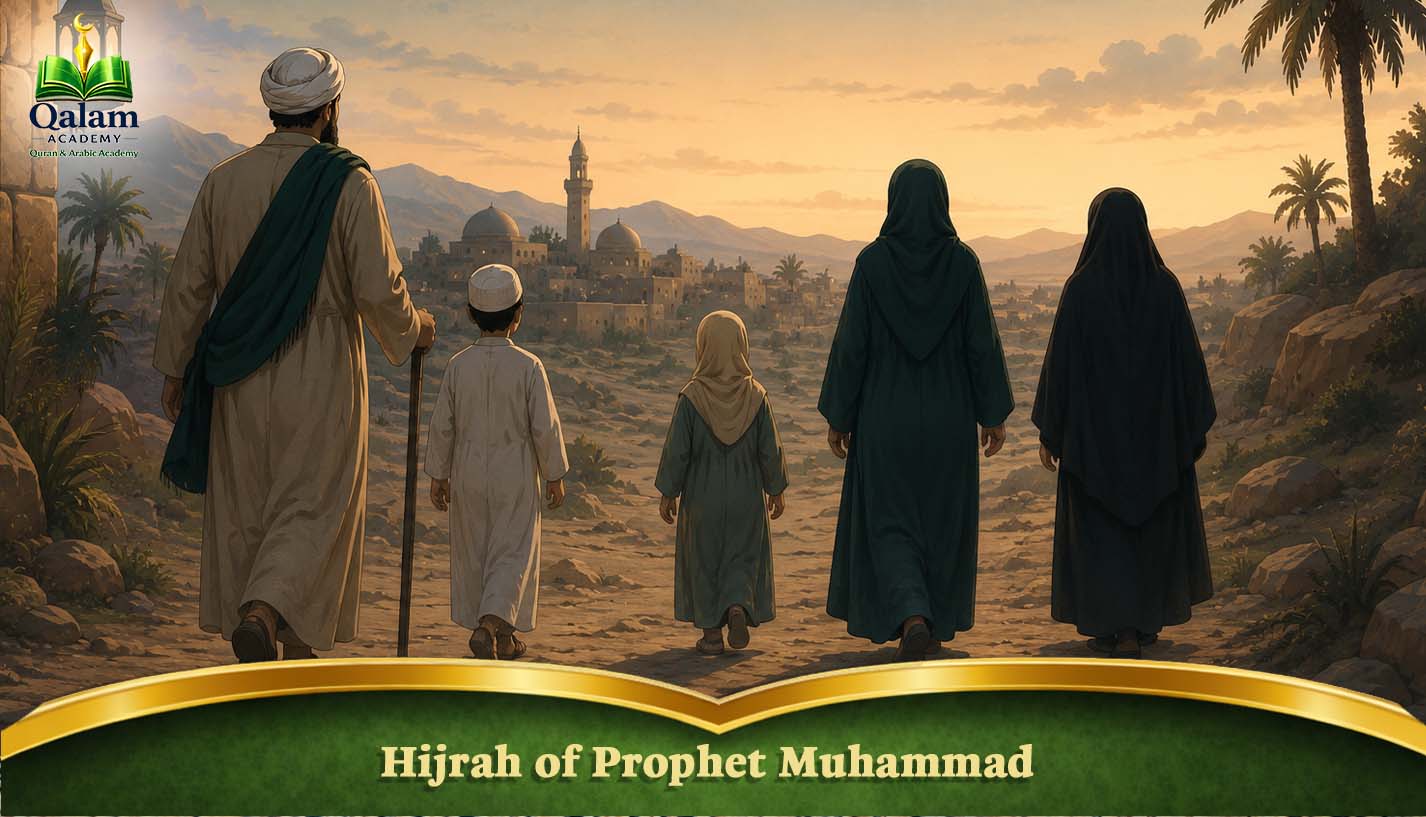
Qalam Quran Academy presents this introduction to the Hijrah of Prophet Muhammad as one of the most significant events in Islamic history, marking a major transformation in the life of Muslims.
It represents patience, sacrifice, and trust in Allah during hardship. The migration from Makkah to Madinah established a strong and united community based on faith and justice.
This event continues to inspire Muslims worldwide to learn from the Seerah and apply its lessons in daily life. Those looking for an accessible introduction to the Prophet’s ﷺ life can also explore Seerah for beginners.Understanding the Hijrah helps strengthen belief, identity, and commitment to Islamic values and teachings for all generations today now.
Hijrah: Emigration for the Sake of Allah
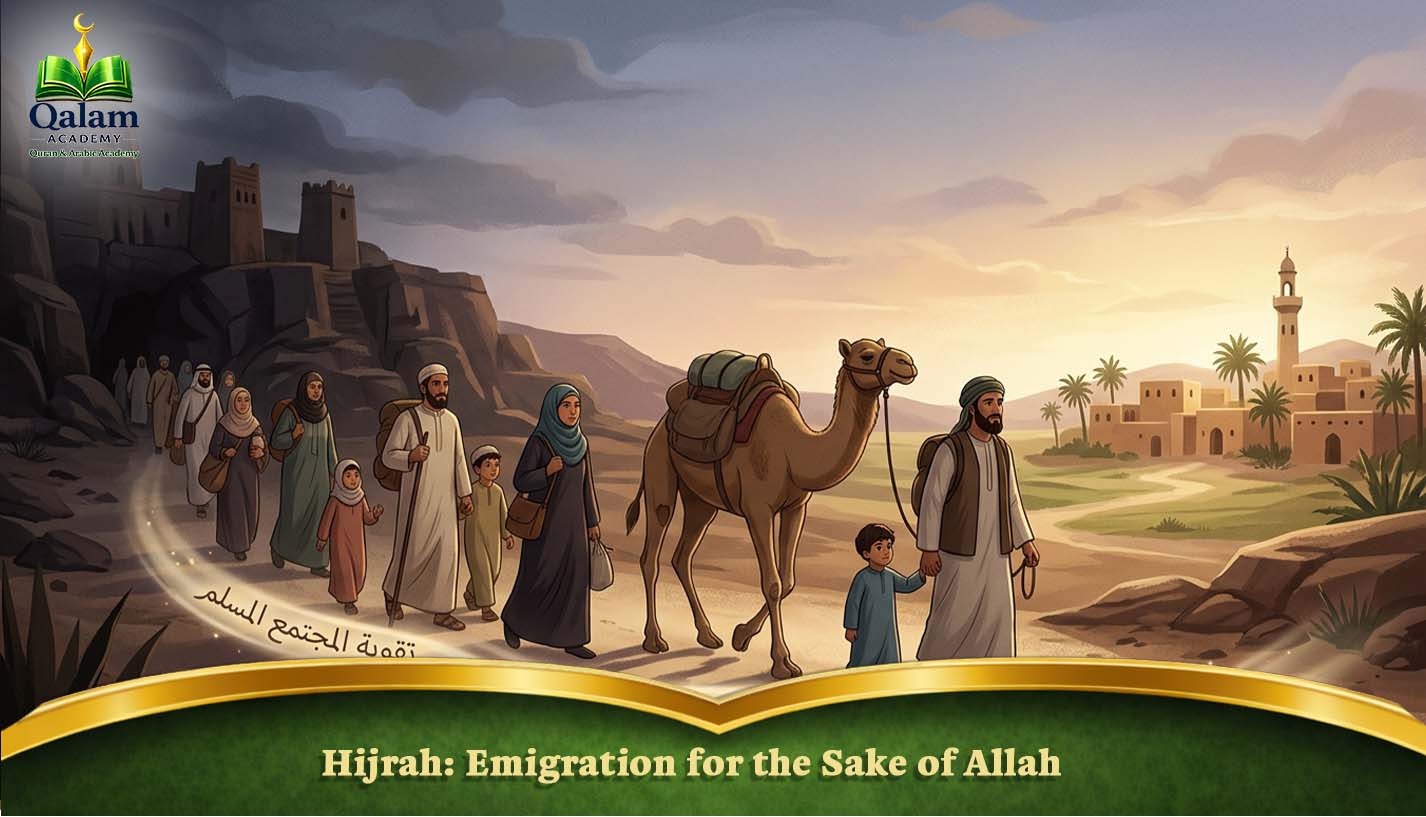
Hijrah in Islam is not merely physical movement; it is a spiritual act of leaving oppression and moving toward freedom of faith. It reflects obedience to Allah and commitment to practicing Islam without fear.
- Migration from a land of shirk to a land of Islam
- Seeking safety for practicing religion
- Strengthening faith and protecting the Muslim community
The most important Hijrah in Islamic history is the migration of Prophet Muhammad (SAW) and his companions from Makkah to Madinah, which later became the center of Islamic civilization.
Online Quran Academy
Qalam Quran Academy is an Online Quran Academy dedicated to providing high-quality Islamic education for students of all ages. Learners looking for a dedicated online memorization pathway can also explore a hifz course online.It offers flexible online classes that help learners study the Quran, Tajweed, and Islamic studies from the comfort of their homes.Families seeking a guided memorization pathway for younger learners can also explore a hifz course for kids.
The academy focuses on building strong Quranic foundations through experienced teachers, interactive lessons, and a structured learning approach. Learners who benefit from regular live guidance and feedback can also explore online hifz classes with teacher.Qalam Quran Academy aims to make Quran learning easy, accessible, and engaging for students worldwide, while maintaining authentic Islamic values and effective teaching methods.Students who want to build a steady Quran memorization routine from home can also explore memorize quran at home.

What Is Hijrah?
Hijrah refers to the migration of Muslims from a land where they cannot freely practice Islam to a land where they can worship Allah openly and safely.
- It symbolizes protection of faith
- It ensures freedom of worship
- It builds strong Muslim communities
The Hijrah of Prophet Muhammad (SAW) was a turning point that transformed Madinah into the heart of Islam after its people pledged allegiance to the Prophet.
Different Forms of Hijrah
Hijrah can take different forms depending on circumstances and the level of oppression faced by Muslims.
From Land of Shirk to Land of Islam
This is the primary form of Hijrah, where Muslims move from oppression to a society governed by Islamic principles.
- Enables free worship of Allah
- Protects religious identity
- Strengthens the Muslim community
From One Non-Muslim Land to Another
In some cases, Muslims may migrate from one non-Muslim land to another where conditions are safer.
- Example: Migration to Abyssinia
- Protection under a just ruler
- Temporary refuge from persecution
Read also: islamic education for kids at home
The First Migration to Abyssinia
During the early years of Islam, Muslims faced severe persecution in Makkah, which led to the first migration to Abyssinia.
Background and Reasons
Muslims suffered intense hardship, including:
- Physical torture and abuse
- Social boycott and isolation
- Economic pressure and restrictions
Abyssinia as a Safe Haven
The Prophet Muhammad (SAW) chose Abyssinia because of its just ruler, King Negus (Al-Najashi).
- Known for justice and fairness
- Provided protection to refugees
- Allowed freedom of worship
The Journey
In 615 CE, a group of Muslims migrated to Abyssinia, including both men and women.
- First organized migration in Islam
- Included Uthman ibn Affan and Ruqayyah (RA)
- Marked beginning of online islamic classes education migration history
Reception in Abyssinia
King Negus welcomed the Muslims and allowed them to live peacefully.
- Safety and religious freedom granted
- Protection from Quraysh threats
- Stable environment for worship
Quraysh Attempt to Extradite Muslims
The Quraysh sent envoys to bring the Muslims back.
- Attempted political pressure on Negus
- Offered gifts to influence decision
- Requested deportation of Muslims
The Hearing Before King Negus
Ja’far ibn Abi Talib (RA) represented the Muslims and explained Islam.
- Recited verses from Surah Maryam
- Explained the message of Islam
- Highlighted justice and truth
King Negus’s Decision
After hearing the truth, King Negus refused to hand over the Muslims.
- Granted permanent protection
- Rejected Quraysh demands
- Declared safety for Muslims
Return of Some Refugees
Some Muslims returned to Makkah due to false news.
- Faced renewed persecution
- Returned again to Abyssinia
- Included Umm Salama (RA)
Impact of the First Migration
This migration had lasting significance: We also cover this in our blog guide.
- First safe refuge for Muslims
- Established principle of seeking protection
- Strengthened early Muslim identity
The Second Migration: Makkah to Madinah
The migration to Madinah was the most important Hijrah in islamic fiqh basics history, marking the foundation of the Islamic state.
Reasons for Migration to Madinah
1. Severe Persecution in Makkah
Muslims faced increasing oppression, including:
- Physical harm and torture
- Social and economic boycott
- Continuous threats to life
2. Divine Command and Vision
Allah chose Madinah as the destination for Hijrah.
- Prophet Muhammad (SAW) saw a dream about migration
- Madinah identified as the future home
- Divine guidance confirmed the journey
3. Support from People of Madinah
The tribes of Aws and Khazraj welcomed Islam.
- Ended long-standing tribal conflicts
- Pledged loyalty at Aqabah
- Invited the Prophet to lead them
4. Strategic Importance
Madinah had a strong geographical position.
- Located on trade routes
- Multicultural society
- Suitable for Islamic governance
5. Foundation of Islamic State
Hijrah enabled establishment of a Muslim state.
- Construction of Prophet’s Mosque
- Formation of islamic courses online constitution
- Establishment of justice system
The First Companions Who Migrated to Madinah
Several companions played key roles in preparing Madinah for Islam.
Mus’ab ibn ‘Umayr and Ibn Umm Maktum
- Sent as teachers to Madinah
- Taught Qur’an and islamic education for kids principles
- Helped spread Islam among Ansar
Other Early Migrants
- Ammar ibn Yasir: endured persecution and migrated
- Bilal ibn Rabah: first Mu’azzin in Islam
- Sa’d ibn Abi Waqqas: early supporter of Islam
Umar ibn Al-Khattab
- Migrated openly with strength and confidence
- Strengthened Muslim presence in Madinah
The Migration of the Prophet Muhammad (SAW)
The final Hijrah began with divine permission through Angel Jibra’il.
Preparation Phase
- Secret planning for safe departure
- Ali ibn Abi Talib stayed in the Prophet’s bed
- Abu Bakr (RA) prepared for journey
Secret Departure
- Prophet left Makkah at night
- Quraysh failed to detect his exit
- Divine protection ensured safety
Cave of Thawr
- Prophet and Abu Bakr stayed for three nights
- Quraysh search parties failed to find them
- Trust in Allah remained absolute
Journey to Madinah
- Encounter with Suraqah ibn Malik
- Divine protection from harm
- Safe continuation of journey
Arrival in Madinah and Building a Strong Islamic Society
The arrival of Prophet Muhammad (SAW) in Madinah marked the beginning of a new and historic era in Islam, where a united and peaceful society began to take shape based on faith and cooperation.
- Warm welcome by the Ansar: The people of Madinah warmly received the Prophet (SAW) and the Muhajirun, showing great generosity and sincere brotherhood.
- Construction of Quba Mosque: The first mosque built after Hijrah was Masjid Quba, which became a center of worship and unity among Muslims.
- Building of the Prophet’s Mosque: Masjid Nabawi was established as the heart of the Muslim community, serving as a place for worship, learning, and governance.
- Establishment of brotherhood system: The Prophet (SAW) created strong bonds between the Ansar and Muhajirun, strengthening social unity and support.
This stage laid the foundation of a strong Islamic society based on justice, faith, and unity.
Impact of Hijrah in Building the First Islamic State
The Hijrah of Prophet Muhammad (SAW) was a turning point that completely reshaped the structure of Muslim society. It was not only a migration but the beginning of a new civilization based on justice, unity, and faith.
- End of tribal conflict: One of the greatest impacts of the Hijrah was ending long-standing tribal wars, especially between Aws and Khazraj, replacing conflict with harmony and brotherhood under Islam.
- Establishment of a justice system: In Madinah, the Prophet (SAW) introduced a fair and balanced system of governance that protected the rights of Muslims and non-Muslims alike, ensuring peace and order.
- Formation of a unified Muslim state: The Hijrah led to the creation of the first organized Muslim community, united under one leadership and guided by divine principles.
- Expansion of Islamic governance: From Madinah, Islam began to spread widely, establishing a model of governance based on justice, consultation, and equality.
The Hijrah remains a powerful example of how faith and leadership can transform society from division into unity and from chaos into order.
Key Lessons from Hijrah of Prophet Muhammad (SAW)
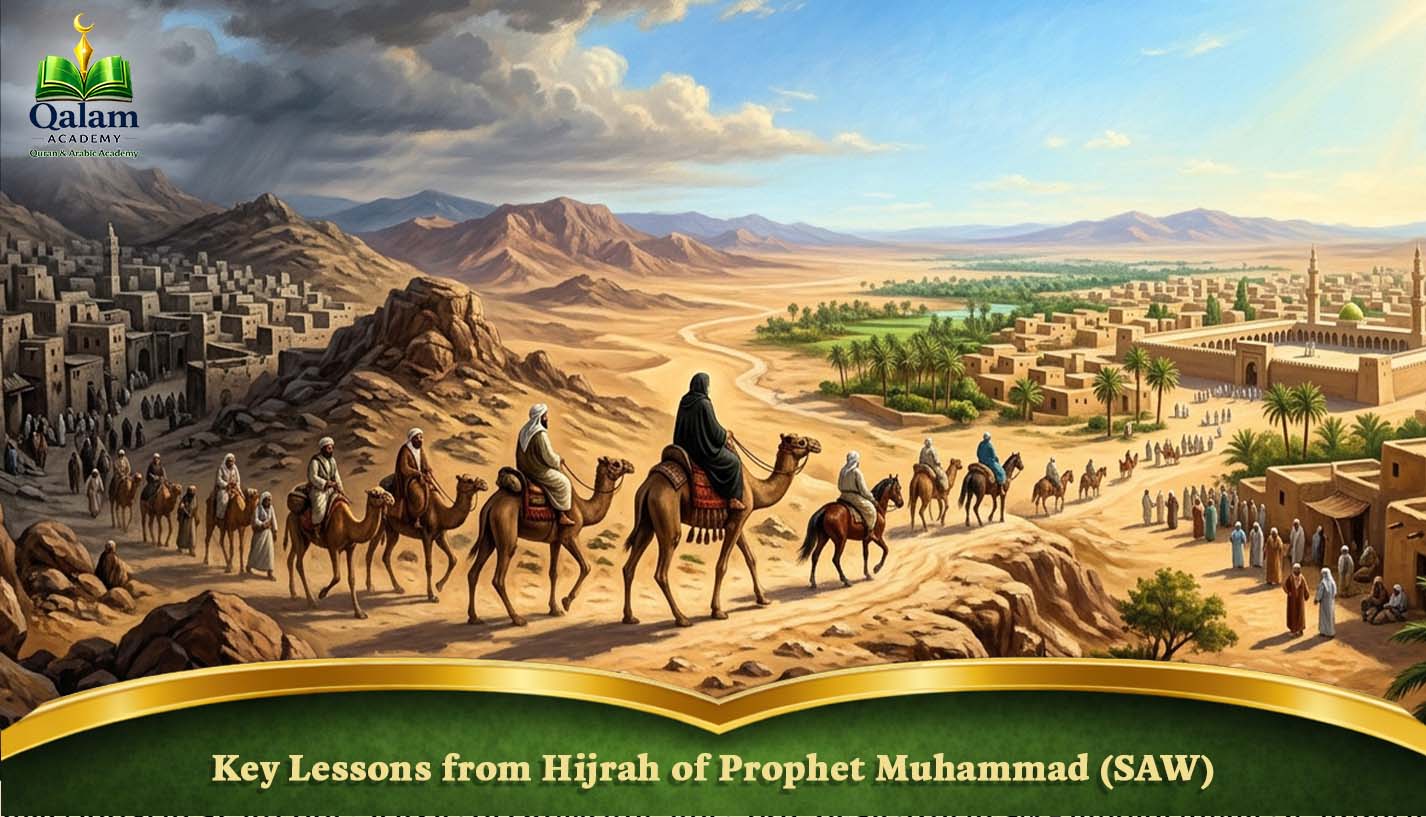
The Hijrah of Prophet Muhammad (SAW) marks a major transformation in Islamic history, moving from persecution in Makkah to the establishment of a peaceful and organized society in Madinah. It was a journey that shaped the future of the Muslim Ummah and laid the foundations of a strong Islamic community based on faith and justice.
- Trust in Allah during hardship: The Prophet (SAW) and Abu Bakr (RA) showed complete reliance on Allah even in the most dangerous moments, proving that faith brings strength in times of fear.
- Importance of planning with faith: The Hijrah demonstrates that believers must combine trust in Allah with careful planning and taking practical steps.
- Unity and brotherhood among believers: It strengthened the bonds of brotherhood among Muslims, uniting them beyond tribe and background.
- Patience in difficult times: The early Muslims endured persecution with patience, showing that hardship is followed by relief.
- Building just societies: The Hijrah led to the creation of a society based on justice, equality, and moral values.
The Hijrah remains a timeless lesson in faith, resilience, and leadership for all generations.
Frequently Asked Questions (FAQ)
1. What is the Hijrah of Prophet Muhammad (SAW)?
It is the migration of Prophet Muhammad (SAW) and his followers from Makkah to Madinah to escape persecution and establish an Islamic society based on faith and justice.
2. Why did the Muslims migrate to Madinah?
They migrated due to severe oppression in Makkah and by Allah’s command, which guided them to a safer place where they could freely practice Islam.
3. What are the main lessons from the Hijrah?
The Hijrah teaches trust in Allah, patience in hardship, proper planning, unity among Muslims, and the importance of building a just and peaceful society.
In conclusion, this historic journey stands as a powerful example of faith, perseverance, and divine support during times of hardship. It marks the beginning of a new era for the Muslim Ummah, built on unity, justice, and strong belief in Allah.
Qalam Quran Academy emphasizes the importance of learning this event to gain deeper understanding of the Prophet’s Seerah and apply its timeless lessons in everyday life. It continues to inspire Muslims to remain steadfast, patient, and committed to their faith in all circumstances.