


Challenges Adults Face When Learning Hifz Online can make Quran memorization difficult when work, family responsibilities, and daily commitments compete for attention. However, adults can make steady progress by setting realistic goals, following a structured revision plan, and receiving regular feedback from a qualified Quran teacher.
Memorizing the Quran as an adult requires patience, consistency, and a learning method that fits individual circumstances. Some learners have demanding jobs, while others care for children or manage household responsibilities. In addition, adults returning to Quran study after many years may need to refresh their Arabic reading skills before beginning a memorization plan.
Online learning offers flexibility, but studying from home also introduces distractions and technical difficulties. Therefore, successful memorization involves more than attending lessons. Learners need a suitable schedule, accurate recitation, regular revision, and realistic expectations about their progress.
This guide explores the most common obstacles adults encounter during online Hifz and explains practical ways to overcome them. It also discusses how teachers, revision routines, and suitable learning arrangements can help adults continue memorizing the Quran without placing unnecessary pressure on themselves.
What Are the Main Challenges Adults Face When Learning Hifz Online?
The challenges adults face when learning Hifz online vary according to their reading ability, previous memorization experience, available time, and personal responsibilities. Consequently, the same learning method may not work equally well for every student.
Some learners struggle to find enough time for revision, whereas others have difficulty remembering verses after several days. Meanwhile, students who are still developing their Arabic pronunciation may need additional guidance before increasing their memorization targets. Common challenges include:
- Managing Quran study alongside work and family responsibilities.
- Retaining newly memorized verses over time.
- Maintaining motivation when progress feels slow.
- Avoiding distractions during online lessons.
- Improving Tajweed and pronunciation.
- Distinguishing between similar Quranic verses.
- Managing fatigue and stress.
- Maintaining consistency after missing lessons.
- Building confidence when starting Hifz later in life.
- Handling internet interruptions and technical problems.
Although these obstacles can overlap, they do not necessarily indicate a lack of memorization ability. For example, a learner who repeatedly forgets a passage may need more revision rather than additional new material.
Therefore, identifying the main difficulty is the first step toward finding an effective solution. A short weekly review can help learners determine whether time management, concentration, pronunciation, or memory retention needs the most attention.
Start Learning with Qalam Online Quran Academy Today
Take the first step toward a stronger connection with the Quran and Islamic knowledge. At Qalam Online Quran Academy, our qualified teachers provide personalised one-on-one classes for children, adults, and beginners. Enjoy flexible schedules, interactive lessons, and a supportive learning environment designed to help you achieve your goals. Begin your Quran learning journey with confidence.

Time Management Challenges Adults Face When Learning Hifz Online
Time management is one of the most common challenges adults face when learning Hifz online. Unlike students with predictable schedules, working adults may deal with changing shifts, appointments, childcare, travel, and unexpected responsibilities.
As a result, an ambitious memorization target can quickly become frustrating. Someone might plan to memorize a full page every day but discover that work leaves insufficient time for accurate recitation and revision.
A more sustainable approach begins with an honest assessment of the time available. Instead of planning around an ideal day, create a routine that remains realistic during an ordinary busy week.
How Can Adults Create a Realistic Online Hifz Schedule?
Start by identifying a time when concentration is usually strongest. Some adults prefer early mornings because the house is quiet, while others study after work or later in the evening. The most suitable time is the one that can be maintained consistently. Next, divide the available study time between different activities.
| Learning activity | Main purpose |
|---|---|
| New memorization | Learn a manageable passage accurately. |
| Recent revision | Strengthen material learned during previous days. |
| Older revision | Maintain previously memorized portions. |
| Recitation correction | Identify pronunciation and Tajweed mistakes. |
| Weekly review | Evaluate progress and adjust the next target. |
The amount of time assigned to each activity depends on the learner’s ability and circumstances. Even a short, focused session can be useful when it includes active recitation rather than passive listening alone.
Moreover, prepare a minimum routine for particularly busy days. If a full session is impossible, revise a small passage instead of abandoning Quran study entirely. This approach helps preserve consistency without turning every missed target into a source of guilt.
Work and Family Challenges Adults Face During Online Hifz
Employment and family commitments can interrupt concentration even when a learner is determined to memorize the Quran. Parents may need to care for children, professionals may work overtime, and household tasks may occupy the hours originally reserved for study.
These responsibilities can also create mental pressure. After a demanding day, a learner may struggle to recall verses because attention remains focused on unfinished tasks.
One useful solution is to discuss the study schedule with family members. Explaining the importance of a specific quiet period can help reduce avoidable interruptions. Whenever possible, choose a time that does not regularly conflict with childcare, meals, or work obligations.
Adults can also connect memorization with existing routines. For example, they might revise a familiar passage during a quiet break or listen to a reliable recitation before a lesson. However, listening during another activity should supplement focused practice rather than replace it.
When unexpected responsibilities arise, reschedule the missed session instead of attempting to compensate by memorizing an excessive amount the following day. A flexible plan is more likely to support long-term progress.
Memory Retention Challenges Adults Face When Learning Hifz Online
For many learners, memorizing a passage initially is easier than recalling it accurately several days later. A verse may feel familiar immediately after repetition but become difficult to retrieve without looking at the Mushaf.
This difference between familiarity and independent recall is important. Repeating a passage many times in one sitting does not automatically mean that the learner will remember it later.
Instead, adults should practise retrieving verses from memory and revisiting them at suitable intervals. This process helps identify which passages are secure and which still need attention.
How Adults Can Improve Quran Memorization and Long-Term Recall?
Begin by reading the passage correctly before attempting to memorize it. Understanding the general meaning can provide useful context, although understanding alone does not guarantee accurate memorization. Then follow a consistent sequence:
- Listen to a reliable recitation while following the written text.
- Read the passage aloud and check unfamiliar words.
- Memorize a short group of words or one verse at a time.
- Repeat each portion until you can recite it without looking.
- Connect the new portion to the preceding verse.
- Recite the complete passage from memory.
- Review it later that day and during subsequent sessions.
- Ask a teacher to identify mistakes you may not notice yourself.
Additionally, keep a simple record of difficult passages. Marking confusing words and weak transitions makes revision more focused. The challenges adults face when learning Hifz online often become easier to manage when new memorization and revision are treated as separate activities. If older material is becoming weaker, temporarily reduce the amount of new material and strengthen previous portions first.
This adjustment is not a failure. Rather, it helps protect the accuracy of memorization and prevents weak passages from accumulating over time.
Motivation Challenges Adults Face When Memorizing the Quran Online
Motivation often changes during a long memorization journey. At the beginning, learners may feel enthusiastic and set ambitious targets. Later, progress may appear slower, particularly when they need to revise previous passages instead of memorizing new ones.
Comparing personal progress with another student’s achievements can make this problem worse. Adults differ in reading fluency, available time, family responsibilities, and previous experience. Therefore, comparing memorization totals without considering these differences provides little useful information.
A better approach is to measure progress through consistency and accuracy. Recording completed revision sessions, corrected mistakes, and passages recalled independently can reveal improvements that are not obvious from daily memorization totals.
How Can Adults Stay Motivated During Online Hifz?
Set small, measurable goals for each week. For example, aim to strengthen a particular passage, improve the accuracy of a difficult verse, or complete revision on several planned days.
Furthermore, divide long-term goals into smaller stages. Completing each stage provides an opportunity to review what has been learned and decide which areas need more attention.
When motivation declines, return to a manageable routine rather than stopping completely. A shorter session can maintain the habit while allowing time to recover from fatigue or a busy period.
It is also helpful to remember why you began memorizing the Quran. Personal intention, spiritual commitment, and the desire to recite accurately can provide meaningful reasons to continue when immediate progress feels limited.
Distraction Challenges Adults Face During Online Quran Memorization
Learning from home removes commuting time, but it does not automatically create a suitable study environment. Mobile notifications, television, household conversations, and unrelated browser tabs can interrupt attention during memorization.
These interruptions matter because Quran memorization requires careful listening, repeated recitation, and attention to the order of words. Even a brief distraction may cause a learner to lose track of the passage or repeat it inaccurately.
To improve concentration, prepare the study environment before the lesson begins. Choose a quiet location, keep the Mushaf and notebook within reach, and silence unnecessary notifications. If other family members share the space, explain the lesson time in advance whenever possible.
During memorization, focus on one task at a time. Avoid checking messages between repetitions because repeatedly switching attention can make practice less organized.
Online learners should also reduce visual clutter on their devices. Close unrelated applications and keep only the resources needed for the lesson open. If background noise is unavoidable, consider suitable headphones that allow clear communication with the teacher.
Finally, notice when concentration naturally decreases. A brief pause between study blocks may be more productive than continuing to repeat verses while mentally exhausted.
Tajweed and Pronunciation Challenges Adults Face During Online Hifz
Accurate memorization involves more than recalling the sequence of words. Learners also need to observe pronunciation, articulation points, vowel lengths, and relevant Tajweed rules. Adults who are still developing their Arabic reading skills may find it difficult to manage these details while learning new passages.
Online lessons can support this process when the teacher can hear the recitation clearly and provide specific corrections. However, learners should not assume that repeated listening alone will identify every pronunciation mistake.
How Can Adults Improve Tajweed While Learning Hifz Online?
Begin by making sure that the passage can be read correctly before increasing the memorization target. If several words are unfamiliar, practise reading them slowly and ask the teacher to explain the relevant pronunciation rules. A structured Quran recitation course can help learners focus on accurate pronunciation and improve their recitation step by step.
During each lesson, focus on a manageable number of corrections. Trying to fix every aspect of recitation at once may make practice overwhelming. Once a particular mistake becomes less frequent, move to the next priority.
Recording your own recitation, where appropriate and permitted, can help you notice differences between your reading and a reliable reference recitation. Nevertheless, recordings should complement feedback from a qualified teacher rather than replace it. Learners who prefer studying remotely can also explore how to learn Quran online via Zoom.
Learners should avoid memorizing an incorrect version and assuming that it will automatically improve later. Correcting a passage early may prevent repeated mistakes from becoming established habits.
The challenges adults face when learning Hifz online may include limited confidence when reciting aloud. Regular, supportive correction can help learners become more comfortable asking questions and addressing errors before moving forward.
Challenges Adults Face When Memorizing Similar Quranic Verses
Some Quranic passages contain similar words, repeated expressions, or closely related endings. These similarities can create confusion when learners move quickly between verses or revise several related passages during one session.
The difficulty is not necessarily a weak memory. Sometimes, learners have memorized both passages but have not developed a clear way to distinguish their wording or context.
Start by identifying the exact point of difference. Compare the relevant words in the Mushaf and note the phrase that changes. Where useful, write a short reminder that helps you recognize the distinction without replacing the actual text.
Next, practise each passage separately before alternating between them. Once both are reasonably secure, recite them in a mixed order to test whether you can identify the correct continuation independently.
Meaning and context may also help. Understanding what a passage discusses can provide an additional cue for remembering its position, although context should never replace checking the exact wording.
Finally, ask your teacher to test the transitions between similar verses. A passage that can be recited from its beginning may still be difficult when the recitation starts from a middle verse. Practising these transitions helps reveal whether memorization is secure.
Confidence Challenges Adults Face When Starting Hifz Later in Life
Some adults feel embarrassed about beginning Quran memorization later in life. They may believe they should already know more, worry about pronunciation mistakes, or feel uncomfortable reciting in front of a teacher.
These concerns can prevent learners from starting or asking for the help they need. However, previous Quran education, Arabic fluency, and memorization experience vary widely among adults. There is no single starting point suitable for everyone.
A useful first step is to assess current ability honestly. Some learners may need to improve reading fluency and Tajweed before beginning substantial memorization. Others may already read confidently and be ready to work on memorized passages.
Choose a learning plan that respects this starting point instead of copying another person’s pace. A qualified female Quran tutor may be an option for learners who prefer lessons with a female teacher.
Adults should also treat corrections as part of learning rather than evidence of failure. Accurate recitation develops through practice, feedback, and revision. Asking questions early can prevent confusion from continuing across multiple lessons.
For women seeking a learning environment tailored to their preferences, online Quran classes for sisters may be worth exploring.
Most importantly, avoid delaying the beginning of Hifz simply because progress may be gradual. A realistic plan allows adults to learn while managing their existing responsibilities.
Fatigue and Stress Challenges During Online Hifz for Adults
Fatigue can affect concentration, recall, and the ability to notice mistakes. Adults who study after long workdays may find that memorization takes longer, even when they are using an otherwise effective method.
Stress can also make it harder to focus. When learners worry about falling behind, they may increase study time without improving the quality of practice. This can create a cycle of tiredness, frustration, and reduced consistency.
Instead, pay attention to the relationship between study time and concentration. If memorization repeatedly becomes less accurate late at night, try moving the main session to a period when you feel more alert.
Break longer sessions into manageable blocks and include short pauses when needed. Maintain reasonable sleep habits, eat regularly, and avoid turning missed targets into a reason for sacrificing rest.
A difficult day does not require abandoning the entire routine. Reduce the workload, revise a familiar passage, or resume the usual schedule the following day. If tiredness remains persistent or affects daily functioning, consider discussing it with a qualified healthcare professional rather than assuming that it is simply a study problem.
Building a Consistent Online Hifz and Revision Routine for Adults
A reliable routine helps adults decide what to study without spending valuable time planning every session. It also makes it easier to balance new memorization with the revision required to retain previous work. Learners can also consider relevant Sunnah prayers every Muslim should know as part of their broader Islamic learning.
The routine should reflect the learner’s current ability. Someone beginning with short passages may need a different plan from a learner who has already memorized several juz. Therefore, avoid copying a schedule designed for someone with different experience or availability.
How Does a Structured Revision Plan Help Adults Overcome Hifz Challenges?
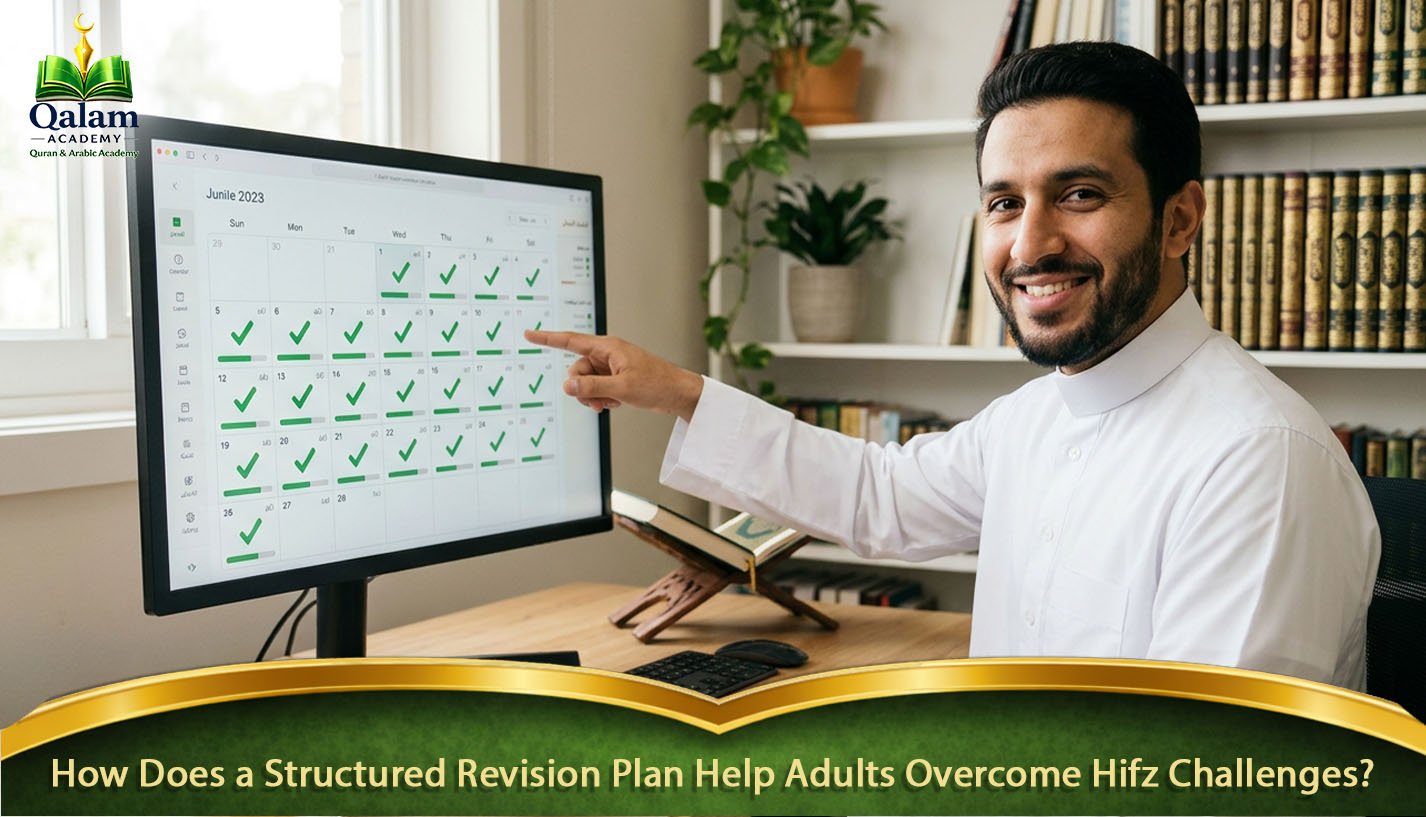
A practical weekly plan can include three main activities: new memorization, recent revision, and older revision. The balance between them should change according to progress and recall accuracy.
| Study period | Main task | Purpose |
|---|---|---|
| Daily session | Memorize a manageable passage | Build new material accurately |
| Daily review | Recite recently learned verses | Strengthen recent recall |
| Several sessions weekly | Review older passages | Maintain previously memorized material |
| Weekly check | Recite selected passages without looking | Identify weak areas |
| Periodic review | Revisit difficult verses and transitions | Reduce recurring mistakes |
Use a notebook or digital tracker to record what was memorized, what was revised, and which errors appeared. Keep the record simple enough that updating it does not become another burden.
If a passage remains weak, revise it again before adding too much new material. Conversely, when recall becomes reliable, gradually continue to the next section according to the teacher’s guidance.
The goal is not to make every day identical. Instead, a good routine provides enough structure to maintain progress while allowing reasonable adjustments for work, family responsibilities, illness, and travel.
How Does an Online Quran Teacher Help Adults Overcome Hifz Challenges?
Independent practice is essential, but feedback can help learners recognize errors they may not notice themselves. A qualified Quran teacher can assess reading ability, correct recitation, identify weak transitions, and recommend an appropriate balance between new memorization and revision.
For adults, the teacher’s approach matters as much as the lesson schedule. Learners may need direct explanations, patient correction, realistic targets, and opportunities to discuss difficulties without feeling rushed. Before choosing a learning arrangement, consider the following questions:
- Can the teacher hear and correct recitation clearly during live lessons?
- Is the lesson plan adjusted to the learner’s current level?
- Does the teacher review previously memorized passages?
- Are mistakes explained in a way the learner understands?
- Is there a clear process for discussing progress and changing targets?
- Can lesson times fit the learner’s regular commitments?
A useful lesson should not focus only on how much new material was covered. It should also examine accuracy, retention, and the learner’s ability to recite without prompts.
Adults should communicate honestly when a target is too demanding or a particular passage remains difficult. This information helps the teacher adjust the plan instead of allowing repeated problems to continue unnoticed.
Technical Challenges Adults May Face During Online Hifz Classes
Internet interruptions, unclear audio, device problems, and unsuitable video-call settings can disrupt online Quran lessons. These difficulties may be especially frustrating when the teacher is correcting a subtle pronunciation error or listening to a complete passage.
Although technical problems cannot always be prevented, basic preparation can reduce their impact. Test the internet connection before the lesson, charge the device, position the microphone appropriately, and keep the required Quran text available.
If the connection becomes unstable, tell the teacher rather than continuing when neither person can hear clearly. Reschedule or repeat the affected portion if necessary, especially when the lesson involves detailed pronunciation correction.
It is also useful to have a backup plan for short interruptions. Depending on the teacher’s guidance, the learner may revise a previously studied passage offline or listen to a reliable recitation until the live lesson becomes possible again.
However, independent practice should not be treated as a full replacement for missed feedback. Make a note of questions and uncertain passages so they can be reviewed during the next lesson.
How Can Qalam Online Quran Academy Support Adults Learning Hifz Online?
Adults considering Qalam Online Quran Academy should check whether its teaching approach suits their reading level, memorization goals, schedule, and revision needs.
Before enrolling, ask about lesson length, teacher feedback, progress reviews, and how memorization targets change when revision becomes difficult. Clarify available scheduling options and how to communicate with teachers between lessons.
Adults should also ask how teachers address difficult verses, forgotten passages, and missed sessions. Clear expectations can help learners organize independent practice and maintain a realistic routine.
Ultimately, evaluate Qalam Online Quran Academy based on its confirmed teaching arrangements, communication, and flexibility. Choose a plan that supports accurate recitation, regular revision, and sustainable progress without unrealistic expectations.
Common Mistakes Adults Should Avoid When Learning Hifz Online
Adults learning Hifz online may face unnecessary difficulties when they follow unrealistic goals or neglect regular revision. Avoiding common mistakes can make memorization more manageable and help learners maintain steady progress.
- Memorizing too much too quickly: Set realistic daily targets that allow enough time for accurate recitation and revision.
- Neglecting older passages: Review previously memorized verses regularly to strengthen recall and prevent forgetting.
- Repeating without testing memory: Close the Mushaf and recite independently to check whether you can remember the passage accurately.
- Ignoring Tajweed mistakes: Ask your teacher to correct pronunciation errors before they become repeated habits.
- Comparing progress with others: Every learner has different responsibilities, abilities, and available study time. Focus on your personal improvement instead.
- Changing methods too frequently: Follow a suitable memorization plan long enough to evaluate its effectiveness, then adjust it when necessary.
- Giving up after missed lessons: Resume with a manageable session instead of trying to memorize everything you missed at once.
- Studying while exhausted: Choose a time when you can concentrate and recite carefully. Short, focused sessions may be more useful than lengthy, tiring ones.
- Relying only on recordings: Listening can support memorization, but it should be combined with active recall, independent recitation, and teacher feedback.
- Hiding learning difficulties: Tell your teacher when a passage remains difficult or the workload becomes unrealistic. Clear communication helps you adjust your targets and maintain a sustainable routine.
By avoiding these mistakes, adults can build stronger memorization habits, improve recitation accuracy, and approach their Hifz goals with greater confidence and consistency.
Frequently Asked Questions About Challenges Adults Face When Learning Hifz Online
Find answers to common questions about the challenges adults face when learning Hifz online, including memorization, revision, and time management.
Should Adults Change Their Memorization Method After a Long Break?
A long break may mean that reading fluency, pronunciation, or previous memorization needs to be reassessed. Begin by checking your current level, then choose a method that addresses the skills requiring the most attention.
Is Keeping a Record of Hifz Mistakes Helpful for Adult Learners?
Yes. A short record can help you identify repeated errors, difficult transitions, and passages that need additional revision. Keep notes brief and specific so that they support practice rather than making the process unnecessarily complicated.
How Can Adults Maintain Hifz During Work Changes or Travel?
Review the upcoming schedule and decide which study activities can realistically continue. If live lessons become difficult, discuss possible adjustments with the teacher and maintain manageable revision where possible. Resume the regular plan when your schedule stabilizes.
When Should Adults Adjust Their Online Hifz Learning Plan?
Consider reviewing the plan when the workload repeatedly causes missed sessions, older passages become less secure, or the same errors continue despite practice. Discuss the issue with the teacher and adjust the amount of new memorization, revision schedule, or lesson timing.
Conclusion
Challenges Adults Face When Learning Hifz Online can feel demanding, but a realistic routine and consistent revision can make Quran memorization more manageable. Adults do not need to follow the same pace as other learners; instead, they should build a plan around their current abilities, responsibilities, and learning goals.
Start by identifying the main obstacle. If time is limited, shorten the session and protect consistency. If verses are forgotten, strengthen revision and practise active recall. When pronunciation or similar passages cause difficulty, seek specific feedback and correct errors before moving forward too quickly.
In addition, prepare a suitable study environment, communicate honestly with the teacher, and review progress regularly. Small adjustments can prevent temporary problems from becoming reasons to stop learning altogether.
If you are considering Qalam Online Quran Academy, review the available teaching arrangements and confirm whether they fit your needs before choosing a program. Ultimately, steady effort, accurate recitation, and a sustainable plan matter more than rushing toward a particular memorization target.